Qualcomm Confirms Quick Share-AirDrop Interoperability Coming to All Snapdragon Phones
 Do Son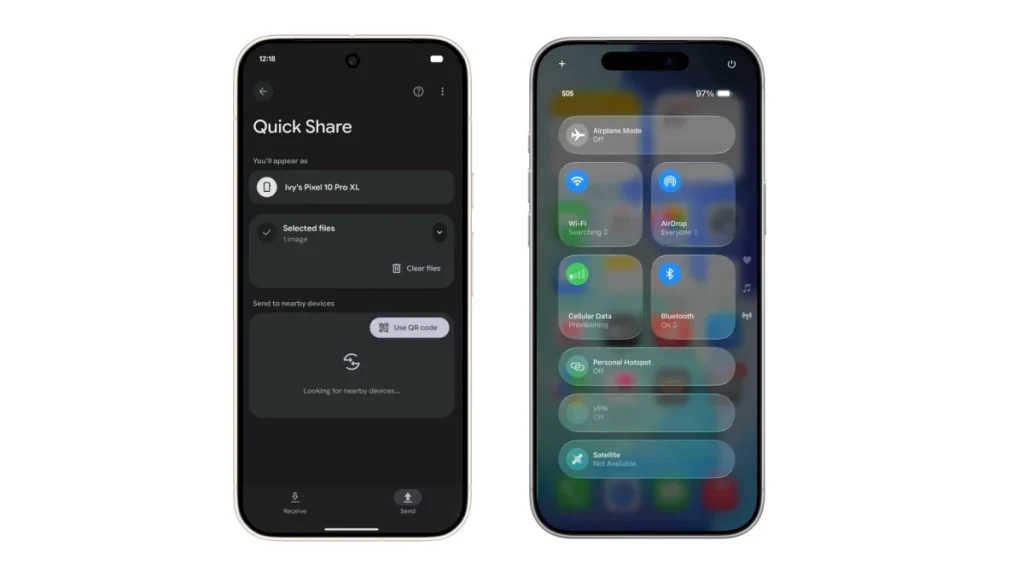
Following Google’s announcement that the upcoming Pixel 10 series will support native Quick Share file transfers directly with iPhones via AirDrop, Qualcomm promptly issued a statement of its own, declaring that it “Can’t wait for people to use this once enabled on Snapdragon in the near future.” The implication is clear: the new Quick Share–AirDrop interoperability will not be limited to Pixel devices, but will eventually extend to a broader range of Android phones powered by Snapdragon processors.
Qualcomm’s remarks confirm a crucial technical detail: this breakthrough, which finally bridges the long-standing divide between Android and iOS, is not dependent on any proprietary hardware tied to Google’s Tensor processors.
In other words, the capability is achieved entirely through software-level protocol implementation. Once Quick Share is updated at the system level, Android phones across various brands should, in principle, be able to enjoy seamless file transfers with Apple devices — excellent news for dual-ecosystem users who have long been frustrated by the “green bubble” divide and the lack of smooth cross-platform sharing.
As for which manufacturers might adopt the feature first, no official list has been released. However, industry observers widely predict that Samsung’s upcoming Galaxy S26 series — expected early next year — stands as a highly likely candidate. Given Samsung’s dominant presence in the Android market, early adoption would significantly accelerate mainstream uptake of this capability.
Intriguingly, while the Android ecosystem continues to push forward by reverse-engineering or replicating aspects of the AirDrop protocol — with brands such as OPPO and Vivo previously introducing iPhone-linked features, and with third-party apps enabling file transfers between Android, Windows, and Apple devices — Apple has yet to issue any formal response.
Will Apple quietly tolerate this cross-platform convenience in the interest of user experience? Will it prepare a future system update to impose restrictions or modify the protocol to “restore the wall”? Or, perhaps in response to recent EU pressure to open its ecosystem, will Apple simply allow these software-based AirDrop integrations to proceed unhindered? This evolving tug-of-war between ecosystems is poised to become one of the most closely watched developments in the tech world.
Related Posts:
- Android Quick Share Now Interoperable with AirDrop, Starting with Pixel 10!
- China Cracks Apple’s AirDrop Feature
- Apple vs. EU: AirDrop, AirPlay & Seamless Pairing at Risk in Europe!
- AirDrop PIN Pairing Arrives: New iOS Beta Allows 30-Day File Sharing Without Contacts
Support Our Threat Intelligence
Find our tech and OS security coverage helpful? Support our work today and unlock a 100% ad-free reading experience!
 Buy Me a Coffee
