 Do Son
TL;DR
SUSE released security updates on October 29, 2026. The fixes address three serious Rancher security vulnerabilities. These flaws cause credential leaks and request forgery. They also allow unauthorized shell access on admin clusters. As a result, bad actors could breach cloud nodes. They could also view user data. Therefore, admins must patch their systems right away. They need to keep clusters safe.
- Product: SUSE Rancher
- Vulnerabilities: 3 flaws (CVE-2026-88811, CVE-2026-88809, CVE-2026-104623)
- Highest severity: 9.1 (Critical · CVSSv3)
- Worst impact: credentials disclosed to third-party hosts by the Manager meta proxy
- Status: No confirmed exploitation yet; patches available
- Action: Update to 2.15.3, 2.14.7, 2.13.11, 2.12.15 (+1) now
| CVE | CVSS (CVSSv3) | Type | Fixed in | Status |
|---|---|---|---|---|
| CVE-2026-88811 | 9.1 | CWE-201 | 2.15.3, 2.14.7, 2.13.11 (+2) | Not exploited |
| CVE-2026-88809 | 7.6 | CWE-918 | 2.15.3, 2.14.7, 2.13.11 (+2) | Not exploited |
| CVE-2026-104623 | 6.3 | CWE-290 | 2.15.3, 2.14.7, 2.13.11 (+2) | Not exploited |
Why It Matters
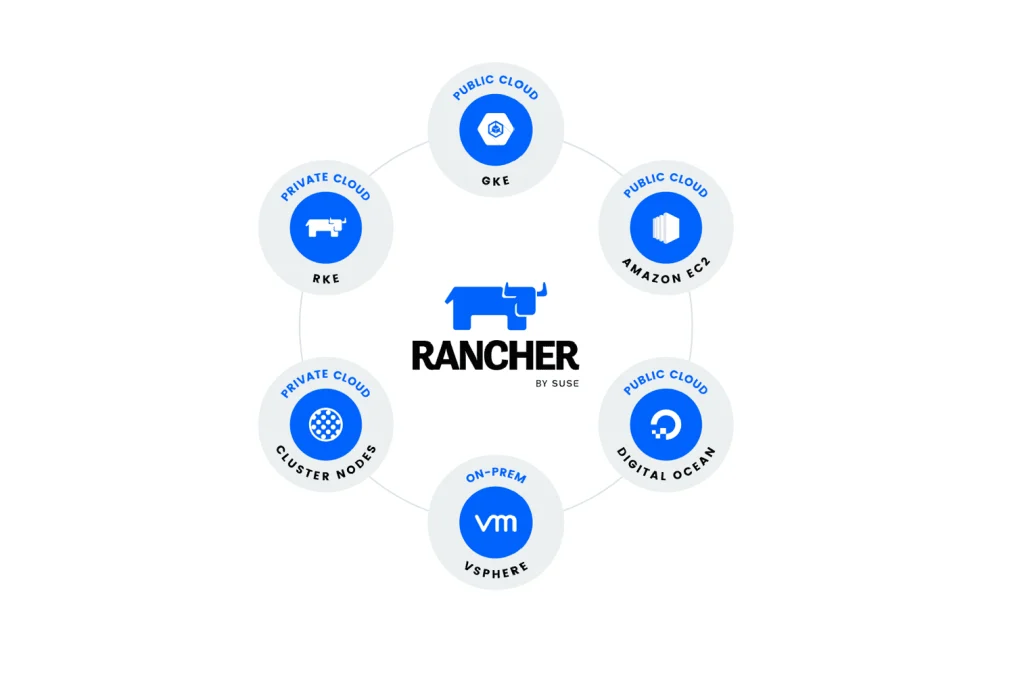
Rancher is a popular tool for Kubernetes management. It helps teams run app workloads across clouds. Market data shows that thousands of firms use Rancher today. Many large firms rely on it to run daily cloud tasks. They trust it with their core apps.
Securing cluster admin tools is key. If attackers breach the control plane, they can control connected nodes. They can also steal private keys. They can shut down critical apps. Fortunately, SUSE found no active attacks in the wild. In addition, researchers have shared no public exploit code for these bugs.
How the Attack Works
Meta Proxy Credential Leakage
The first flaw is CVE-2026-88811 in the Rancher Manager meta proxy. When users query cloud provider APIs, the proxy sends requests to remote hosts. The GHSA-x82x-2qj6-5rm2 security advisory explains the risk. It states: “When the proxy forwards a request to a configured third-party host, it did not consistently remove the caller’s own Rancher credentials from the outgoing request.”
Consequently, outgoing traffic leaked user browser cookies and active API tokens. Anyone who monitors the receiving host can read these live credentials. They can also read transit logs on third-party servers. Because these tokens hold full rights, attackers could take over the cluster.
SSRF via Allowlist Bypass
Meanwhile, the second flaw is an SSRF bug tracked as CVE-2026-88809. The GHSA-f9gf-wh3x-jx3v security advisory details the allowlist bypass in the meta proxy. The report notes: “This endpoint is intended to forward requests only to destinations that appear on a configured allowlist.” However, the code failed to stop bad requests. In fact, “The allowlist decision was evaluated in a place where it could not stop a request from being forwarded.”
As a result, a logged-in user can make the server call internal services. In cloud setups, attackers can query instance metadata endpoints. This allows them to steal cloud access keys. Then, they can reach cloud resources outside the cluster.
Cluster Shell Authorization Bypass
Finally, CVE-2026-104623 is an authorization bypass on the local cluster shell endpoint. The GHSA-8x6f-2v58-x6p7 security advisory highlights this routing gap. The advisory warns that “The authorization check that was introduced to protect this feature was not applied to every API route that can reach it.”
Therefore, any logged-in user can launch a shell pod in the cattle-system namespace. The pod runs with standard rights. Still, it breaks expected cluster isolation.
Affected Versions
These Rancher security vulnerabilities impact versions 2.11 through 2.15. Specifically, the flaws affect releases prior to versions 2.15.3, 2.14.7, 2.13.11, 2.12.15, and 2.11.19.
Patch and Mitigation Steps
SUSE resolved all three issues in the latest releases. Admins should update to Rancher v2.15.3, v2.14.7, v2.13.11, v2.12.15, or v2.11.19 right away. Furthermore, operators must rotate any API tokens used with the proxy. Teams should also check the cattle-system namespace for unknown shell pods.
Support Our Threat Intelligence
Find our vulnerability reports and weekly recaps helpful? Support our work today and unlock a 100% ad-free reading experience!
 Buy Me a Coffee
