
 Do Son
A new report uncovers the "Traffer" economy, a sophisticated cybercriminal ecosystem that uses business-like structures and SEO abuse to steal data at scale.
Cybercrime

A 26-year-old UK hacker, tied to the Yemen Cyber Army, has been sentenced to 20 months in prison for breaching thousands of websites and stealing data.
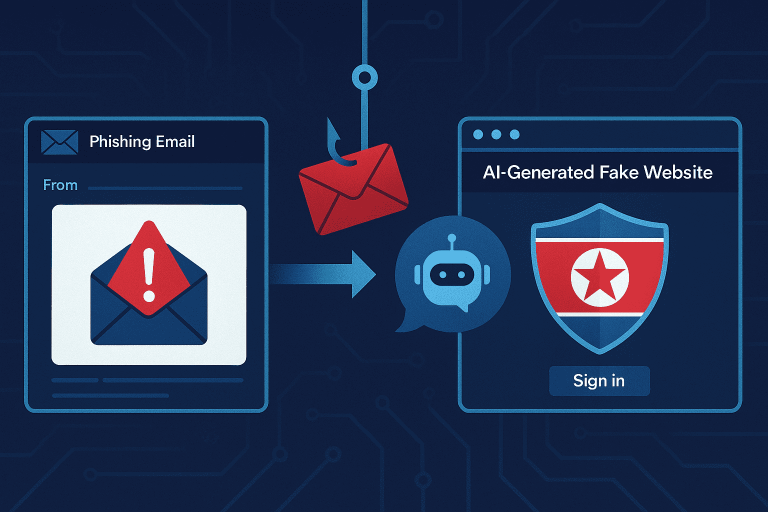
A new report from Unit 42 reveals how cybercriminals are misusing generative AI to create realistic phishing sites, deepfake content, and fraudulent websites.

CYFIRMA's new report reveals REVENANT, a malware-free attack framework that can achieve long-term persistence by hiding in AI models and document fonts.

A new report reveals a dangerous malware campaign on a popular game piracy site, proving that even with an adblocker, pirated software is a huge risk.

ThreatFabric researchers have uncovered PhantomCard, an Android Trojan that uses an NFC relay attack to steal contactless card data and enable fraudulent payments.

An Ethereum developer lost funds to a fake AI extension that stole his private key, highlighting how even experts can fall victim to sophisticated phishing attacks.

A new report from Infoblox reveals the shocking scale of VexTrio, a 15-year-old cybercrime syndicate that profits from a massive network of scams and fake apps.

A new report reveals Chinese-speaking smishing syndicates are using phishing-as-a-service, MFA bypass, and stolen cards to conduct a multi-billion dollar fraud campaign targeting digital wallets.

The DFIR Report details a destructive attack: Bumblebee malware, delivered via SEO poisoning in Bing search results, led to a full Akira ransomware deployment in under 44 hours.
ShadowSyndicate’s Global Ransomware Empire Blurs Lines Between Cybercrime and Geopolitical Espionage

ShadowSyndicate’s Global Ransomware Empire Blurs Lines Between Cybercrime and Geopolitical Espionage
A new report exposes ShadowSyndicate, a sophisticated cybercrime group tied to top-tier RaaS affiliates, bulletproof hosting, and suspected geopolitical influence operations, blurring lines between cybercrime and espionage.

Palo Alto's Unit 42 reveals a sophisticated cyberespionage campaign by Liminal Panda (CL-STA-0969) targeting Southwest Asian telecom infrastructure with custom backdoors.

A DomainTools report exposes how North Korean IT workers use fake IDs, AI, and shell companies to infiltrate remote tech jobs globally, funding the regime's military and compromising corporate infrastructure.

A joint advisory from US, UK, Canada, and Australia warns of Scattered Spider's evolving tactics, now using DragonForce ransomware, spearphishing, SIM swapping, and MFA fatigue to compromise systems.

Trend Micro reports Gunra ransomware has expanded to Linux, employing 100 parallel encryption threads, partial encryption, and stealthy keystore methods to target global enterprises.

Seychelles Commercial Bank (SCB) suffered a cyberattack exposing 1.4M+ customer PII, including government employee data. Resecurity suspects espionage, not just financial gain, given the low data sale price.

Security researcher Vasilis Orlof exposes QWINS LTD, a suspected bulletproof hosting provider registered in the UK, allegedly fueling global malware campaigns with Lumma, Mirai, and more.

Cisco Talos reveals "Chaos," a new RaaS operation likely formed by former BlackSuit members, using vishing and Quick Assist to conduct big-game hunting and double extortion campaigns.

Christina Marie Chapman was sentenced to 8.5 years for facilitating a $17M scheme that allowed North Korean IT operatives to pose as US citizens and secure remote jobs at over 300 US companies.

A highly organized Romanian criminal group, notorious for ATM "Transaction Reversal Fraud" and openly taunting police, has been dismantled by UK and Romanian authorities in a Europol-backed operation.

Wiz Research uncovers Soco404, an evolving cryptojacking operation exploiting cloud misconfigurations and PostgreSQL to stealthily mine cryptocurrency across Linux and Windows.

The UK government is drafting new legislation to criminalize ransomware payments by public sector bodies (NHS, schools, councils) to deter attacks and cut off funding to cybercriminals.