
 Do Son
NVIDIA replaces Apple as TSMC's largest customer in Jan 2026. Discover how the $33B AI chip boom is rewriting the rules of the silicon industry.
TSMC

Samsung enters the final phase of NVIDIA’s HBM4 certification. Mass production in early 2026 could break SK Hynix’s monopoly and reshape the AI memory market.

Apple may return to Intel by 2028 to fab iPhone chips on the 14A node. Discover how NVIDIA's AI boom and U.S. politics are reshaping Apple Silicon.
At CES 2026, Qualcomm CEO Cristiano Amon confirmed a return to Samsung for 2nm chip production, aiming to diversify supply as TSMC capacity tightens.
TSMC’s 2nm is fully booked! Samsung’s Taylor, Texas fab aims to steal the lead in 2026 as AMD, Google, and Tesla seek an American-made 2nm alternative.

Apple and NVIDIA are fiercely competing for TSMC's next-gen A16/A14 capacity. To mitigate risk, Apple is exploring using Intel's 18AP process for entry-level M-series chips.

Apple is reportedly signing a deal for Intel to manufacture entry-level M-series chips (MacBook Air/iPad Pro) using its 18A process by mid-2027, validating Intel's foundry business.
NVIDIA CEO Jensen Huang unveiled the first Blackwell wafer produced at TSMC's Arizona fab. The move, a landmark for the US supply chain, signals volume production of the next-gen AI chip in America.

MediaTek's new Dimensity 9500 chip, built on a 3nm process, features an all-big-core design and dual NPUs to deliver massive gains in AI, gaming, and efficiency.
Qualcomm's CEO says Intel's foundry technology isn't advanced enough for its needs, signaling continued reliance on TSMC and Samsung for chip production.

Apple has reportedly secured nearly half of TSMC's 2nm chip production for the iPhone 18's A20 processor, a move that highlights the fierce competition for cutting-edge silicon.
Elon Musk confirms a $16.5B, nine-year deal with Samsung for AI6 chip production at its Texas foundry, a crucial win for Samsung's struggling chip business and Tesla's AI future.

Intel's new CEO indicates the company may exit advanced chip manufacturing (14A/18A) if external demand falters, highlighting struggles to compete with TSMC and ongoing cost-cutting efforts.

Google executives reportedly visited TSMC, discussing a potential shift for Pixel's Tensor G5 processor manufacturing for the Pixel 10 series.
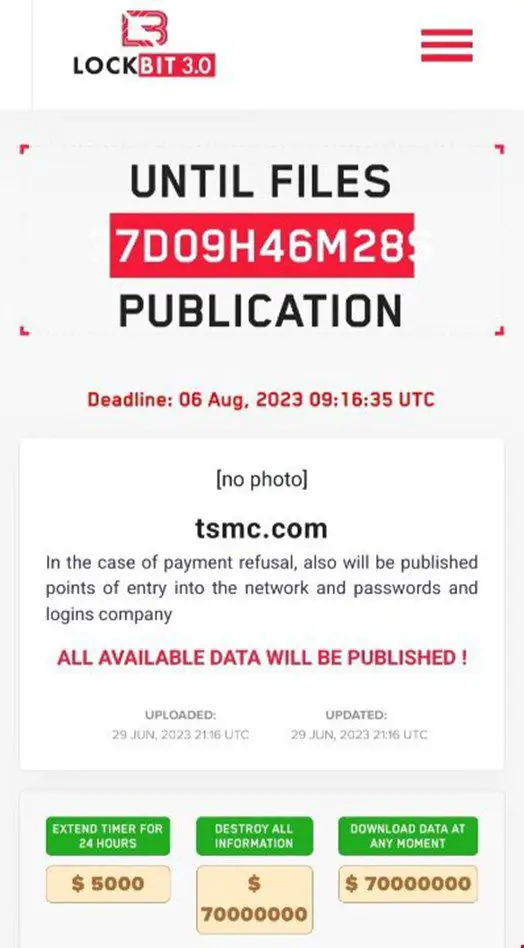
ransomware group LockBit asserted they had successfully infiltrated the systems of TSMC, demanding a ransom of 70 million dollars