 Do Son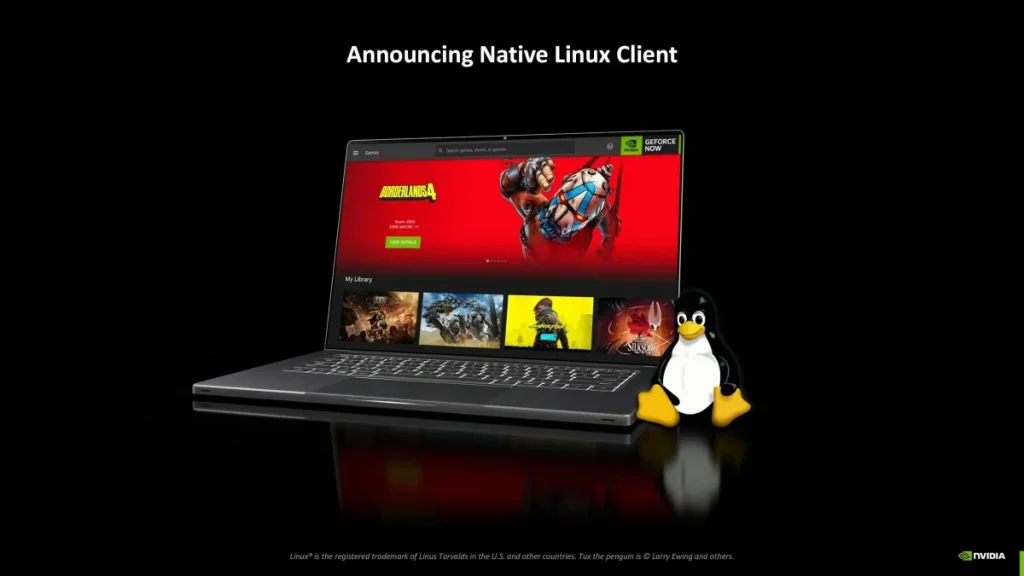
As CES 2026 approaches, NVIDIA unveiled a slate of consumer-facing updates for gamers and creators during its pre-show event. Highlights include G-SYNC Pulsar technology, capable of delivering 1000Hz-class dynamic visual clarity; a new DLSS 4.5 release with support for dynamic multi-frame generation; and real-world implementations of its AI assistant platform, ACE, now integrated into games such as Total War: PHARAOH.
In the past, gamers choosing an esports monitor often had to pick between G-SYNC (to eliminate screen tearing) and ULMB (to reduce motion blur). With G-SYNC Pulsar, NVIDIA positions the technology as the ultimate evolution of esports displays—and the most significant leap since G-SYNC was first introduced in 2013.
G-SYNC Pulsar combines Variable Overdrive with VRR Backlight Strobing to solve a long-standing limitation of VRR: its inability to fully suppress motion blur. By employing a Rolling Scan technique, the display emits localized backlight pulses for 25 percent of the frame time before each scan, allowing pixels sufficient time to stabilize and remain clear during motion.
According to NVIDIA, this approach delivers up to a fourfold improvement in effective motion clarity. On a 360Hz panel, it achieves a level of visual smoothness comparable to displays operating at 1000Hz or higher.
Key features include:
- Ambient Adaptive Technology: The display senses ambient light and automatically adjusts brightness and color temperature—cool white during the day, warmer tones at night.
- Project G-Assist: Players can adjust monitor settings using natural language commands such as “Set my display to esports mode,” with AI handling the configuration.
- Launch models: Initial offerings include 27-inch, 1440p, 360Hz monitors from partners such as Acer, AOC, ASUS, and MSI. Pricing starts at USD 599, with availability beginning January 7.
To meet the demanding requirements of full path-traced titles like Black Myth: Wukong and Cyberpunk 2077, NVIDIA introduced DLSS 4.5.
This update centers on two major innovations:
- Second-generation Super Resolution Transformer: Trained on larger datasets and accelerated with FP8, it significantly improves temporal stability and reduces ghosting. This enhancement will be available across all RTX GPUs.
- Dynamic Multi-Frame Generation: Exclusive to the RTX 50 series, this feature dynamically inserts additional frames, delivering up to a sixfold increase in frame rates—for example, boosting native 60 FPS to 240 FPS—while also refining frame pacing.
Official benchmarks show that with path tracing enabled at 4K resolution, DLSS 4.5 raises Black Myth: Wukong performance from 184 FPS (DLSS 4) to 246 FPS.
NVIDIA’s ACE (Avatar Cloud Engine) is no longer a mere technology demo; it is now entering real gameplay. In collaboration with Total War: PHARAOH, NVIDIA demonstrated how ACE uses Retrieval-Augmented Generation (RAG) and Small Language Models (SLMs) to transform more than 1,200 in-game data tables into a knowledge base. Players can ask the in-game AI advisor questions such as “How do I suppress a rebellion?” and receive context-aware recommendations—for instance, suggesting the construction of art schools to raise public satisfaction.
RTX Remix also gains new Logic capabilities, allowing mod creators to script behaviors so legacy game visuals respond dynamically to real-time events—changing lighting when doors open or triggering visual effects when enemies are detected. This feature is expected to launch in January.
NVIDIA also announced a series of updates for creators and tools:
- ComfyUI support: Native NVFP4/FP8 quantization enables data-center-scale models while reducing VRAM usage by up to 60 percent.
- LTX-2 video generation: Adds 4K support, doubles performance, and integrates RTX Video for super-resolution processing.
- Nexa Hyperlink: Introduces AI-powered video search, allowing users to query local video content by keyword.
GeForce NOW received an upgrade as well, adding RTX 5080-class performance based on the Blackwell architecture. The service now supports streaming at up to 5K 120 FPS or 1080p 360 FPS, while maintaining its monthly price of USD 19.99.
Finally, NVIDIA announced dedicated GeForce NOW client applications for Linux and Amazon Fire TV devices, expanding access to the service across a wider range of connected platforms.
Related Posts:
- Nvidia confirmed the hacking incident: NVIDIA DLSS source code leaked
- CVE-2024-27135: Apache Pulsar Remote Code Execution Vulnerability
- Nvidia RTX 50 Crash Fix: vBIOS Update Incoming
Support Our Threat Intelligence
Find our tech and OS security coverage helpful? Support our work today and unlock a 100% ad-free reading experience!
 Buy Me a Coffee
