 Do Son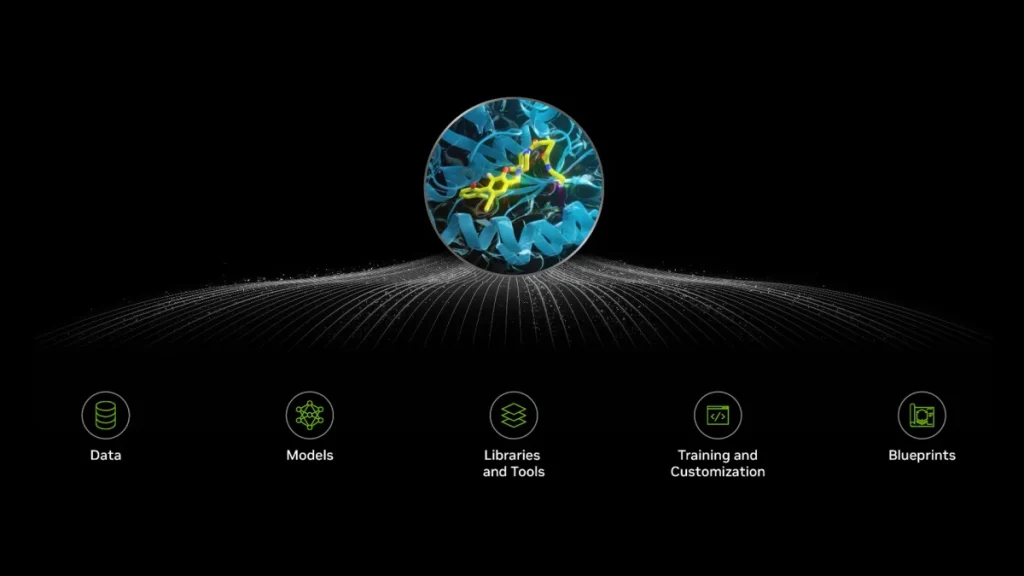
Having revolutionized the generative content landscape through unparalleled computational prowess, NVIDIA has pivoted toward the profoundly influential domain of life sciences. By unveiling a significant expansion of its BioNeMo platform, the company endeavors to precipitate a “Transformer moment” within the realm of biology. The centerpiece of this strategic evolution is a landmark five-year alliance with pharmaceutical titan Eli Lilly, underpinned by a projected $1 billion investment to establish the inaugural “AI Co-Innovation Lab.” Simultaneously, a collaboration with laboratory instrumentation leader Thermo Fisher aims to transmute conventional research facilities into automated, high-efficiency “data factories.”
This partnership represents a historic confluence of the pharmaceutical and technology sectors. Establishing their joint laboratory in the San Francisco Bay Area, the two entities will channel vast resources—encompassing elite talent, robust infrastructure, and immense computational power—over the next half-decade. The quintessential objective is to dissolve the traditional dichotomy between “wet labs” (physical chemical and biological experimentation) and “dry labs” (computational modeling). By integrating the BioNeMo platform with the forthcoming Vera Rubin architecture supercomputers, Lilly intends to architect a “scientist-in-the-loop” continuous learning ecosystem. In this paradigm, artificial intelligence conceives molecular designs, which are subsequently synthesized and evaluated by autonomous robotics. The resulting empirical data is then fed back into the AI to refine its predictive models, creating a perpetual, autonomous loop capable of operating incessantly to accelerate drug discovery cycles.
Beyond research and development, the alliance will utilize NVIDIA Omniverse to construct digital twins of manufacturing facilities, optimizing supply chains and production workflows within a virtual environment. Concurrently, NVIDIA introduced pivotal updates to BioNeMo, tailoring the platform to the exigencies of modern drug development:
-
RNAPro Model: Specifically engineered to predict RNA structures, a capability fundamental to the advancement of next-generation vaccines and genomic therapies.
-
ReaSyn v2 Model: Designed to mitigate the “unrealistic” nature of AI-conceived molecules by predicting “synthesizability,” ensuring that AI-driven designs remain chemically viable for laboratory production.
-
BioNeMo Recipes: A standardized suite of protocols enabling research institutions to expeditiously train and deploy bespoke biological models.
To facilitate total laboratory automation, NVIDIA has partnered with Thermo Fisher to integrate NVIDIA DGX Spark edge computing and NVIDIA NeMo agentic AI directly into scientific instrumentation. This transformation elevates laboratory equipment from passive data generators to intelligent nodes capable of “edge reasoning.” These AI agents can autonomously monitor data integrity, calibrate parameters in real-time upon detecting anomalies, and even orchestrate subsequent experimental workflows.
NVIDIA CEO Jensen Huang has repeatedly characterized “Digital Biology” as the next quintessential frontier for AI. These collaborations signal NVIDIA’s transition from merely providing the underlying hardware (GPUs) to architecting the entire biological research infrastructure. The Eli Lilly engagement serves as a definitive bellwether, shifting the pharmaceutical industry from sporadic AI experimentation to a holistic, “factory-level” integration—from foundational computation (Vera Rubin) and platform services (BioNeMo) to robotic execution and digital twins (Isaac/Omniverse).
This underscores a paradigm shift in drug discovery: migrating from the traditional “high-throughput screening” approach toward “generative design.” Should BioNeMo succeed in generating viable molecular structures with the same precision that language models generate text, humanity’s capacity to combat oncology and rare diseases may advance at an exponential velocity. Nevertheless, given that biological complexity far exceeds that of linguistic frameworks, the global industry remains watchful to see if this $1 billion investment will bear fruit within its five-year horizon.
Related Posts:
Support Our Threat Intelligence
Find our tech and OS security coverage helpful? Support our work today and unlock a 100% ad-free reading experience!
 Buy Me a Coffee
