 Do Son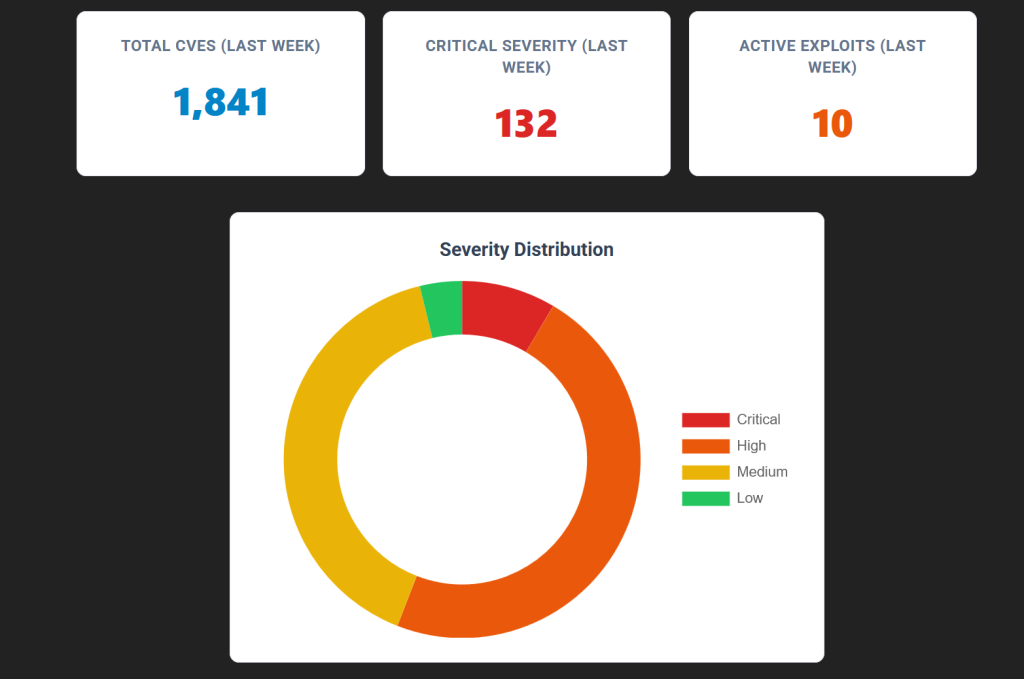
Welcome to the CVE WATCHTOWER. As your premier source for weekly threat intelligence, we are tracking an alarming spike in active zero-day exploits. Between June 8 and June 14, 2026, security researchers disclosed a staggering 1,841 new vulnerabilities. If you are a CISO, ethical hacker, or network defender, this vulnerability management report highlights the critical threats you must mitigate immediately to protect your perimeter.
The CISA KEV Explosion: Network Infrastructure Under Fire
This week, the Cybersecurity and Infrastructure Security Agency (CISA) added seven heavily weaponized flaws to its Known Exploited Vulnerabilities (KEV) catalog. Attackers are ruthlessly targeting enterprise infrastructure. Most notably, an OS Command Injection flaw in Ivanti Sentry (CVE-2026-10520) scored a maximum CVSS 10.0. Unauthenticated remote attackers are currently exploiting this gateway to achieve root-level code execution.
Similarly, Cisco Catalyst SD-WAN Controllers are under active attack. A CLI vulnerability (CVE-2026-20245) allows authenticated local attackers to execute arbitrary commands as root. Furthermore, Oracle PeopleSoft environments are facing a 9.8 CVSS threat (CVE-2026-35273) that enables unauthenticated network takeovers. To make matters worse, a logic flow weakness in deprecated IKEv1 key exchanges (CVE-2026-50751) is actively allowing remote attackers to establish VPN connections without a valid password.
AI Gateways and Browser Breaches
Our weekly threat intelligence analysis also detected severe exploits penetrating modern workflows. LiteLLM, a popular proxy server for AI APIs, suffered a catastrophic bypass (CVE-2026-42271). Attackers are actively sending crafted server configurations to spawn malicious subprocesses, executing arbitrary commands directly on the host proxy.
On the endpoint side, Google Chrome was hit with a dangerous out-of-bounds read and write vulnerability in its V8 engine (CVE-2026-11645). Threat actors are actively leveraging crafted HTML pages to bypass sandbox restrictions and compromise local workstations.
Urgent Remediation Required
This vulnerability management report serves as your early warning system. Administrators must immediately isolate vulnerable Ivanti Sentry appliances and apply Cisco’s latest SD-WAN firmware. Additionally, if your DevOps teams deploy LiteLLM for AI routing, upgrade to version 1.83.7 before attackers hijack your AI gateway.
As cybercriminals accelerate their attack cycles, relying on outdated patching schedules is no longer viable. Leverage our weekly threat intelligence to stay one step ahead of the adversaries. We will continue monitoring the wire, decoding the threats, and delivering the zero-hour alerts you need to secure your systems.
Support Our Threat Intelligence
Find our vulnerability reports and weekly recaps helpful? Support our work today and unlock a 100% ad-free reading experience!
 Buy Me a Coffee
