WhoFi: New AI-Powered Wi-Fi Biometrics Track Humans Through Walls with 95.5% Accuracy
 Do Son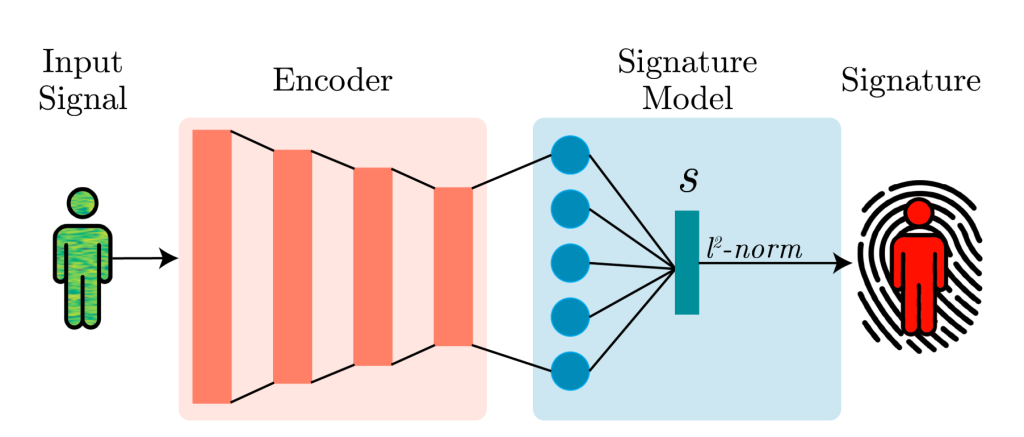
Overview of the proposed framework
As early as 2020, researchers introduced a technology called EyeFi, which leveraged the reflective properties of Wi-Fi signals as they passed through the human body to create unique biometric identifiers for tracking purposes. At the time, this method achieved a recognition accuracy of approximately 75%.
Now, a research team from Italy has advanced this concept by integrating artificial intelligence, elevating the identification accuracy to an impressive 95.5%—even in scenarios where the subject carries no smartphones or electronic devices.
This technology is rooted in the analysis of Wi-Fi Channel State Information (CSI). Over the past decade, scientists have discovered that Wi-Fi signals can be employed in a wide range of sensing applications, such as penetrating walls, detecting falls, sensing human presence, and even interpreting sign language.
Following the approval of the IEEE 802.11bf standard in 2020—also known as the Wi-Fi Sensing Standard—the Wi-Fi Alliance began promoting the use of Wi-Fi for sensing and positioning, rather than limiting its function to data transmission alone.
The Italian research team has published a paper detailing a method they’ve dubbed “WhoFi,” which uses Wi-Fi reflections from the human body to encode and recognize unique biometric signatures. As Wi-Fi signals pass through the body, the waveform is altered in a manner specific to each individual, due to the unique physiological characteristics of their body.
The researchers clarify that while re-identifying a specific person using WhoFi does not necessarily reveal their real-world identity, it can determine whether a monitored subject has entered a particular environment. Traditional video surveillance often relies on clothing or other physical traits to identify individuals, a process that is inherently less reliable and prone to error.
WhoFi significantly enhances recognition accuracy by leveraging bodily biometric traits and offers advantages over optical cameras. Unlike traditional visual systems, Wi-Fi signals are unaffected by lighting conditions or visual obstructions. Researchers suggest that, in comparison to optical surveillance, WhoFi also offers a layer of privacy by avoiding the capture of visual images.
From a beneficial perspective, WhoFi could serve as an alternative to optical surveillance in specific scenarios, offering broader coverage—including areas that are traditionally blind spots to cameras—while protecting the privacy of bystanders who are not visually recorded.
However, the drawbacks are equally stark. Due to its signal-penetrating capabilities, WhoFi can be used for expansive surveillance, potentially encompassing individuals unrelated to the original target. Moreover, since the system relies on biologically derived identifiers, once a person has been recognized, it is exceedingly difficult to erase or anonymize their presence.
In the future, we may see surveillance systems that combine optical cameras with WhoFi technology—particularly in enclosed or complex environments. In such setups, cameras could initially identify a target, after which WhoFi would enable continuous, wide-range tracking through walls and across large spaces, creating an uninterrupted chain of surveillance.
Related Posts:
- SambaSpy RAT Targets Italian Users in a Unique Malware Campaign
- Android P will have Biometric Authentication Mechanisms
Support Our Threat Intelligence
Find our tech and OS security coverage helpful? Support our work today and unlock a 100% ad-free reading experience!
 Buy Me a Coffee
