Algorithmic Acceleration: Microsoft Deploys Low-Latency Core Profiles via KB5094126 Cumulative Update
 Do Son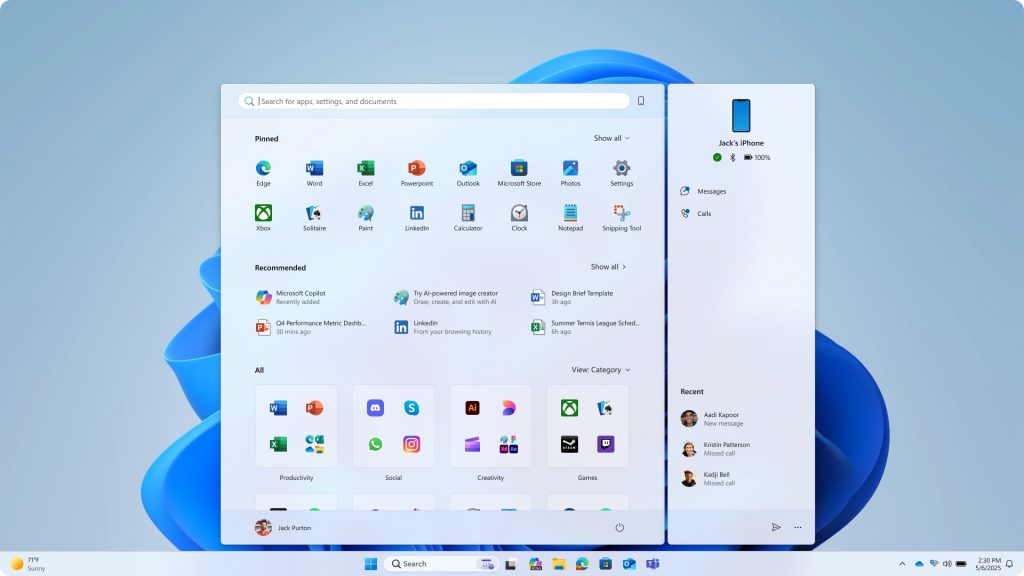
Microsoft recently initiated preliminary testing for a low-latency CPU profile framework within Windows 11 development branches. Specifically, this feature dynamically elevates processor frequencies the exact moment an operator interacts with native system overlays. These interface targets include the Start Menu, Search dialogue, and Notification Center. Consequently, the optimization dramatically curtails input-to-render latency. The resulting user experience yields immediate, palpable fluidity across the primary graphical interface.
Presently, this low-latency subsystem has graduated to the stable retail tier of Windows 11 via the cumulative update designated as KB5094126. However, Microsoft utilizes a controlled feature rollout paradigm to distribute the code. Therefore, a subset of production terminals may host the binaries in a dormant stasis. To circumvent this artificial constraint, technicians can force configuration activation via the open-source ViveTool utility. Initial empirical validation reports zero stability regressions following manual initialization.
Technical Mechanics of Dynamic Thermal and Frequency Scaling
The underlying operational logic is remarkably straightforward. The kernel intercepts interface input interrupts to command a transient, aggressive frequency spike. Because the integrated Windows Task Manager samples processor cycles at relatively coarse intervals, it frequently fails to record these hyper-fast transitions. Instead, analysts must rely on high-fidelity telemetry engines like HWiNFO to observe the real-time clock modulations.
Empirical performance traces reveal the following processing metrics:
Quiescent Base Metric: During periods of computational inactivity, the core clock multiplier hovers near a conservative baseline of x8.
The Start Menu Threshold: Upon initializing the primary menu grid, the clock multiplier spikes violently to x41 within a narrow 0.5 to 1.0-second window before dropping gracefully back to its quiescent state.
Secondary System Boundaries: Interacting with search modules and administrative notifications triggers parallel transient spikes ranging from x35 to x39.
These specific telemetry metrics serve as an architectural proof-of-concept. Actual scaling vectors will fluctuate significantly depending on unique silicon characteristics and underlying motherboard firmware logic.
Importantly, because these burst cycles resolve within micro-windows, they do not exhaust available thermal headroom. As a result, the configuration remains entirely viable for ultra-portable laptop platforms, completely avoiding fan noise amplification or thermal throttling thresholds.
Instructions for Manual Infrastructure Activation
Operators eager to evaluate this low-latency pipeline prior to automatic global provisioning can query their existing state via real-time monitoring tools. If the baseline telemetry shows no responsive clock scaling during interface events, the parameter can be modified using the command-line asset ViveTool.
Deploying the specific feature flag and executing a standard system reboot initializes the low-latency routing tables immediately. Nevertheless, manual intervention remains largely redundant for the general populace. Given that the code resides inside the stable update stream, the vast majority of enterprise terminals will ingest and activate this configuration automatically.
Support Our Threat Intelligence
Find our tech and OS security coverage helpful? Support our work today and unlock a 100% ad-free reading experience!
 Buy Me a Coffee
