Breaking the 5-Week Limit: Windows 11 to Finally Grant Users Total Update Autonomy
 Do Son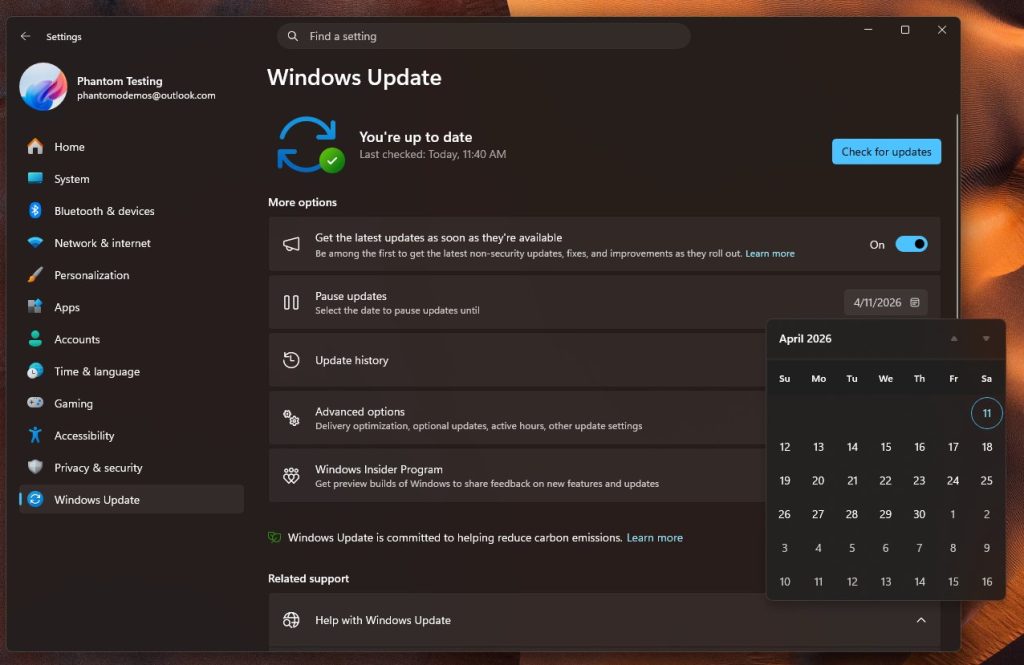
The mandatory update mechanism of Windows 11 has become a source of profound exasperation for many users, primarily due to the inconsistent quality of Microsoft’s software patches. Furthermore, the system’s occasional inability to discern active user engagement often leads to untimely reboots—disrupting critical workflows or interrupting resource-intensive background tasks, such as video rendering, at most inopportune moments.
In a previously published communique, Microsoft pledged to grant users the autonomy to designate their preferred update schedules. This initiative aims to liberate Windows 11 users from the constraints of rigid installation windows, addressing the long-standing limitation that currently restricts the suspension of updates to a maximum of five weeks.
Within the current architectural framework of Windows 11, users may defer system updates for a duration not exceeding five weeks. Once this grace period elapses, the system unilaterally resumes its automated update protocols—proceeding to download and install the latest patches before confronting the user with persistent notifications to restart.
In recent experimental builds of Windows 11, Microsoft is refining a bespoke date-selection feature, empowering users to specify the exact day, month, and year for future updates. Theoretically, this functionality should permit an indefinite postponement of system maintenance by allowing users to schedule updates years into the future.
As the date-selection utility remains in a nascent stage of development, the current test environment restricts selections to April and May of 2026. While it is anticipated that the final iteration will offer a broader chronological range, it remains to be seen whether this mechanism will truly facilitate a perpetual suspension of updates.
Should a user elect to manually resume the update process after selecting a specific date, the system will immediately initiate a connection to the network to retrieve available patches. This behavior is entirely consistent with expectations; provided the installation has not reached completion, users retain the liberty to re-apply a deferral.
Support Our Threat Intelligence
Find our tech and OS security coverage helpful? Support our work today and unlock a 100% ad-free reading experience!
 Buy Me a Coffee
