 Do Son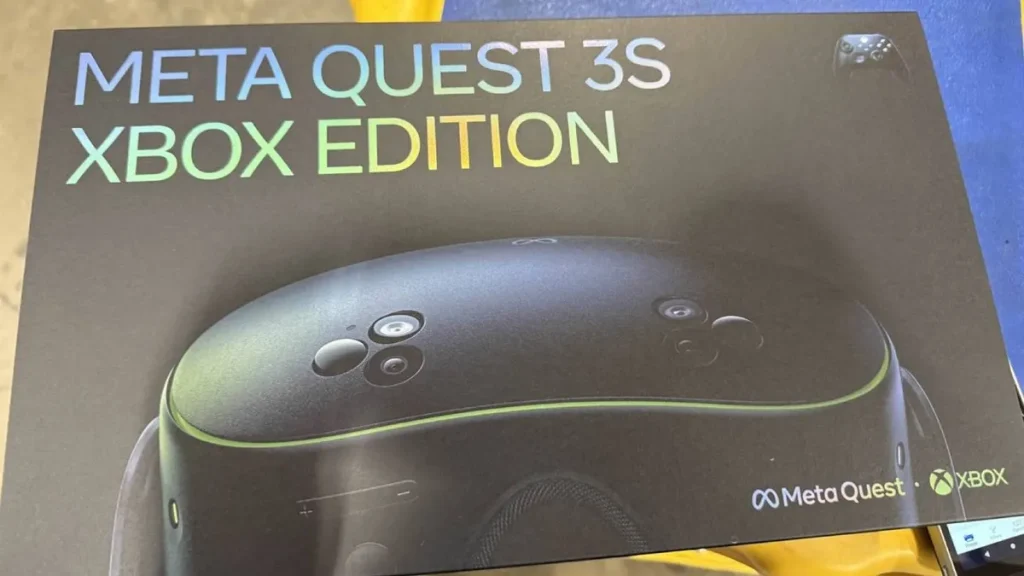
Image: @RJdoesVR
Previously, Meta announced the open-sourcing of its virtual reality headset operating system—renamed Meta Horizon OS—alongside a partnership with ASUS, Lenovo, and Microsoft’s Xbox brand to co-develop future VR devices. According to emerging reports, the Meta–Microsoft collaboration will take the form of a co-branded virtual reality headset, built upon the existing Meta Quest 3S. This edition will feature Xbox-branded elements, bundled with an Xbox wireless controller, a Quest Elite head strap, and a three-month trial of the Xbox Game Pass Ultimate subscription. The suggested retail price is expected to be $399, with a potential unveiling as early as June 24.
Although neither Meta nor Microsoft has officially confirmed this news, if accurate, it would mark Xbox’s inaugural foray into hardware collaboration within the virtual reality space—potentially signaling a new chapter for Microsoft in its broader integration of cloud gaming, subscription services, and cross-platform experiences.
Following partnerships with Ray-Ban and Oakley to produce smart eyewear, Meta appears to be deepening its hardware ambitions by expanding into the gaming realm. Collaborating with Microsoft’s Xbox—an established force in gaming content and brand recognition—strengthens Meta’s push to increase Quest’s appeal among console gamers.
Based on known specifications, this co-branded Quest 3S retains the original hardware setup, including 128GB of storage and an integrated processor. The primary distinction lies in the software and accessory integration: the Xbox wireless controller and bundled Xbox Game Pass Ultimate subscription will offer users seamless access to Xbox platform titles in a fully immersive environment.
While existing Meta Quest users may not upgrade solely for a co-branded version, Xbox gamers yet to explore virtual reality may view this as a tailored entry point. With familiar branding and controllers, the device lowers the barrier to adoption and creates a new overlap in the user base for both Meta and Microsoft.
Furthermore, this headset may serve as an extension of Microsoft’s broader “console-free” gaming strategy, given the company’s growing focus on cloud gaming through Xbox Game Pass. In a world where access to a screen and internet connection suffices to enter the Xbox ecosystem, pairing it with a VR headset can dramatically enhance immersion.
This partnership exemplifies a broader industry trend toward open platforms and shared hardware ecosystems. Particularly as Apple’s Vision Pro enters the arena, Meta must solidify its leadership in the mid-tier VR market. Meanwhile, Xbox stands to amplify its brand reach through this collaboration.
If the rumors prove accurate, the co-branded Quest 3S will be available for pre-order starting June 24, launching simultaneously in markets including the United States, Canada, the United Kingdom, and Germany, with subsequent expansion into India, Mexico, and the Middle East.
Related Posts:
- Bluetooth Eavesdropping Threat Exposed: New “BlueSpy” Exploit Targets Popular Headsets
- VPN No More: Xbox Targets Gamers Buying Games from Cheaper Regions
- Xbox AI Boost: Copilot for Gaming, Play Anywhere Hits 1,000 Game
- Copilot for Gaming: Microsoft Begins Beta Testing AI Assistant for Xbox
Support Our Threat Intelligence
Find our tech and OS security coverage helpful? Support our work today and unlock a 100% ad-free reading experience!
 Buy Me a Coffee
