Android 16 Update: AI Notification Summaries & Gemini-Powered Accessibility Suite
 Do Son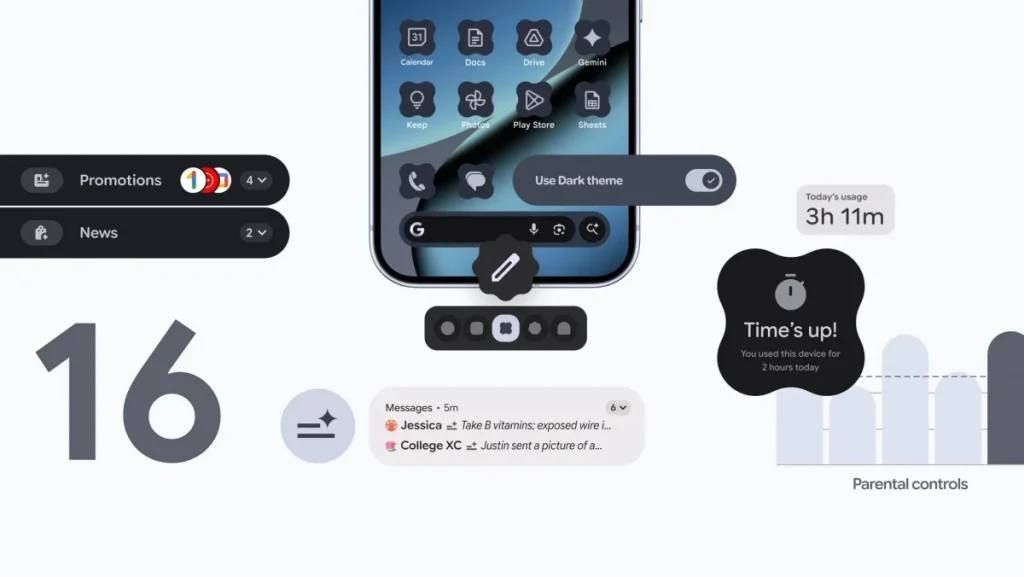
Following the release of its stable build in June, Google has now issued the second major update to Android 16. This update introduces a suite of AI-driven features for Pixel devices and, on the eve of the International Day of Persons with Disabilities, significantly enhances the operating system’s accessibility experience.
One of the headline additions is AI-powered notification summaries, a feature akin to Apple Intelligence. Leveraging on-device AI, the system can distill lengthy messages and sprawling group chats into concise highlights, allowing users to grasp the essentials at a glance.
In tandem, the new Notification Organizer automatically silences and categorizes low-priority alerts—such as news pushes and promotional messages—reducing unnecessary interruptions.
On the security front, Google Messages can now proactively filter group invitations from unknown numbers and offers a one-tap block-and-report option. Circle to Search also gains anti-scam capabilities: users can simply circle a suspicious message, and the AI will analyze it for fraud indicators and provide relevant guidance.
Android 16 further expands interface customization. Users may now alter the shape of home-screen icons—square, rounded-square, and more—and the system can enforce Themed Icons across all apps, finally resolving the long-standing inconsistency in visual styling.
A new Expanded Dark Theme allows the system to force unsupported apps into a dark interface, improving eye comfort and conserving battery life. Parental controls have also been integrated directly into Settings, simplifying the management of children’s screen time and app permissions.
To mark the International Day of Persons with Disabilities, Android 16 introduces a robust suite of accessibility upgrades:
- TalkBack with Gemini: Powered by Gemini’s language understanding, users can dictate and edit text using natural phrases (e.g., “Change Monday to Tuesday”) and even ask the AI to shorten messages.
- Guided Frame enhancements: The Pixel camera’s audio guidance now provides richer scene descriptions and can alert users when a face is detected, helping visually impaired users frame photos more accurately.
- AutoClick: For users who operate Android with a mouse, the system can now trigger automatic clicks after cursor dwell, with customizable click types—reducing physical strain.
- Expressive Captions: System captions now indicate speakers’ emotions (such as “happy” or “sad”) and environmental audio cues, enabling deaf and hard-of-hearing users to better experience video context.
- Call Reason: Currently in beta, this feature lets callers tag their outgoing call as “urgent,” allowing recipients to see the designation even if they miss the call.
These features will roll out first to eligible Pixel devices, with broader availability across the Android ecosystem to follow.
Related Posts:
- Google Boosts Accessibility with AI: Enhanced TalkBack, Captions, and More
- Android 16 & Gemini AI Unleashed: Google’s Pre-I/O Powerhouse
- Popular Chinese Text Editors Compromised in Targeted Attack
Support Our Threat Intelligence
Find our tech and OS security coverage helpful? Support our work today and unlock a 100% ad-free reading experience!
 Buy Me a Coffee
