The Accessibility Lockdown: How Android 17’s Advanced Protection Mode Ends API Exploitation
 Do Son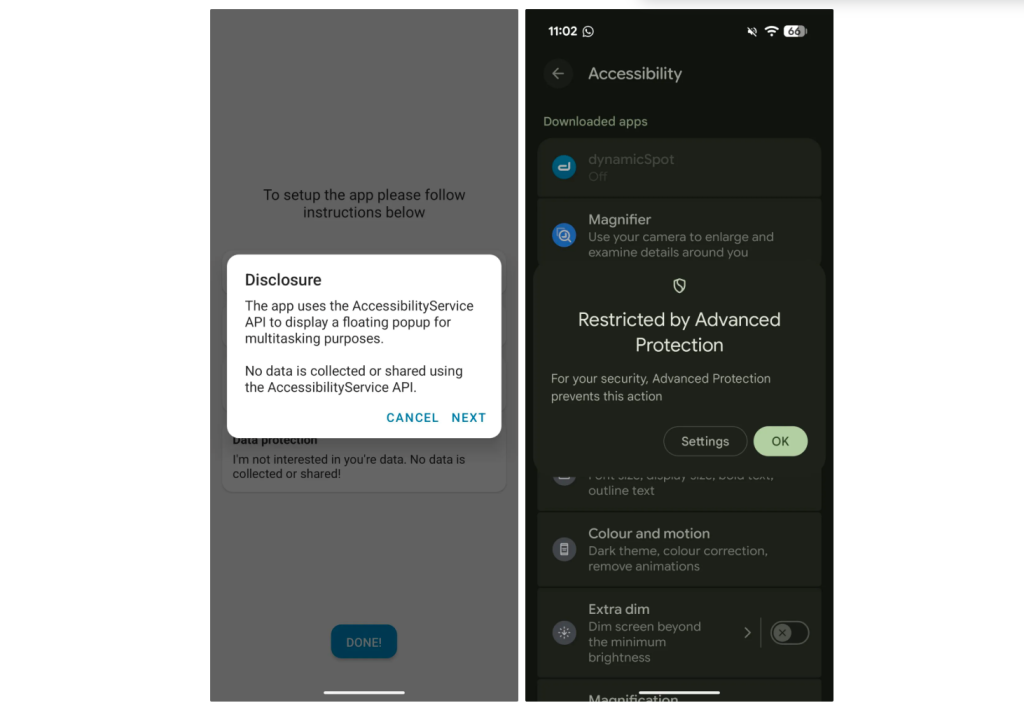
Android’s Accessibility suite was ingeniously architected by Google to empower patrons with disabilities, endowing instruments such as screen readers, vocal dictation utilities, and interfaces with elevated systemic privileges—empowering them to autonomously orchestrate clicks and labyrinthine interactions on the user’s behalf.
Presently, however, these very accessibility conduits are succumbing to rampant exploitation. A multitude of applications, utterly devoid of genuine accessibility mandates, increasingly commandeer the Accessibility API to execute their machinations. Admittedly, a fraction of these interventions are willingly sanctioned by patrons, epitomized by the autonomous circumvention of intrusive launch advertisements.
Yet, the indiscriminate bestowal of such formidable privileges precipitates catastrophic security vulnerabilities. The digital theater has already borne witness to malicious architectures deceiving patrons into surrendering these rights, subsequently weaponizing them to summon a relentless deluge of advertisements, autonomously interact with said promotions, and covertly install a myriad of illicit applications. Consequently, Google is now orchestrating a decisive stratagem within the Android Advanced Protection Mode (AAPM): categorically embargoing extraneous applications from invoking the Accessibility API, thereby fiercely prioritizing systemic integrity and monumentally constricting the attack surface.
AAPM manifests as a formidable paradigm inaugurated by Google within the Android 16 epoch. Upon its invocation, the apparatus ascends to a profoundly fortified security posture, capable of repelling intensely labyrinthine cyber incursions and dramatically elevating the overarching inviolability of the Android ecosystem.
Within the canonical support dossiers of Android 17, Google unequivocally decrees: any application failing to secure classification as an authentic accessibility instrument shall be categorically banished from wielding the Accessibility API, whereas rigorously vetted accessibility utilities shall remain unburdened by this draconian stricture.
According to Google’s sovereign taxonomy, solely screen readers, switch-based input conduits, vocal dictation instruments, and Braille interfaces are consecrated as legitimate accessibility tools. Antivirus architectures, automation utilities, digital auxiliaries, surveillance applications, systemic purifiers, cryptographic password vaults, and launchers are resolutely excluded from this venerated pantheon.
Should a patron have previously bequeathed accessibility privileges unto extraneous applications prior to igniting AAPM, the sheer act of activating this fortified mode shall autonomously and irrevocably revoke those unwarranted authorizations.
In a profound endeavor to thwart phishing machinations, Google categorically denies patrons the liberty to forge bespoke exceptions. Once AAPM is actively reigning, denizens are utterly stripped of the capacity to manually grant accessibility privileges to unrelated applications, unless they elect to entirely abandon the sanctuary of AAPM.
In its totality, this nascent security paradigm shall leave the vast constituency of lay patrons profoundly unmolested, given that such users customarily eschew the invocation of AAPM (which severely hobbles web traversal by ruthlessly interdicting JavaScript executions). For those denizens who fervently pursue absolute digital inviolability, the constriction of the attack surface reigns supreme; thus, the sacrifice of pedestrian convenience upon the altar of impenetrable security is deemed a profoundly worthy exchange.
Support Our Threat Intelligence
Find our tech and OS security coverage helpful? Support our work today and unlock a 100% ad-free reading experience!
 Buy Me a Coffee
