 Do Son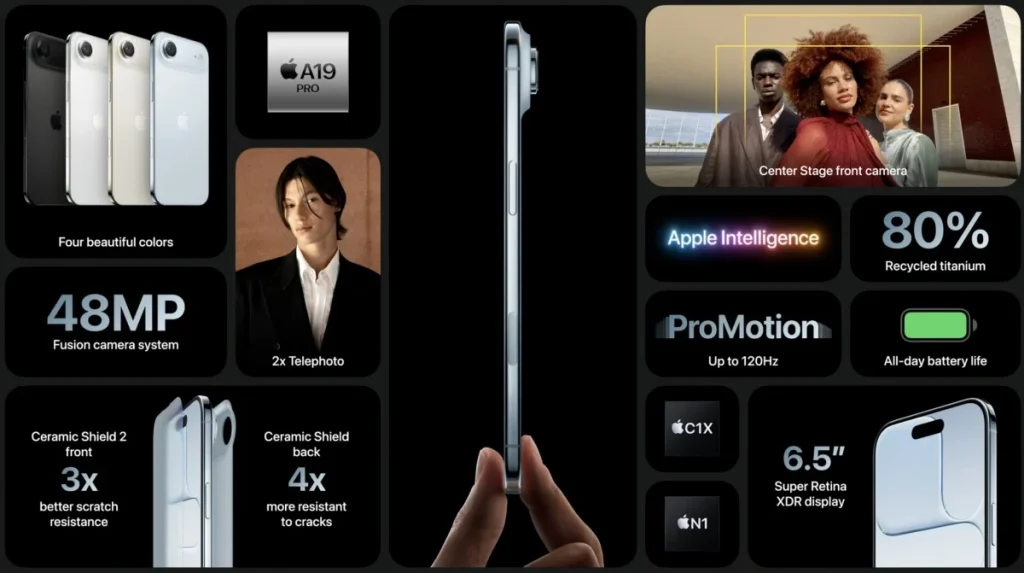
Wi-Fi 6 employs a channel bandwidth of 160 MHz, whereas Wi-Fi 7, introduced by the Wi-Fi Alliance, expands support to 320 MHz channels, delivering significantly greater performance. However, Apple’s in-house N1 network chip does not support the 320 MHz bandwidth.
The Advantages of Wi-Fi 7’s 320 MHz channels include
- Higher throughput: The wider bandwidth enables the transfer of larger volumes of data, thereby boosting overall network speed.
- Lower latency: Expanded capacity reduces delays, enhancing real-time experiences such as online gaming and video conferencing.
- Improved performance in congested environments: In device-dense settings, broader channels help mitigate interference and sustain more reliable performance.
At its launch event, Apple highlighted the debut of its self-designed N1 network chip, though without disclosing detailed specifications. The N1 is intended to replace Broadcom’s wireless solutions, which Apple had long relied upon for Bluetooth and Wi-Fi functionality.
Regulatory filings reviewed by MacRumors indicate that the iPhone 17 Pro Max supports Wi-Fi standards 802.11a/ax/be with bandwidths of 20/40/80/160 MHz. This confirms that the N1 chip’s maximum channel width is capped at 160 MHz.
Apple’s previously deployed Broadcom chips also topped out at 160 MHz, meaning the transition to the N1 does not yield an immediate leap in Wi-Fi performance. Nonetheless, by adopting its own silicon, Apple stands to enhance inter-device connectivity and stability across its ecosystem, even if peak wireless throughput remains unchanged.
Related Posts:
- Beyond Qualcomm and Broadcom: Apple’s In-House Chips Take Over iPhone Connectivity
- The Largest DDoS Attack in History: Cloudflare Fights Back
- Microsoft reveals massive DDoS attack in November 2021: Peak traffic up to 3.47Tbps
- Kaspersky Lab’s Report Reveals Surge in Black Friday Shopping Threats
Support Our Threat Intelligence
Find our tech and OS security coverage helpful? Support our work today and unlock a 100% ad-free reading experience!
 Buy Me a Coffee
