AWS Transform: Agentic AI Automates Legacy Code Modernization and Reduces Technical Debt
 Do Son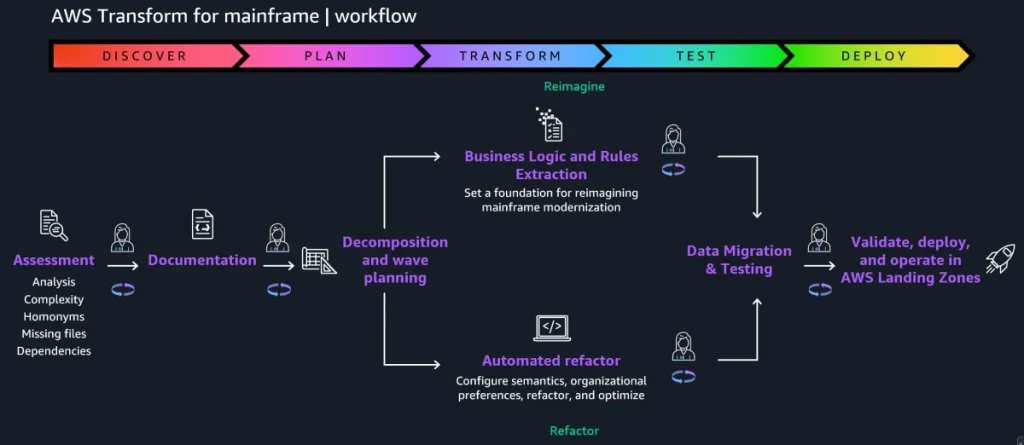
At the re:Invent 2025 conference, AWS announced a sweeping enhancement to its application-modernization service, AWS Transform, introducing a new suite of Agentic AI capabilities designed to tackle the long-standing problem of technical debt—manual modernization tasks that often consume nearly 30% of an enterprise IT team’s time.
As technologies evolve—whether through software upgrades, infrastructure changes, or shifts in hardware environments—IT teams frequently find themselves burdened with labor-intensive work: migrating data, porting services to new platforms, or rewriting legacy code so that systems can function properly in more modern environments. For many engineers, this has become a recurring nightmare.
The updated AWS Transform aims to dramatically reduce this workload through agentic automation. AWS states that the new features not only accelerate modernization for Windows .NET, VMware, and mainframe environments but also introduce a powerful Custom capability, enabling enterprises to modernize proprietary languages, frameworks, and internal syntaxes—saving valuable time and reallocating resources toward innovation.
The centerpiece of this update is AWS Transform’s new custom modernization capability. Many organizations still rely on outdated, highly specialized languages or frameworks that cannot be easily converted using standard tools. With dedicated agentic AI, the system can learn and perform consistent, high-quality code transformations across common languages such as Java, Node.js, and Python—even extending to a company’s bespoke codebases.
Official data shows that AWS Transform Custom can modernize hundreds or even thousands of applications at speeds up to five times faster than traditional manual workflows, while its feedback-driven agents continuously refine and optimize their performance.
Real-world examples include:
- Air Canada: Coordinated and executed modernization for thousands of AWS Lambda functions within days, reducing project time and cost by 80%.
- QAD: Cut a two-week modernization process down to just three days, saving more than 7,500 developer hours annually.
- Thomson Reuters: Achieved automated migration of 1.5 million lines of code per month, lowering costs by 30%.
For enterprises built around the Microsoft ecosystem, AWS Transform now provides full-stack modernization for Windows environments. Agentic AI analyzes the complete software stack—.NET applications, SQL Server databases, UI frameworks, and the OS layer—then produces a coherent migration blueprint.
Once approved, the agent executes the transformation, migrating systems to open-source and cloud-native alternatives—such as moving from Microsoft SQL Server to PostgreSQL. AWS notes that this not only accelerates modernization but can also reduce operational costs by up to 70% by eliminating expensive licensing dependencies.
For traditional mainframe systems, AWS Transform introduces three new AI agents capable of deep code analysis, extracting business rules, and automatically generating technical documentation. A new task-planning agent can also produce test plans and automation scripts—tasks that historically consumed half of a modernization project’s timeline.
In the realm of VMware migration, the agentic capabilities streamline large-scale asset inventory, network-migration planning, and full workflow orchestration from assessment through deployment. The system can even process unstructured inputs—such as documents and chat logs—to help shape migration strategies, while offering enhanced support for network and security ecosystems including Cisco ACI, Fortigate, and Palo Alto Networks.
AWS has also launched the AWS Transform Composability program, enabling partners such as Accenture, Capgemini, and Pegasystems to integrate their proprietary tools and knowledge bases into AWS Transform—empowering industry-specific modernization workflows, particularly in highly regulated sectors such as finance.
Related Posts:
- Google’s Agentic AI Security Team Develops Framework to Combat Prompt Injection Attacks
- Trend Micro Fortifies AI Security: Integrates NVIDIA Agentic AI Safety for End-to-End Protection
Support Our Threat Intelligence
Find our tech and OS security coverage helpful? Support our work today and unlock a 100% ad-free reading experience!
 Buy Me a Coffee
