 Do Son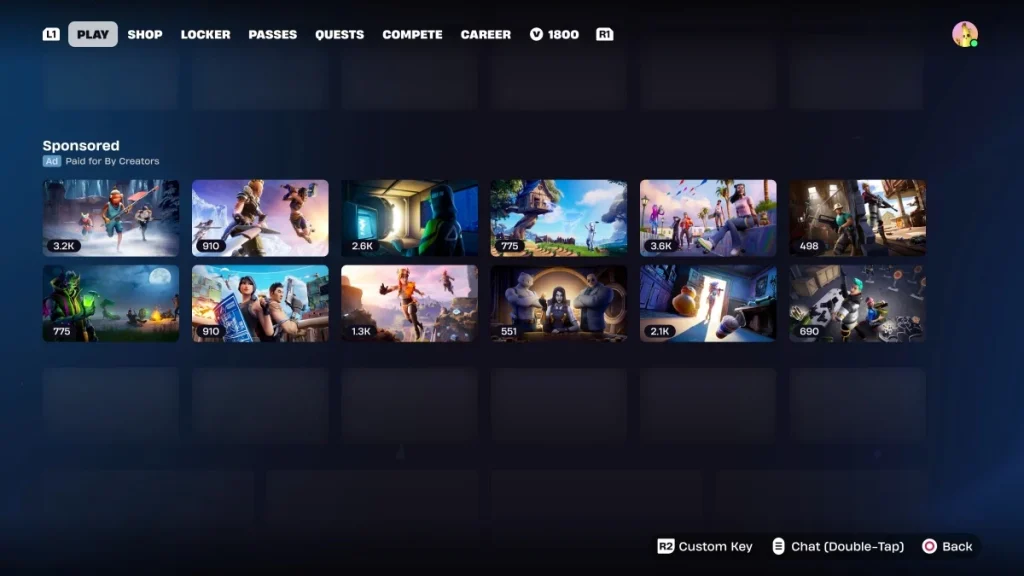
To transform Fortnite into more of a creative and social platform, Epic Games has announced that creators will now be able to sell in-game items directly and share in the real revenue generated from player purchases made with the virtual currency V-Bucks. This new policy marks another significant shift in Epic’s monetization model, following its earlier decision to reward creators based on player engagement time, and is clearly aimed at competing with Roblox’s established “creator economy.”
According to Epic Games, developers will soon be able to use the Unreal Editor for Fortnite tool and the new Verse API to design both consumable and permanent items, which can then be sold within the custom “islands” they build.
On revenue sharing, Epic has set the standard split at 50% of V-Bucks sales for creators. To further accelerate early adoption, however, from December 2025 through the end of 2026, creators will temporarily retain 100% of item sales revenue, keeping the entirety of their earnings.
Epic highlighted that the 50% share is substantially higher than Apple’s App Store, which offers developers only 30%, while also covering the costs of servers, content moderation, design, and overall operations.
When converting to cash, Epic calculates revenue by taking the total amount players spend on V-Bucks (minus platform fees ranging from 12% to 30%) and dividing it by the monthly V-Buck usage, thereby establishing the currency’s effective value. As a result, a 50% share equates to roughly 37% of retail spend, while the temporary 100% translates to about 74%—still considerably higher than Apple’s payout.
In addition to item sales, Epic will launch a “Sponsored row” in the Discover page, enabling developers to pay for the promotion of their islands to attract more players. New community tools will also allow creators to host forums, publish updates, and deepen engagement with their audiences, fostering more vibrant and loyal player communities.
The move underscores Epic’s ambition to evolve Fortnite beyond its origins as a battle royale title, positioning it instead as a large-scale creative platform akin to Roblox—one designed to capture both younger and older audiences for longer periods of time.
Related Posts:
- Fake Game Hacks on YouTube Target Kids with Malware
- 100 hacking organizations aimed at sabotaging the British economy and stealing government secrets
- Epic Games blames the Meltdown CPU bug for Fortnight downtime
- Apple Revises U.S. App Store Rules After Court Ruling in Epic Games Case
- Sharp Stealer: New Malware Targets Gamers’ Accounts and Online Identities
Support Our Threat Intelligence
Find our tech and OS security coverage helpful? Support our work today and unlock a 100% ad-free reading experience!
 Buy Me a Coffee
