 Do Son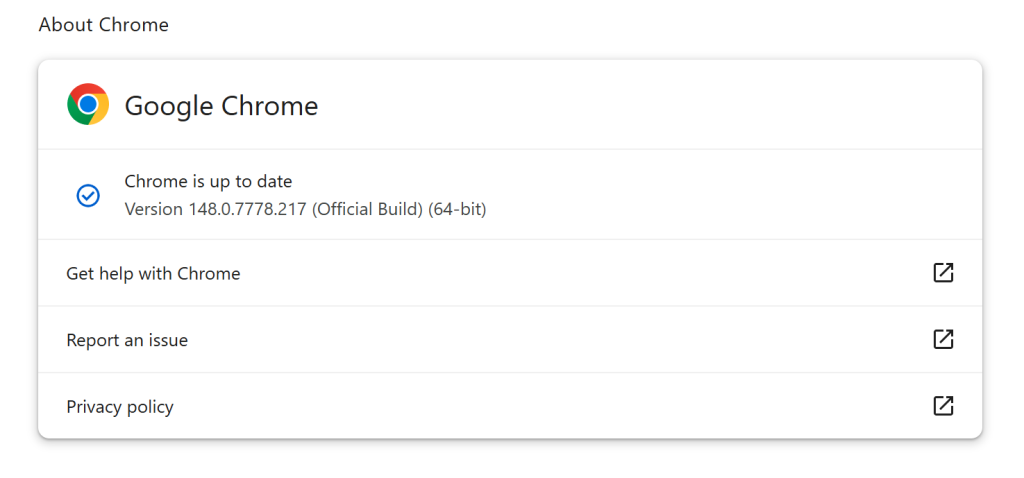
Google recently pushed a major software modification to its millions of global desktop users. Specifically, the technology giant distributed a massive Google Chrome security update to prevent remote execution exploits. The new software rollout upgrades the browser to version 148.0.7778.216/217 for Windows systems. Additionally, Mac and Linux users will receive corresponding installation packages over the coming weeks. Because this release resolves an unprecedented number of flaws, users should update their local installations immediately. Consequently, corporate deployment teams are prioritizing this update cycle to shield enterprise workloads.
Overview of the Extensive Security Release
External Research Contributions
To begin with, the defensive patch incorporates a massive total of 151 security fixes. Many of these important fixes came from independent researchers through the company’s reward program. For example, a researcher named cinzinga reported two critical flaws in late April. These discoveries earned the researcher individual bounty payments of 43,000 dollars each. However, Google maintains strict access limits on the bug trackers for now. This restriction remains active until a majority of the user base installs the safe update.
Deep Dive into Critical Vulnerabilities
Memory Corruption in Graphics and Core Components
In addition, the update eliminates several critical memory corruption bugs within the browser backend. For instance, CVE-2026-9872 represents an out-of-bounds write flaw in the GPU subsystem. Meanwhile, CVE-2026-9873 describes a severe use-after-free issue inside the core network architecture. Furthermore, anonymous researchers uncovered high-risk memory flaws within the Dawn rendering layer and WebGL components. Attackers often exploit these precise anomalies to slip past traditional browser sandboxes. Therefore, applying this Google Chrome security update effectively closes these dangerous entry vectors.
Google’s Internal Vulnerability Discovery Campaign
Severe Flaws and Core Library Safeguards
Concurrently, Google’s internal security engineering teams discovered numerous critical flaws during automated fuzzing routines. The internal findings include multiple use-after-free bugs located in the ANGLE graphics engine. Specifically, these flaws track under CVE-2026-9877 and CVE-2026-9878. Additionally, the internal review uncovered an integer overflow bug inside the same subsystem. Moreover, engineers patched similar memory-handling issues within the Bluetooth, Base, and Proxy modules. As a result, this coordinated effort delivers critical security fixes across the entire user environment.
Broader Impact and High-Severity Threats
V8 Engine and Graphics Engine Deficiencies
Subsequently, the software vendor resolved several high-severity errors that carry widespread operational risks. For example, external researchers discovered an out-of-bounds write flaw in the V8 JavaScript engine. Similarly, external partners identified use-after-free conditions within the DOM layer and accessibility frameworks. Furthermore, teams from Microsoft and OpenAI contributed valuable research to secure the codebase. Specifically, pwn2addr discovered a high-severity use-after-free bug in the DOM component. Ultimately, compiling these cross-industry contributions helps solidify browser defense.
Actionable Remediation Guidance
Enforcing Automatic Update Procedures
To conclude, users must restart their web browsers to apply the pending security changes successfully. Most desktop installations will download the necessary binaries automatically in the background. However, administrators can manually check for the new version via the application settings menu. Enforcing these procedures guarantees immediate protection against potential in-the-wild exploitation. Thus, keeping your browser updated remains the single most effective baseline security practice.
Support Our Threat Intelligence
Find our vulnerability reports and weekly recaps helpful? Support our work today and unlock a 100% ad-free reading experience!
 Buy Me a Coffee
