Google Launches Private AI Compute for Pixel 10, Blending Cloud Power with On-Device Privacy
 Do Son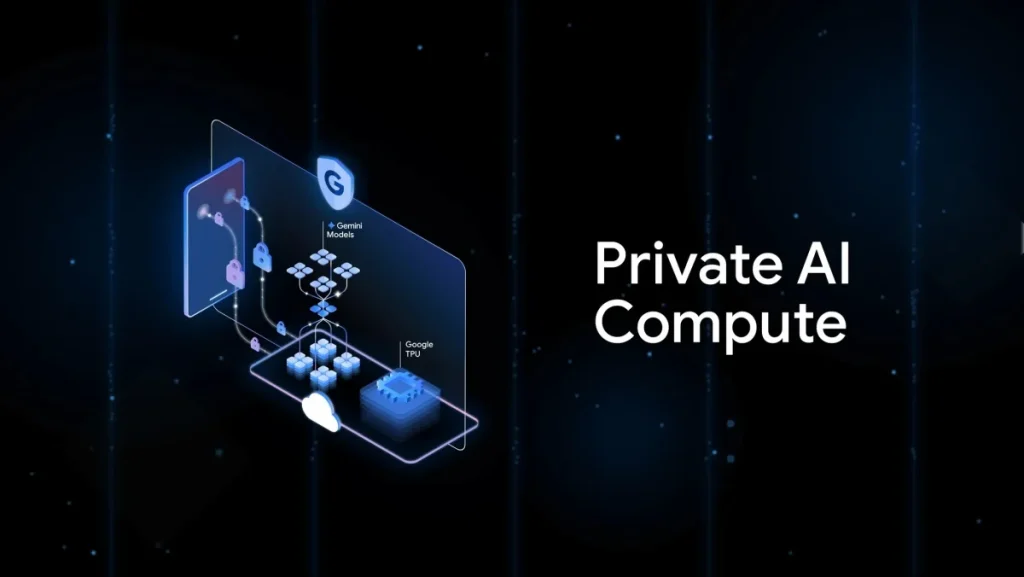
Google has announced the launch of a new cloud-based architecture called Private AI Compute, designed to enable users to perform advanced AI computations on their devices while maintaining full data privacy. This platform unites the immense processing power of Google’s cloud-based Gemini models with the security and privacy guarantees traditionally associated with on-device processing.
The concept closely mirrors Apple’s “Private Cloud Compute”, unveiled at WWDC 2024, which leverages Apple Silicon to deliver secure and private “Apple Intelligence” services across both cloud and device environments.
Private AI Compute operates on Google’s custom Tensor Processing Units (TPUs) within a seamlessly integrated single Google stack. Its core security mechanism centers on the Titanium Intelligence Enclaves (TIE) architecture, which ensures an exceptional level of privacy and protection. Through a combination of remote authentication and end-to-end encryption, user devices connect to a hardware-protected, “sealed” cloud environment.
Google emphasizes that any sensitive data processed through Private AI Compute remains fully isolated from user accounts — even Google itself cannot access it — thereby guaranteeing the confidentiality of user information.
The newly launched Pixel 10 series will be the first line of devices to incorporate this technology. Powered by Private AI Compute, these smartphones will deliver more advanced AI-driven experiences, including:
- Magic Suggest — a feature offering real-time, contextually relevant suggestions.
- Recorder enhancements — expanded transcription capabilities across more languages, along with automatic content summarization.
To bolster public confidence, Google announced that Private AI Compute will be included in its Vulnerability Rewards Program (VRP). Moreover, in pursuit of greater transparency, Google will allow external verification of remote authentication processes and plans to expand third-party auditing by making portions of its source code and binaries openly inspectable.
This move signals Google’s intention to rival Apple in setting the benchmark for AI privacy standards, adopting an equally proactive and open approach to secure AI computing.
Related Posts:
- Google Boosts Real-Time Protection Against Scams and Malware on Android Devices
- Android AI Scam Defense Blocks 10 Billion Monthly Threats; Users 58% More Likely to Avoid Scam Texts Than iOS
- 7 Android & Pixel Vulnerabilities Exposed: Researcher Publishes PoC Exploits
- Google Pixel Phones Exposed: Millions at Risk Due to Pre-Installed App Vulnerability
Support Our Threat Intelligence
Find our tech and OS security coverage helpful? Support our work today and unlock a 100% ad-free reading experience!
 Buy Me a Coffee
