 Do Son
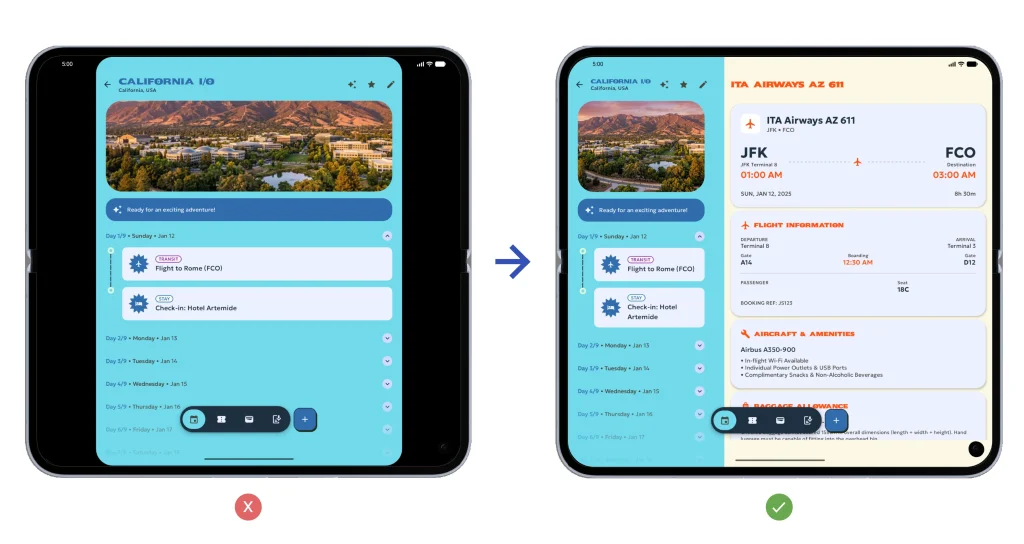
Google recently updated its storefront policies to elevate mobile user experiences across large-screen hardware. Specifically, the revised Google Play foldable standards require standard Android applications to achieve at least Tier 3 adaptive quality starting in April 2027. Apps that fail this baseline cannot launch on the store or publish future updates. Furthermore, non-compliant listings will suffer reduced store visibility across devices.
Additionally, developers submitting new titles or refreshing store pages must upload three dedicated foldable screenshots. Recognizing higher graphical complexity, Google granted mobile games an extended transition timeline. Consequently, baseline foldable mandates for gaming titles take effect in August 2027.
Preserving User State When Unfolding or Rotating Screens
Within Google’s tiered framework, Tier 3 establishes the essential baseline for large-screen compatibility. First, applications must fill the entire available display area naturally. Programs can no longer display cramped, narrow phone interfaces flanked by unsightly black letterbox bars when unfolded.
Second, software must preserve active user state seamlessly whenever someone folds, unfolds, or rotates their device. As outlined in the official Android Developers announcement on Google Play adaptive quality standards, continuity remains paramount. Specifically, applications must retain key session elements without interruption:
- Navigation Context: Current scroll positions and active page views must remain intact.
- User Input: Unsubmitted text entries and form drafts cannot vanish during screen transitions.
- Media Playback: Active audio or video streams must continue playing from their exact timestamps.
- Ongoing Tasks: Background workflows and active interactions must proceed without forced app reloads.
Higher Adaptation Tiers Unlock Greater Store Visibility
Beyond basic compliance, Google established Tier 1 and Tier 2 benchmarks to reward deeper multi-pane and posture-aware designs. Developers who optimize for these upper tiers unlock substantially higher search rankings on large-screen devices. Moreover, qualifying teams can apply for an official Google Play foldable quality badge. When tablet or foldable owners search the catalog, badged applications enjoy prominent placement and stronger organic discovery.
Planning Your Android Adaptive Roadmap Early
Conversely, meeting only Tier 3 requirements grants zero algorithmic visibility boosts. Worse still, falling short of Tier 3 actively restricts storefront reach and blocks software maintenance. Therefore, Android engineering teams should audit their layouts and state-restoration logic well ahead of the 2027 deadlines. Ultimately, targeting Tier 1 or Tier 2 transforms a mandatory compliance hurdle into a major competitive advantage.
Support Our Threat Intelligence
Find our tech and OS security coverage helpful? Support our work today and unlock a 100% ad-free reading experience!
 Buy Me a Coffee
