 Do Son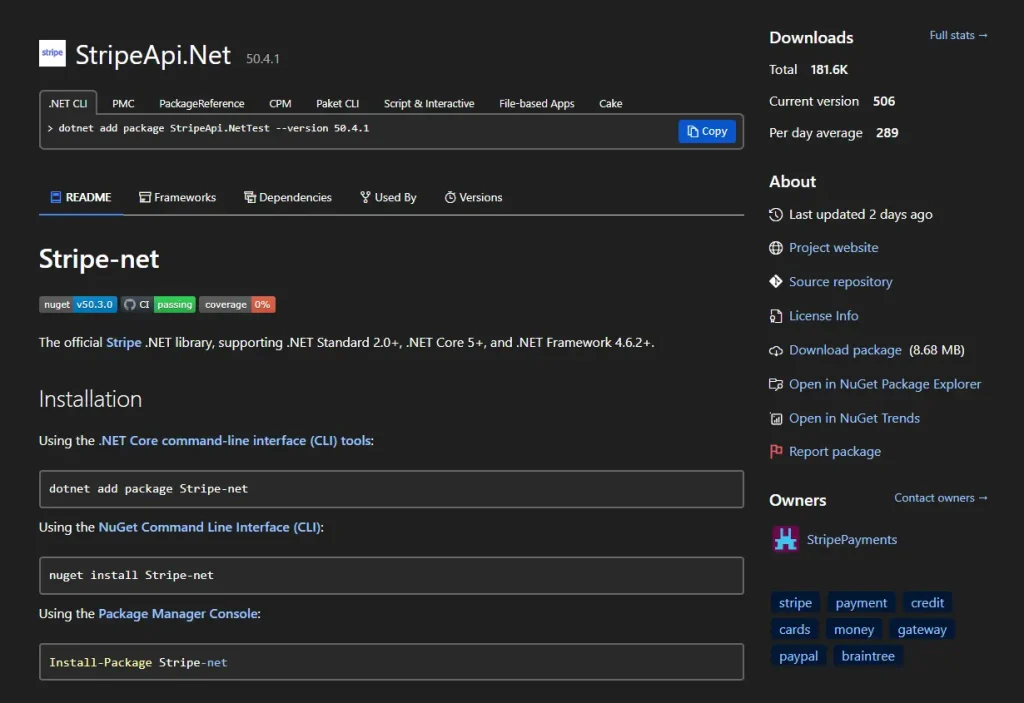
Fake package | Image: ReversingLabs
Late last year, the cybersecurity community was put on high alert when the ReversingLabs research team uncovered a malicious NuGet campaign targeting developers linked to major cryptocurrency platforms like Coinbase, Binance, and Solana. Following that discovery, the malicious activity appeared to temporarily subside. However, it turns out the attackers were simply changing their targets.
According to a newly released report by ReversingLabs, researchers have recently discovered a malicious package mimicking the highly popular Stripe.net library. This latest incident reveals that “while the threat actors have shifted away from blockchain-related targets on NuGet, they remain active and focused on the financial sector”.
Stripe is a ubiquitous online financial services platform that handles the heavy lifting of internet commerce, allowing businesses to securely accept payments, process credit cards, and manage subscriptions. To make integrating these services as seamless as possible for .NET programmers, the company provides the official Stripe.net NuGet package.
This official helper library is exceptionally popular, having amassed “more than 74 million downloads since its release”. By creating a malicious package that mimics this trusted tool, threat actors are attempting to poison the software supply chain, hoping developers will accidentally integrate the fake package into applications designed to communicate with Stripe’s online payments API.
Supply chain attacks that rely on typosquatting or package impersonation are notoriously challenging to catch with the naked eye. As the ReversingLabs report emphasizes, “Detecting threats like StripeAPI.net is difficult”.
As threat actors continue to refine their supply chain attacks and move toward traditional financial infrastructure, verifying the integrity of open-source components before they enter the development environment is no longer just a best practice—it is an absolute necessity.
Support Our Threat Intelligence
Find our threat intelligence and malware analysis helpful? Support our work today and unlock a 100% ad-free reading experience!
 Buy Me a Coffee
