 Do Son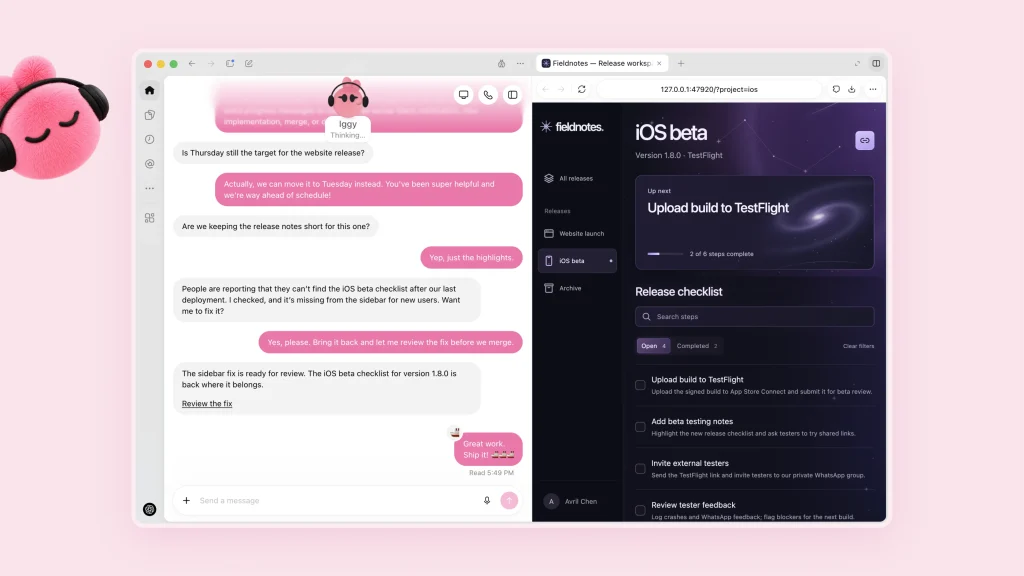
OpenAI Unveils Dots, the Always-On Assistant
OpenAI has formally revealed the persistent AI assistant that was once rumored under the codename “O.” Its name is Dots.
OpenAI positions the system as proactive and online around the clock. In the background, it handles tedious chores for the user. Better still, it can prepare results before anyone asks. For example, it can notice a forgotten invoice and send it once the user grants permission.
A Private Cloud Computer and Cross-Platform Teamwork
The boldest feature is simple. Every assistant owns a cloud computer and a browser. Through plugins, it interacts with more than 4,000 applications.
Beyond the ChatGPT interface, Dots integrates deeply with Slack and Microsoft Teams. Therefore, users can talk to a Dot and assign tasks right inside their workplace chat tools.
The design goes further. Users can open the Dots computer at any time to watch its progress. They can even authorize it to connect remotely to their own local PC. From there, the two can work together.
From One Assistant to an AI Team
Dots first opens to Pro, Business Premium, and Enterprise subscribers in select markets. Eligible users receive one free primary Dot, which supports naming and customization. In addition, they get unlimited conversations inside ChatGPT. Usage caps for Codex and Work still apply.
OpenAI’s vision reaches further. It plans to let users command a team of several Dots at once. A scientist could assign one Dot to gather experimental data and fold it into a paper. Likewise, a developer could let Dots collect user feedback, then write debugging code and new features automatically.
Stronger Safety Boundaries and Permission Controls
Many people worry that AI agents may spin out of control. OpenAI therefore stresses the safeguards in Dots.
During proactive research in the background, the tools Dots uses stay strictly read-only. Dots cannot send messages, change app content, or control the browser on its own.
Account sign-in works differently. Verification can finish without exposing passwords to the underlying model. Users can also write custom rules. These rules define which actions Dots may run alone and which need a human click to approve.
From Chat Box to Virtual Desk
The launch marks the start of the multi-agent era. It also answers Meta’s recent Muse release and Manus 2.0. Both stress cloud computers and group-chat collaboration.
Dots signals a shift. AI has evolved from a librarian who answers questions into a digital employee with its own desk and computer.
A separate cloud environment marks a key watershed in this wave of AI. It solves the system compatibility and security risks that agents faced when they ran locally. Moreover, it gives the AI the physical conditions for nonstop operation.
A New Role for Workers
Someday, people may direct a whole team of Dots. Personal productivity would then multiply. Our work would shift from content producer to AI project manager.
The Open Question of Data Boundaries
Yet new worries follow. An AI that moves often between the cloud and a local PC, with access to 4,000 apps, blurs old lines. How should companies redefine their data boundaries?
NVIDIA has just announced a hardware-level protection platform for AI agents. It may aim squarely at the threats that powerful, autonomous agents like Dots can pose.
Support Our Threat Intelligence
Find our tech and OS security coverage helpful? Support our work today and unlock a 100% ad-free reading experience!
 Buy Me a Coffee
