
 Do Son
Although Google’s Gemini AI has long been capable of analyzing images, PDF files, and even uploaded videos,...
Latest news

ThreatFabric has uncovered RatOn, a newly developed Android banking trojan that merges traditional overlay fraud with NFC...

Rockwell Automation has issued a security advisory for a critical vulnerability in its Stratix industrial Ethernet switches,...

Today, SAP released 21 new Security Notes and 4 updates as part of its monthly Security Patch...

Beginning in July 2025, several high-profile companies reported breaches of their Salesforce CRM (Customer Relationship Management) systems,...

Intel is currently advancing its 14A process node (equivalent to 1.4 nanometers)—the company’s first manufacturing technology designed...

After recently announcing the expansion of its “AI Mode” search feature to more than 180 countries and...

The popular streaming platform Plex was recently the target of a cyberattack that resulted in a database...

On September 8, Intel announced that Michelle Johnston Holthaus—who has served the company for more than 30...

Storage device manufacturer SanDisk has recently announced a 10% price increase across all consumer products and channel...

Tracked as CVE-2023-23947 (CVSS score of 9.1), the bug exists due to improper authorization, was introduced in Argo CD version v2.3.0-rc1

CVE-2022-39952 could allow unauthenticated threat actors to execute unauthorized code or commands via specifically crafted HTTP requests
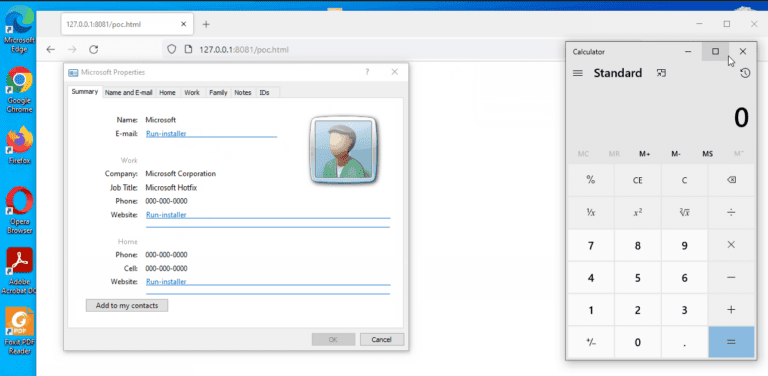
A technical analysis of the CVE-2022-44666 bug was published and a PoC exploit has now been created on the Github page.

CVE-2023-0662 is a remote unauthenticated Denial of Service vulnerability and affects the default/production configuration.

an authenticated attacker could exploit the CVE-2023-20009 vulnerability to execute arbitrary commands as root.

Tracked as CVE-2023-20032 with a CVSS score of 9.8, the critical bug exists because of improper bounds checking

This post introduces an effective solution to avoid the “cloned hard disk shows wrong size” issue. It also provides several effective troubleshooting methods

RCE Security has been credited with discovering and reporting the bug on January 13 that's been assigned the identifier CVE-2023-0291

An attacker could exploit CVE-2023-25725 to bypass HAProxy's headers processing, thus, could smuggle HTTP requests to the backend server
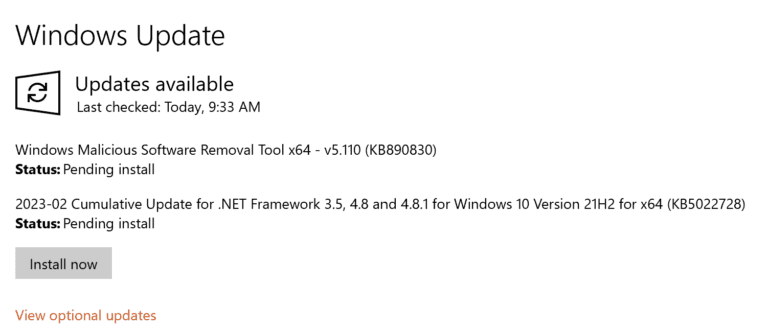
By executing a specially-crafted program, an authenticated attacker could exploit CVE-2023-21823 to gain SYSTEM privileges.

Excellent tips and tricks that you can effectively use during your journey as a programming student to...

Language translation has become a high-demand service as a result of globalization and legal and regulatory requirements,...

CVE-2023-23529, the issue has been described by the tech giant as a type confusion issue in the WebKit browser engine
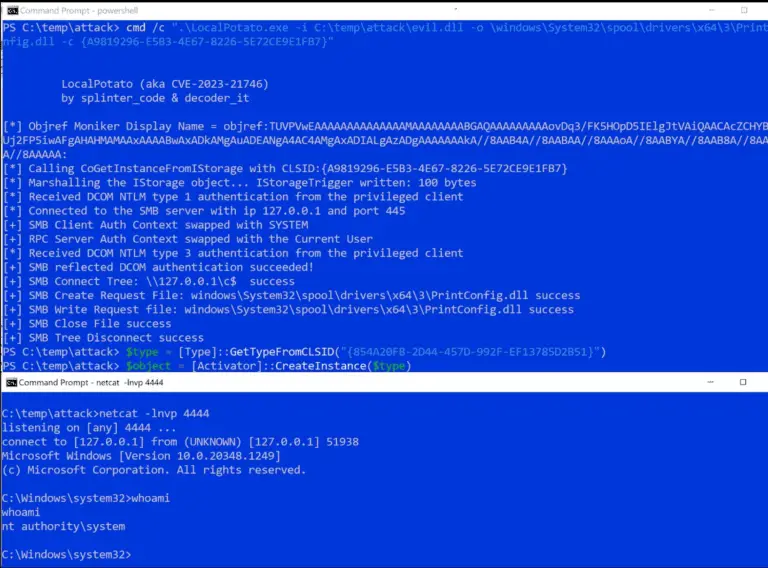
Two security researchers Andrea Pierini & Antonio Cocomazzi announced the release of PoC exploits code targeting the CVE-2023-21746 flaw

Namecheap has its mail system hacked. Some users found that they received a phishing email from hello@namecheap.com.

CVE-2023-20076 (CVSS score of 7.2) exists because of incomplete sanitization of parameters passed in for activation of an application

There are so many applications out there that help out in daily life to such a degree...

The Internet has changed us completely. The way we live, communicate, work, and even go to sleep...

Tracked as CVE-2023-25194, Apache Kafka could allow a remote authenticated attacker to execute arbitrary code on the system

In today’s fast-paced business world, closing deals quickly and efficiently is more important than ever. The ability...

It’s no secret that businesses today rely more on technology. From managing day-to-day operations to communicating with...

Starting a marketing agency can be an exciting and rewarding experience. But it also comes with its...