State-Sponsored Actors Operationalize ROADtools Framework in Cloud Campaigns
 Do Son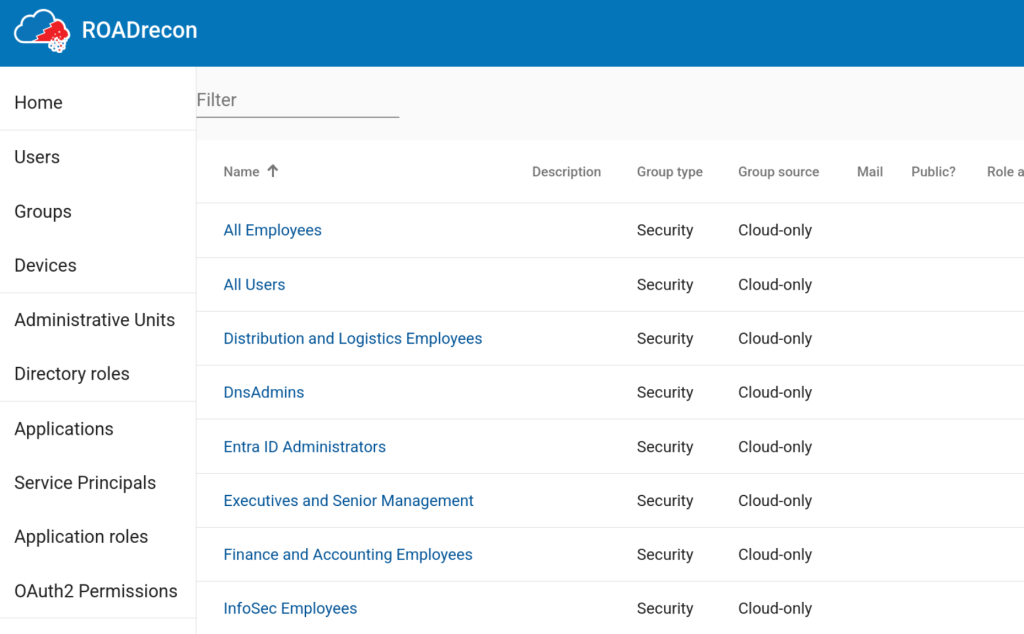
Entra ID Groups in the ROADtools web interface | Image: Unit 42
Security analysts have released a comprehensive analysis regarding specialized offensive tools in modern network breaches. Specifically, hackers are weaponizing the ROADtools cloud attack toolkit to infiltrate secure corporate infrastructure. This toolkit targets the identity and authentication layers of prominent cloud environments. According to the published threat intelligence report, several advanced persistent threat groups leverage this framework for long-term persistence. Consequently, defenders must deploy specific behavioral detection capabilities to protect active cloud environments.
Dissecting the Toolkit Infrastructure
Internal Reconnaissance and API Migration
To begin with, the framework utilizes modular code structures to map out target infrastructure. For instance, the reconnaissance module gathers organizational data and identity configurations from Entra ID platforms. The report states that “ROADtools is a publicly available toolkit for offensive and defensive security purposes that attackers have integrated into cloud attacks.” Initially, the tool queried the Azure AD Graph API. However, Microsoft retired that legacy endpoint. This change caused development fragmentation across various community repositories. Nevertheless, community forks still successfully enumerate user objects and directory roles.
Advanced Token Manipulation Logic
In addition, the framework features a powerful token exchange module called roadtx. This component enables attackers to interact directly with authentication endpoints. Specifically, it supports multiple authentication flows including device code techniques and on-behalf-of requests. Therefore, threat actors can effortlessly replay stolen session assets to maintain persistence. The library layer also streamlines these activities by abstracting low-level communication complexities. As a result, malicious actors can easily bypass multi-factor authentication defenses.
Stealth Exploitation Tactics
Evading Traditional Security Monitoring
Furthermore, the design permits threat groups to operate underneath standard verification layers. The official threat report explains that “To avoid detection, ROADtools operates through legitimate Microsoft APIs and can mimic typical traffic.” Operators can also customize request attributes like user-agent strings to look authentic. Consequently, these configuration options prevent common automated defensive alerts from firing during internal discovery actions. This flexibility transforms a standard research script into an effective stealth attack asset.
Tracking Nation-State Activity Clusters
Historically, highly sophisticated state-sponsored syndicates have operationalized this specific infrastructure. For example, Microsoft tracked a prominent group known as Cloaked Ursa utilizing the tool in late 2021. This campaign used precise spear phishing before conducting internal tenant exploration. Subsequently, the Iranian threat group Curious Serpens deployed identical discovery tools during active intrusions in 2023.
More recently, threat intelligence teams detected the ROADtools cloud attack toolkit during an extensive phishing wave in early 2025. During that event, an actor named UTA0355 registered unauthorized rogue devices to steal Microsoft Graph API tokens.
Recommendations for Defensive Hardening
To secure corporate networks, security managers must update their diagnostic hunting queries. Administrators should look for unusual user-agent strings interacting with core administrative APIs. Furthermore, teams must monitor unauthorized device registrations to neutralize token manipulation attempts. Ultimately, building robust visibility around cloud identity transactions remains the best strategy to block advanced persistence.
Support Our Threat Intelligence
Find our threat intelligence and malware analysis helpful? Support our work today and unlock a 100% ad-free reading experience!
 Buy Me a Coffee
