Stealth & Persistence: MuddyWater’s New Rust-Based Payload Mimics Cloudflare and Reddit
 Do Son
While financially motivated cybercrime often dominates the headlines, state-sponsored espionage operates quietly in the background, prioritizing stealth and persistence over quick payouts. A new threat report from Genians shines a light on the evolving tactics of Advanced Persistent Threat (APT) groups operating out of the Middle East, with a specific focus on the notorious MuddyWater syndicate.
The analysis reveals a highly patient adversary targeting government and critical national infrastructure, not just regionally, but expanding across Europe, Asia, and North America.
According to the report, the geopolitical landscape is directly fueling these campaigns, transforming the region into a hotspot for state-backed hacking.
“The Middle East serves as a strategic cyber threat hub where state-sponsored APT activities are highly concentrated. Attacks originating from the Middle East prioritized long-term infiltration and intelligence collection over short-term gains.” — Genians Report
To breach these high-value targets, the attackers aren’t necessarily relying on complex zero-day exploits. Instead, they are manipulating the human element and exploiting legacy IT environments.
“Abuse of RMM tools and macro-based attacks were primary initial access vectors used by Middle Eastern APT groups.” — Genians Report
By weaponizing Remote Monitoring and Management (RMM) software and relying on social engineering, these actors blend in with normal administrative traffic, making their initial foothold incredibly difficult to spot.
The Genians researchers provided a technical breakdown of a recent campaign attributed to MuddyWater. The attack chain begins with a deceptive Word document—interestingly named Cybersecurity.doc—which acts as the initial lure.
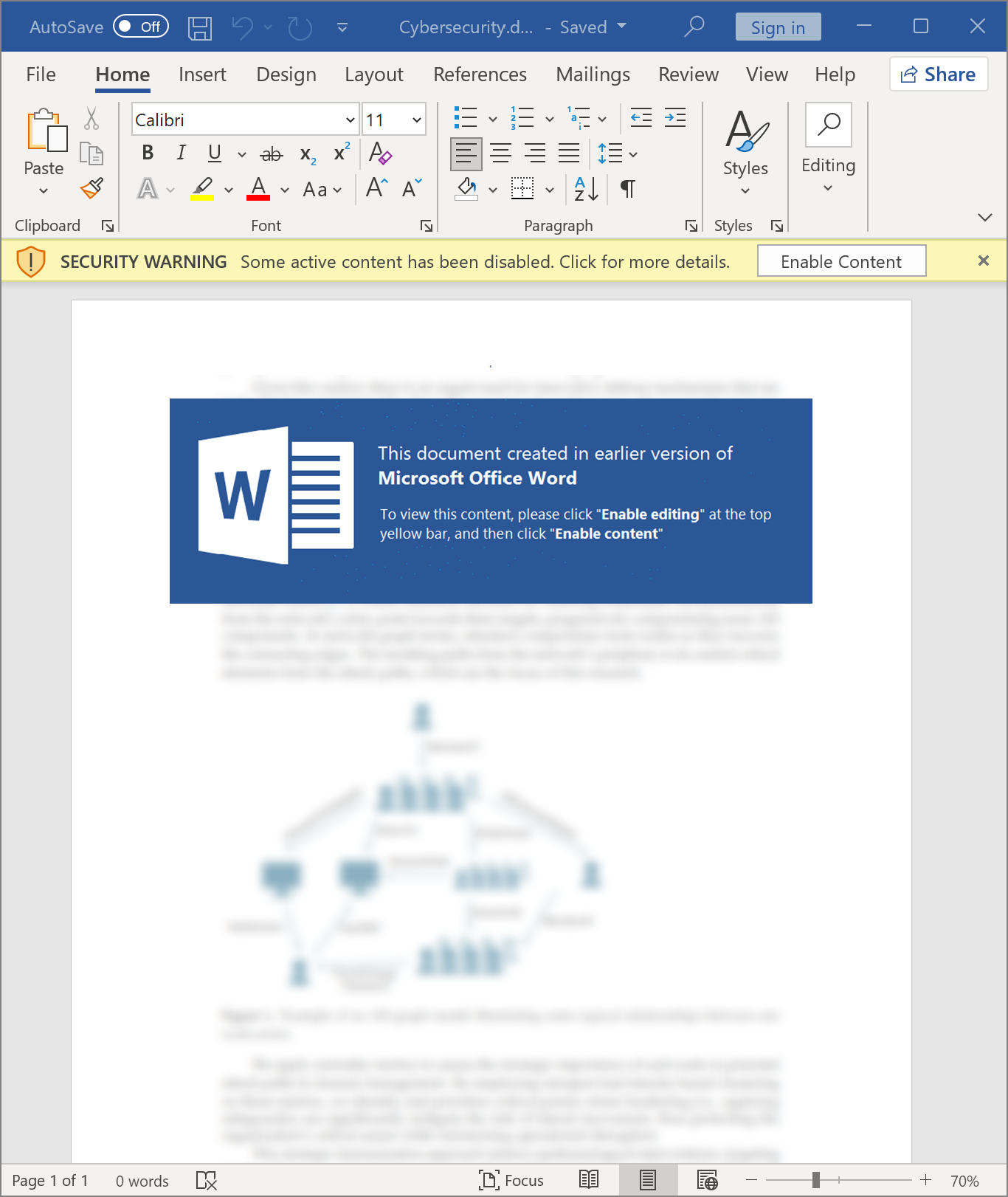
Once the victim opens the document and enables macros, the malware uses string obfuscation to create a WScript.Shell COM object. This quietly executes a command (cmd.exe /c Certificationkit.ini) entirely hidden from the user’s view.
The payload itself is a masterclass in disguise. The Certificationkit.ini file is actually a 64-bit executable file compiled in Rust. To further trick the user and the system, the executable is internally named reddit.exe and uses a legitimate-looking Cloudflare icon.
Once active, this Rust-based payload reaches out to its Command and Control (C2) server at nomercys.it[.]com to catalog the victim’s installed security products and await further instructions.
The continued success of groups like MuddyWater highlights a fundamental shift in defensive strategy. Because these attackers use valid tools and legitimate-looking macros to gain entry, traditional firewalls are often blind to the intrusion.
“Based on these findings, the MuddyWater APT group continues to employ tactics that use DOC file-based VBA macros as an initial intrusion vector, while leveraging Rust-based malicious payloads to conduct reconnaissance and information gathering on compromised systems.” — Genians Report
The report explicitly warns that “perimeter-based detection has clear limitations” against these types of user-driven attacks. For organizations in the crosshairs, transitioning to robust, endpoint behavior-based detection (EDR) is no longer optional—it is a critical necessity to catch these sophisticated, long-term infiltrations before the data disappears.
Support Our Threat Intelligence
Find our threat intelligence and malware analysis helpful? Support our work today and unlock a 100% ad-free reading experience!
 Buy Me a Coffee
