The 2nm Revolution: Samsung Unveils the Exynos 2600 with All–Big-Core Power & HPB Cooling
 Do Son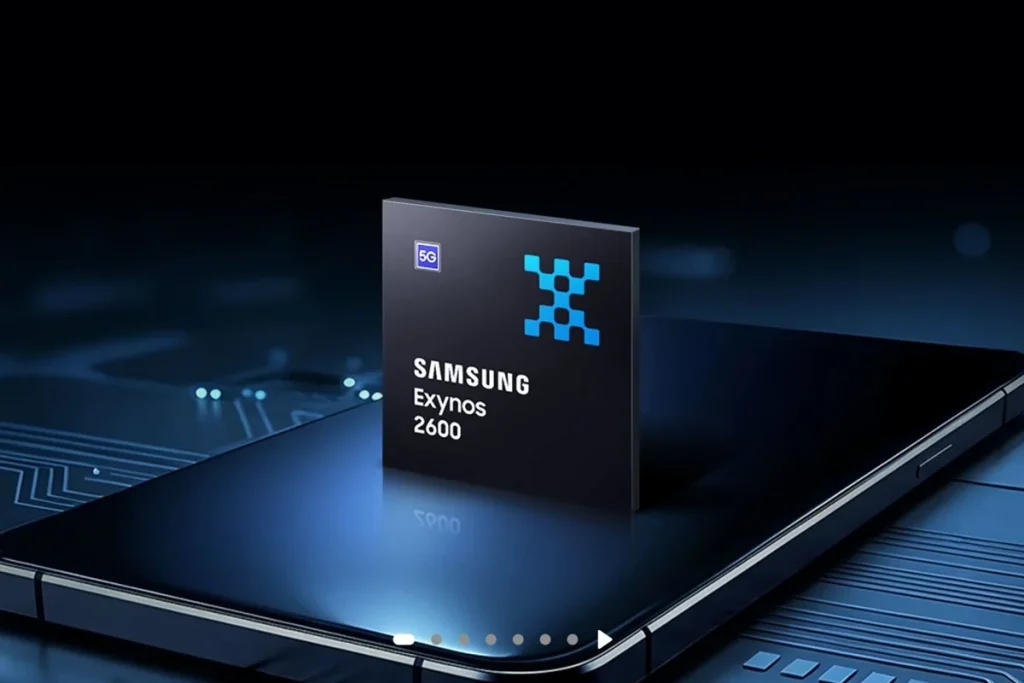
As the process-node rivalry between TSMC and Intel intensifies, Samsung has finally entered the fray with a flagship mobile processor built on its in-house 2nm GAA process: the Exynos 2600, which likewise adopts an all–big-core design.
Not only is this chip Samsung’s first large-scale mass-produced product based on its 2nm GAA (Gate-All-Around) process, it also represents a major architectural shift. Following in the footsteps of Qualcomm and MediaTek, Samsung has, for the first time, embraced an all–big-core CPU architecture, completely abandoning the traditional small-core design.
In addition, Samsung has highlighted the introduction of an innovative cooling solution known as HPB (Heat Path Block), aiming to shed its long-standing reputation for excessive heat generation and to demonstrate the maturity of its 2nm process. Although the Exynos 2600 retains Samsung’s familiar 10-core configuration, its core composition has been fundamentally reworked. The chip entirely discards the previous efficiency-core approach in favor of a pure all–big-core strategy, built on Arm’s latest Armv9.3 instruction set and the C1-series CPU architecture. The configuration includes one C1-Ultra prime core clocked at 3.8 GHz, three C1-Pro cores running at 3.25 GHz, and an additional six C1-Pro cores operating at 2.75 GHz.
This arrangement is clearly designed to compete head-on with Qualcomm’s Snapdragon 8 Elite Gen 5 and MediaTek’s Dimensity 9400 and 9500 series in multitasking workloads and high-intensity gaming scenarios. On the graphics front, Samsung continues its collaboration with AMD’s RDNA architecture, deploying the new Xclipse 960 GPU. Samsung claims a twofold increase in compute performance over the previous generation, alongside a 50% boost in ray-tracing performance. More notably, the chip introduces ENSS (Exynos Neural Super Sampling), an AI-driven upscaling and frame-generation technology positioned as a counterpart to NVIDIA DLSS and AMD FSR.
In terms of AI performance, the Exynos 2600 is equipped with a 32K MAC NPU. Samsung asserts that generative AI performance has improved by up to 113 times compared with the Exynos 2500. The processor also integrates hardware-level hybrid post-quantum cryptography (PQC), reinforcing data security in the AI era.
The image signal processor (ISP) has likewise been enhanced with AI-based Visual Perception Sensing (VPS), enabling real-time detection and optimization of details in photos and videos while reducing power consumption by 50%. Support for image sensors of up to 320 megapixels further suggests that Samsung’s upcoming Galaxy S26 series may feature significantly higher-resolution cameras. To address the thermal challenges inherent to an all–big-core design and a 2nm process, Samsung has introduced its HPB cooling technology.
This technology incorporates High-K dielectric materials to strengthen internal heat conduction pathways. According to official data, HPB reduces thermal resistance by 16%, allowing waste heat to be transferred more efficiently to external cooling components—an essential factor in sustaining prolonged peak performance without throttling. In my view, the launch of the Exynos 2600 carries two layers of significance.
First, it signals Samsung’s product strategy for the upcoming Galaxy S26 lineup. Current market rumors suggest that the Exynos 2600 will be limited to specific regions—such as Europe and South Korea—for the Galaxy S26 and Galaxy S26+ models. The top-tier Galaxy S26 Ultra, as well as most global variants, is still expected to rely on Qualcomm’s Snapdragon 8 Elite Gen 5. This implies that while Samsung has confidence in its own silicon, it remains cautious in deploying it across its highest-end flagship models worldwide.
Second, and more importantly, the Exynos 2600 serves as a “living advertisement” for Samsung’s 2nm GAA process. At a time when its foundry business is under pressure, Samsung urgently needs a mass-produced product to validate the yield, performance, and power efficiency (PPA) of its 2nm technology. If the Exynos 2600 delivers strong performance alongside effective thermal control, it could significantly bolster Samsung’s prospects of securing future advanced-node foundry orders from Apple, NVIDIA, AMD, and other major clients.
Conversely, if the specter of overheating resurfaces, it would only compound the challenges facing Samsung’s foundry operations.
Related Posts:
- A New Race for Silicon: Apple Secures Half of TSMC’s 2nm Chip Production
- Next-Gen Power: iPad Pro Gets Vapor Chamber Cooling for M6 Chip
- Microsoft’s Microfluidics Breakthrough: A New Era for AI Cooling
Support Our Threat Intelligence
Find our tech and OS security coverage helpful? Support our work today and unlock a 100% ad-free reading experience!
 Buy Me a Coffee
