Turf War in Your Living Room: ‘Katana’ Botnet Hijacks Android TV Boxes with Custom Rootkits
 Ddos
Ddos 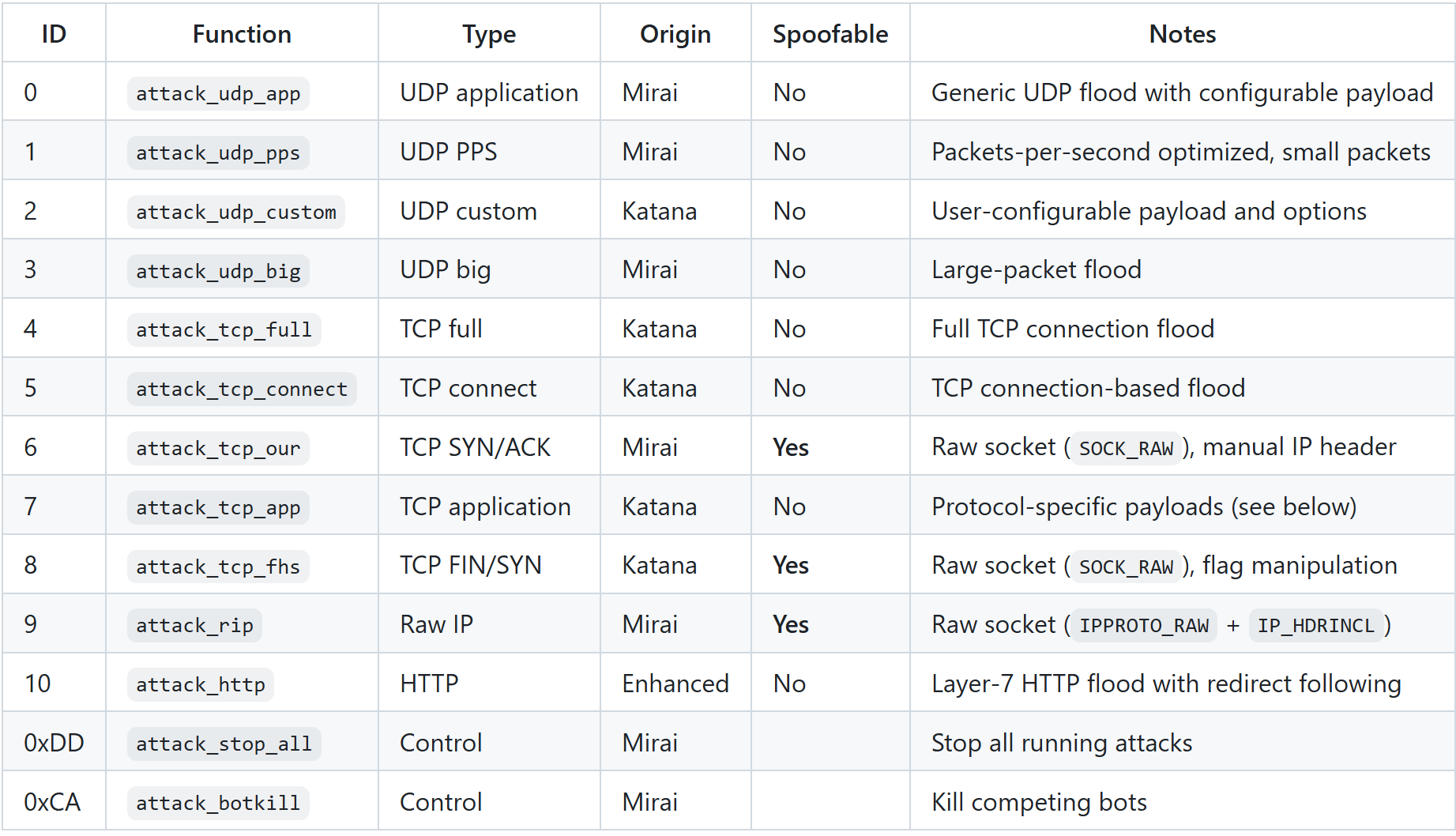
A specialized report from the Nokia Deepfield Emergency Response Team (ERT) has identified a sharp escalation in the battle for control over unmanaged Android TV set-top boxes. The newcomer, a Mirai variant dubbed Katana, is currently engaged in a “turf war” against rival botnets, utilizing aggressive “bot-killing” techniques to seize territory within the growing residential proxy landscape.
Unlike previous generations of IoT malware, Katana stands out for its technical agility—specifically its ability to compile its own custom rootkit directly on the victim’s device to ensure long-term, invisible persistence.
The primary targets for Katana are low-cost, unbranded Android TV boxes. These devices typically run the Android Open Source Project (AOSP) and lack critical security features like Google Play Protect or official Google certification.
The economics of the attack are startlingly simple. Attackers purchase residential proxy subscriptions to gain a foothold in home networks, which then allows them to exploit unauthenticated Android Debug Bridge (ADB) interfaces.
“The economics are straightforward: for the cost of a residential proxy subscription, an operator gains access to tens of millions of AOSP devices with unauthenticated remote shell access without writing a single exploit.”
Because these vulnerable devices are a finite resource, Katana has been programmed with a killed policy toward competitors. To secure its bot Katana employs an aggressive bot killer and performs ADB port remapping to lock out other operators.
“Katana’s aggressive bot killer and ADB port remapping reflect an ongoing turf war: multiple botnet operators are now fighting each other for control of the same pool of devices, and the devices’ owners are not part of the conversation.”
What truly sets Katana apart from standard Mirai derivatives is its sophisticated approach to kernel-level persistence. While most IoT botnets operate entirely in userspace, Katana ships with the TinyCC compiler to build a Loadable Kernel Module (LKM) rootkit specifically for the host’s kernel version.
This “on-device compilation” strategy solves a major compatibility hurdle for attackers:
- Compatibility: Pre-compiled modules must match the target’s kernel exactly.
- Stealth: By compiling the rootkit using headers found on the device, Katana ensures a perfect fit, making it nearly impossible to detect through standard tools.
- Resourcefulness: The malware trades a slightly larger binary size for the ability to infect a vast diversity of Android TV hardware and firmware builds.
Interestingly, despite its innovation in rootkit deployment, the Nokia ERT found that Katana—like many of its offensive peers—remains tethered to older network protocols. The botnet uses raw sockets with IP_HDRINCL to enable source IP spoofing, but all attack methods are strictly IPv4-only.
“IPv6 adoption, it appears, remains slow even on the offensive side of the internet.”
As the residential proxy market continues to provide a cheap gateway for these “turf wars,” the Nokia ERT emphasizes that unbranded, uncertified IoT hardware represents a massive, poorly defended attack surface.
Recommended Security Actions:
- Verify Hardware: Stick to Google-certified Android TV products that include Play Protect.
- Disable ADB: Ensure that “Network Debugging” or ADB is disabled in the developer settings of all home entertainment devices.
- Network Hygiene: Regularly check your router’s connected devices list for unrecognized hardware that may have been “enslaved” by these competing botnets.
Support Our Threat Intelligence
If you find our CVE report and cybersecurity news helpful, consider supporting our work.
 Buy Me a Coffee
PayPal
Buy Me a Coffee
PayPal
