Vibe Coding the Apocalypse: McAfee Uncovers AI-Generated Malware Scaling Global Attacks
 Ddos
Ddos 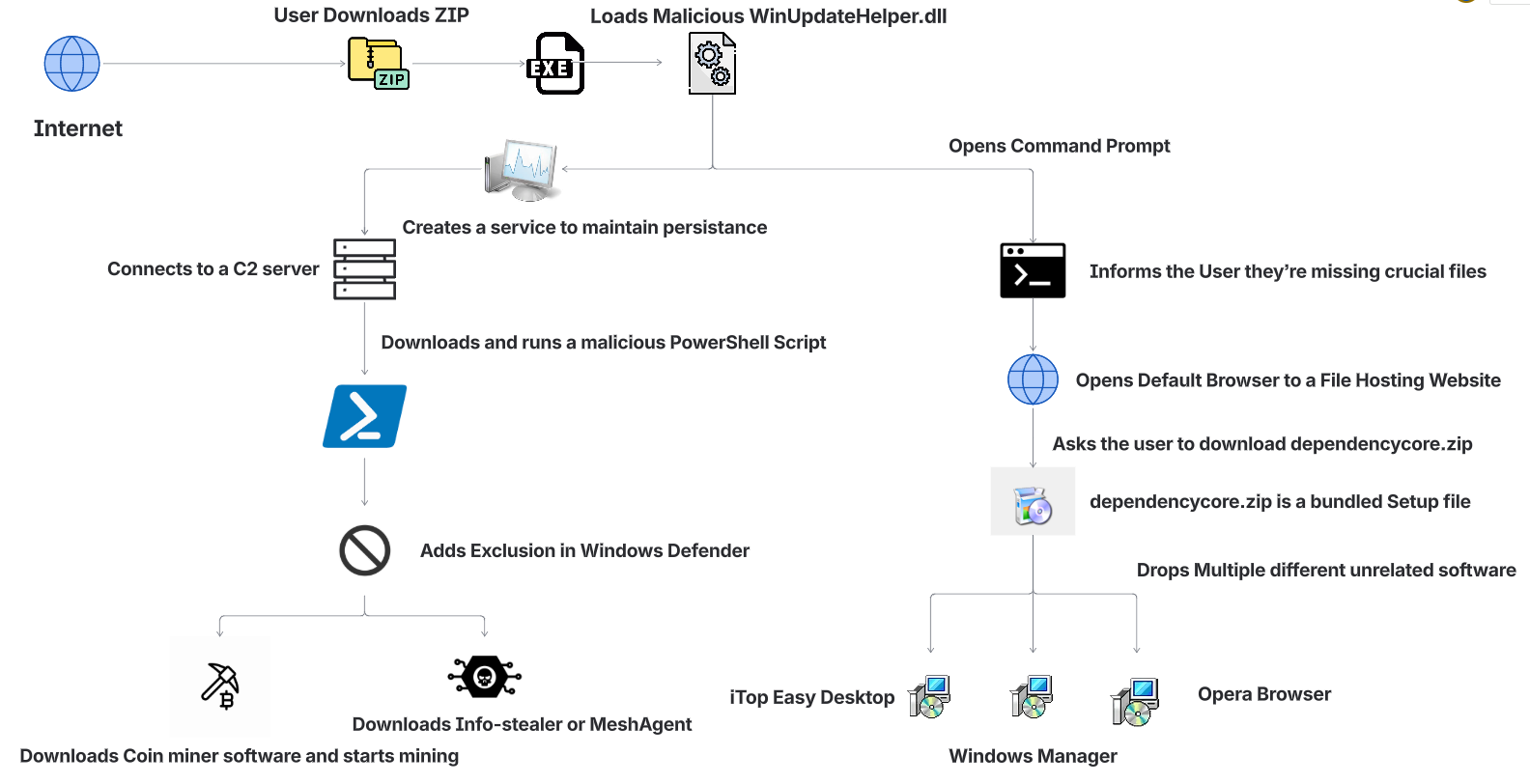
A widespread malware campaign has been caught casting a massive net across the internet, hiding malicious code inside fake downloads for everything from Roblox mods to AI voice changers. While the “fake download” trick is one of the oldest in the book, McAfee Labs researchers have uncovered a modern twist: the attackers appear to be using Large Language Models (LLMs) to help write and scale their attacks.
This discovery suggests that “vibe coding”—where a person describes what they want and an AI generates the code—is now being leveraged by cybercriminals to lower the effort needed to launch sophisticated campaigns.
The attackers identified by McAfee didn’t just target one niche; they created over 443 malicious ZIP files and used more than 1,700 unique filenames to lure in victims. The bait categories included:
- Gaming Tools: Cheats, executors, and game mods.
- AI-Themed Tools: Image generators and voice changers.
- System Utilities: VPNs, emulators, and graphics drivers.
- Finance: Stock-market and trading utilities.
These files were distributed through trusted platforms like Discord, SourceForge, and FOSSHub, making them appear legitimate to users who were already looking for unofficial or hard-to-find software.
What tipped researchers off to the use of AI? It wasn’t just the sheer volume of the campaign, but the “fingerprints” left inside the code itself.
McAfee found certain PowerShell scripts with explanatory comments that “looked more like AI-generated instructions than the kind of shorthand attackers usually leave for themselves”. In one glaring oversight, a script still contained a placeholder referring to “your GitHub URL,” suggesting the attacker had copied a template generated by an AI without fully cleaning it up.
While this doesn’t mean an AI invented the attack from scratch, it proves that “AI may be helping cybercriminals lower the effort needed to build malware and launch attacks”.
When a user runs the fake download, a complex, multi-stage infection begins:
- DLL Sideloading: A hidden file, often WinUpdateHelper.dll, starts the real attack while the user thinks they are just installing a tool.
- The Distraction: To keep the user busy, the malware may display a fake “missing dependency” message and redirect them to download unrelated software like the Opera browser.
- Persistence & C2: While the user is distracted, the malware “creates a service to maintain persistence” and connects to a command-and-control (C2) server to pull down more malicious code.
Once the device is compromised, the attackers use it for profit. The primary goal observed by McAfee was cryptojacking—turning the victim’s computer into a “quiet crypto-mining machine”.
Infected devices have been seen mining currencies like Monero, Zephyr, and Ravencoin. For the victim, this translates to:
- Slower performance and lagging apps.
- High CPU/GPU usage causing fans to run constantly and batteries to drain.
- Potential data theft if the attackers decide to push “infostealers” or remote access tools to the device.
While the campaign is global, the highest prevalence has been seen in the United States, United Kingdom, India, and Brazil.
McAfee was able to trace nearly $11,500 in total funds received by Bitcoin wallets tied to this campaign , though researchers warn the actual total is likely much higher due to the use of harder-to-trace privacy coins.
Support Our Threat Intelligence
If you find our CVE report and cybersecurity news helpful, consider supporting our work.
 Buy Me a Coffee
PayPal
Buy Me a Coffee
PayPal
