 Do Son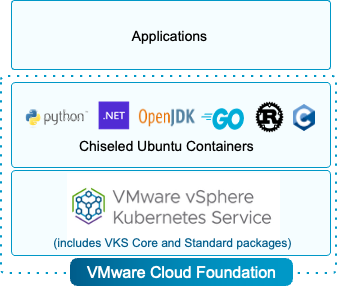
At VMware Explore 2025 in Las Vegas, Broadcom announced an expanded partnership with Canonical, the steward of the Ubuntu open-source operating system, to further integrate Ubuntu into VMware Cloud Foundation (VCF). This collaboration is designed to help enterprises accelerate the deployment of containerized and AI-driven applications, enabling cloud-native innovation with greater efficiency, reduced cost, and strengthened security.
Broadcom emphasized that VCF is the industry’s first fully integrated private cloud platform, created to meet modern enterprises’ demand for both consistency and flexibility in cloud environments. Canonical, as the publisher of Ubuntu and a global leader in open-source solutions, will now bring Ubuntu Pro, chiseled containers, and precompiled GPU drivers into VCF—empowering customers to deploy cloud-native applications more rapidly, with fewer risks, and without the burden of additional integrations.
Traditional enterprises pursuing Kubernetes adoption or AI workloads frequently encounter three major challenges:
- Limited development efficiency. Oversized container images slow the transition from development to production.
- Increased security risks. Larger images also broaden the attack surface and raise the likelihood of vulnerabilities.
- Complex AI deployments. In offline, “air-gapped” environments, GPU driver installation often becomes a bottleneck.
This partnership directly addresses these obstacles. With Ubuntu Pro and enterprise-grade support, organizations gain end-to-end maintenance and rapid security updates across both the operating system and Kubernetes services, significantly reducing exposure to vulnerabilities.
Meanwhile, chiseled Ubuntu containers deliver a streamlined development platform. Optimized for core programming languages like Python, .NET, and Go, these lightweight containers shrink image sizes, cut storage and bandwidth consumption, and reduce the attack surface—striking an ideal balance between performance and security.
For AI workloads, Canonical’s precompiled GPU drivers remove one of the most persistent barriers: deployment in disconnected environments. Enterprises can now accelerate GPU-enabled workloads without the overhead of compiling drivers at the node level, shortening deployment times, conserving resources, and boosting computational performance.
Paul Turner, Vice President of VMware Cloud Foundation at Broadcom, noted that this collaboration will empower developers to build Kubernetes-based applications more efficiently while simplifying the deployment of AI workloads. Regis Paquette, Canonical’s Senior Vice President of Global Sales, added that this is a direct answer to the perceived trade-off between innovation and security: enterprises can now advance both simultaneously.
As demand for AI and cloud-native applications continues to surge, the Broadcom–Canonical partnership signals the next phase in private cloud evolution. The question is no longer whether enterprises can adopt AI, but how they can do so faster, safer, and more efficiently. This trajectory underscores the growing role of private cloud platforms in ensuring consistency, harnessing the power of open-source ecosystems, and enabling enterprise-scale AI adoption—solidifying their place as a cornerstone of digital transformation.
Related Posts:
- Scattered Spider Targets the Cloud: A Growing Threat to the Insurance and Financial Sectors
- The EU unease about Broadcom attempts to buy Qualcomm: Privacy data may be leaked
Support Our Threat Intelligence
Find our tech and OS security coverage helpful? Support our work today and unlock a 100% ad-free reading experience!
 Buy Me a Coffee
