
 Do Son
CVE-2023-28229 is an elevation of privilege vulnerability that allows a local authenticated attacker to gain elevated privileges on the system
Vulnerability

CVE-2023-20101, a critical security vulnerability could allow an unauthenticated, remote attacker to gain root access to an affected device

Besides the PoC exploit code for the CVE-2023-4911 bug, researchers have also unveiled a video demonstration.

The first zero-day (CVE-2023-42824) is a kernel vulnerability that allows local attackers to escalate privileges on unpatched devices.

Additionally, the CVE-2023-22515 vulnerability can be exploited to create unauthorized Confluence administrator accounts.

CVE-2023-4911 allows local attackers to gain root privileges by exploiting a buffer overflow weakness in the GNU C Library's ld.so

CVE-2023-33106, CVE-2023-33107, CVE-2022-22071, and CVE-2023-33063 may be under limited, targeted exploitation

CVE-2023-43261 could allow attackers to expose sensitive information and gain unauthorized access to devices

Google and Microsoft confirmed that two zero-day vulnerabilities, CVE-2023-4863 and CVE-2023-5217 have been maliciously exploited in the wild

The vulnerability, tracked as CVE-2023-5288 (CVSS score of 9.8), could allow remote attackers to reconfigure or disrupt the devices.

Google’s bulletin sheds light on two bugs, specifically CVE-2023-4863 and CVE-2023-4211, believed to be under limited targeted exploitation

Arm's fix for CVE-2023-4211 has been incorporated into Android and Pixel devices. Google reacted, releasing the patch for its Pixel devices
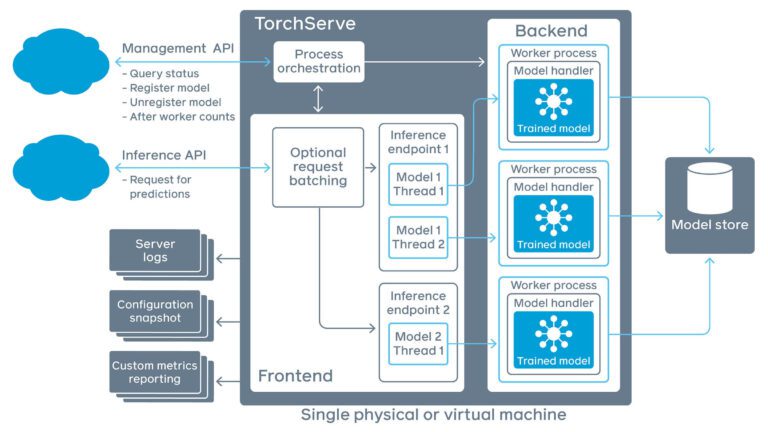
The CVE-2023-43654 vulnerability in question is a server-side request forgery (SSRF) in PyTorch TorchServe.

This newfound vulnerability (CVE-2023-41081), graded as "important" in severity, is of particular concern.

The digital realm experienced a wave of unease as Mozilla revealed a critical zero-day vulnerability in its flagship Firefox web browser

Tracked as CVE-2018-14667, this vulnerability has received an alarming severity score of 9.8/10 from Red Hat

With a towering CVSS score of 9.8, the CVE-2023-42115 vulnerability unveils a gateway for remote attackers to embed arbitrary codes

CVE-2023-42121 allows remote attackers unbridled access to execute arbitrary code on affected installations of the Control Web Panel

A PoC code for a macOS CVE-2023-32364 vulnerability could be exploited to escape a sandbox and execute code within the Terminal
CVE-2023-20109 could allow an authenticated, remote attacker to execute arbitrary code on an affected device or cause the device to crash
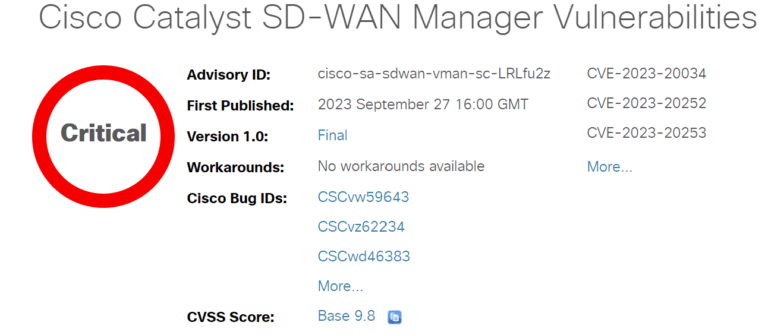
The CVE-2023-20252 vulnerability resides in the Security Assertion Markup Language (SAML) APIs of Cisco Catalyst SD-WAN Manager

Google recently revealed in a security advisory that a zero-day vulnerability, designated as CVE-2023-5217, is being actively exploited.