
 Do Son
CVE-2023-39417 allows an attacker with database-level CREATE privilege to execute arbitrary code as the bootstrap superuser
Vulnerability
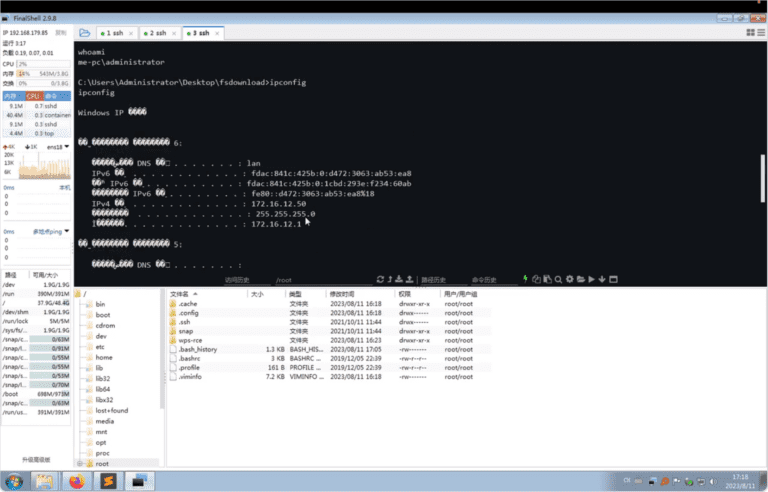
A security researcher unveiled the disturbing details of a critical vulnerability that can lead to Remote Code Execution (RCE) in WPS Office
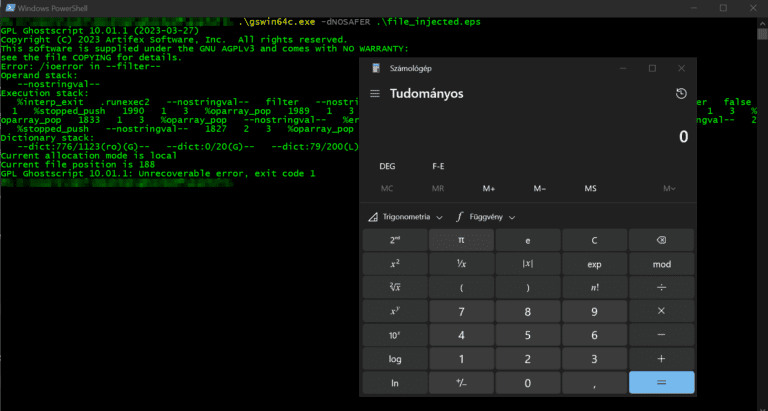
A proof-of-concept (PoC) exploit code has been made available for the recently disclosed critical security flaw, tracked as CVE-2023-36664

CVE-2022-41984 vulnerability may allow a privileged user to potentially enable denial of service via local access.

This flaw, which has been assigned the identifier CVE-2023-24329, has a CVSS score of 7.5 and could be exploited to cause a variety of security problems
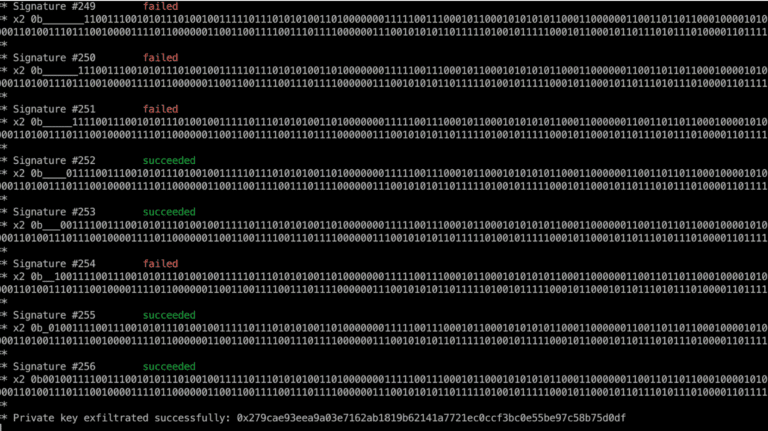
The attacker, assuming privileged access, can exploit the CVE-2023-33242 bug to exfiltrate the key after approximately 200 signature requests
Horizon3 has gone a step further by publishing a Proof-of-Concept (PoC) code that demonstrates how to abuse the CVE-2023-26067 vulnerability
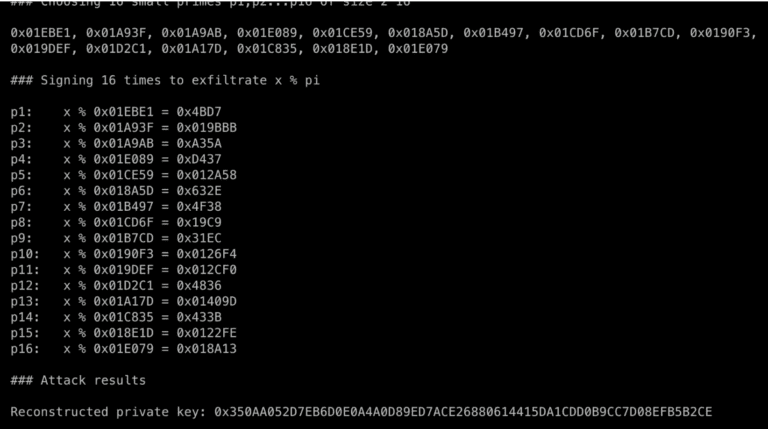
CVE-2023-33241 has recently been discovered in the popular multi-party computation (MPC) protocols GG18 and GG20

Cybersecurity researchers have released guides and scripts to help users assess whether their VPN service is affected by the TunnelCrack flaw

CVE-2023-32002 vulnerability allows a remote attacker to bypass security restrictions by using the Module._load() function

The CVE-2023-33934 vulnerability is an equally troubling flaw that could allow an attacker to bypass security restrictions

it is entirely feasible to maliciously exploit the CVE-2022-40982 security vulnerability to steal other users' data and credentials

One of the most serious bugs, CVE-2023-39216, allows an unauthenticated attacker to enable an escalation of privilege via network access

The Inception attack, tracked as CVE-2023-20569 has exposed a flaw in a broad range of AMD Zen CPUs, including the most recent models.

CVE-2023-38180 is a denial of service vulnerability in the .NET and Visual Studio software development kits

CVE-2023-21273 could lead to remote (proximal/adjacent) code execution with no additional execution privileges needed

Successful exploitation of the CVE-2023-39526 flaw could enable an attacker to submit a specially crafted request
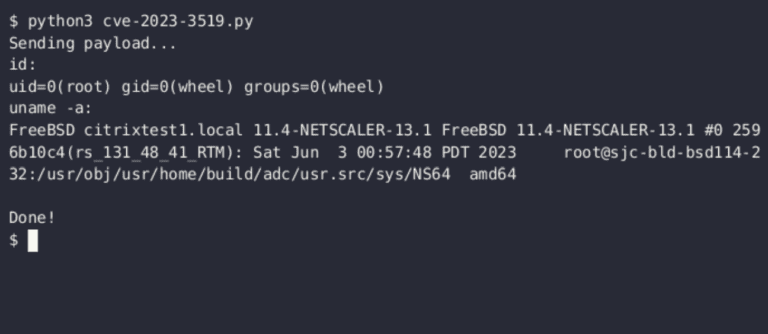
A proof-of-concept (PoC) for CVE-2023-3519, a critical vulnerability in Citrix ADC that allows remote code execution, has been published

CVE-2023-3824 is a buffer overflow vulnerability that could allow a remote attacker to execute arbitrary code on a PHP system

A hacker team from TU Berlin in Germany discovered that by injecting voltage faults, they could successfully unlock the TPM key of Tesla's AMD Ryzen SoC

The vulnerability, which has been assigned the CVE-2023-39157 identifier, has a CVSS score of 9.0, making it a critical risk.

the Controller Manager component has fallen prey to another critical vulnerability, CVE-2023-39292, boasting an elevated CVSS score of 8.8