
 Do Son
CVE-2023-38408 is a RCE vulnerability that lies within the ssh-agent's forwarded feature, particularly in relation to the PKCS#11 providers
Vulnerability

The vulnerability, which has been assigned the CVE identifier CVE-2023-3765, has a Common Vulnerability Scoring System score of a perfect 10

CVE-2023-3519 (CVSS score of 9.8) - The most severe of the three, this vulnerability allows unauthenticated remote code execution

This specific vulnerability, tagged as CVE-2023-33999, is a site-wide Reflected Cross-Site Scripting (XSS) vulnerability.

CVE-2023-34034 has a CVSS score of 8.8 and occurs when "**" is used as a pattern in Spring Security configuration for WebFlux

CVE-2023-36884, characterized as a high-severity flaw, plagues both Office and Windows, offering attackers a dangerous platform to execute arbitrary code
CVE-2023-37266 could allow unauthenticated attackers to craft arbitrary JWTs and access features that usually require authentication
CVE-2023-3696 bug, which carries a significant CVSS score of 10, stands testimony to its gravity and potential for wreaking havoc

CVE-2023-37466, a critical CVSS score of 9.8, exposed the VM2's sandbox, allowing rogue elements to bypass Promise handler sanitization

The CVE-2023-38198 flaw, allowing for the execution of arbitrary commands via 'eval', has reportedly been exploited in the wild in June 2023
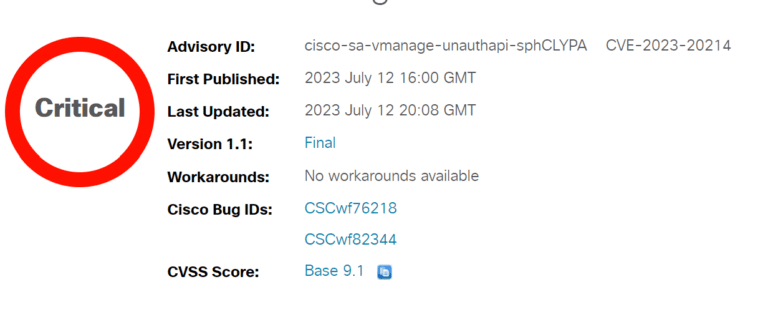
Cisco released security updates to address a critical severity vulnerability (CVE-2023-20214) found in the Cisco SD-WAN vManage software

In Apache RocketMQ, the black hole takes the form of CVE-2023-37582, a lingering vulnerability threatening the secure performance of this reliable platform

CVE-2023-33308 in FortiOS and FortiProxy might allow a remote attacker to execute arbitrary code or commands via carefully crafted packets

recent revelations highlight some vulnerabilities in the system that have been silent undercurrents, threatening to unseat us from our boards

CVE-2023-24492 vulnerability, discovered in the Citrix Secure Access client for Ubuntu, bears a CVSS score of 9.6

CVE-2022-42009, is a notable case of Spring Expression Language injection. A malicious authenticated user can execute arbitrary code remotely

CVE-2023-37450 zero-day exploit allows ill-intentioned hackers to execute arbitrary code on targeted devices

With a towering CVSS score of 9.9, CVE-2023-36460 allowed attackers to create arbitrary files anywhere, using specially crafted media files
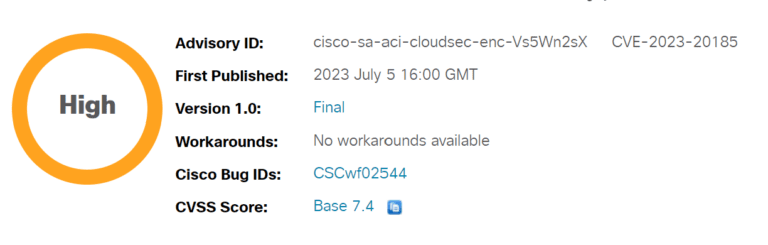
The CVE-2023-20185 security loophole is specific to Cisco Nexus 9000 Series Fabric Switches in ACI mode running releases 14.0 and later

An unauthenticated attacker could potentially exploit the CVE-2023-36934 flaw to gain unauthorized access to the MOVEit Transfer database

CVE-2023-21250 is a critical-severity remote code execution (RCE) flaw affecting Android releases 11, 12, 12L, and 13.
StackRot (CVE-2023-3269) refers to a flaw discovered in the Linux kernel's handling of stack expansion, specifically within versions 6.1 through 6.4