 Do Son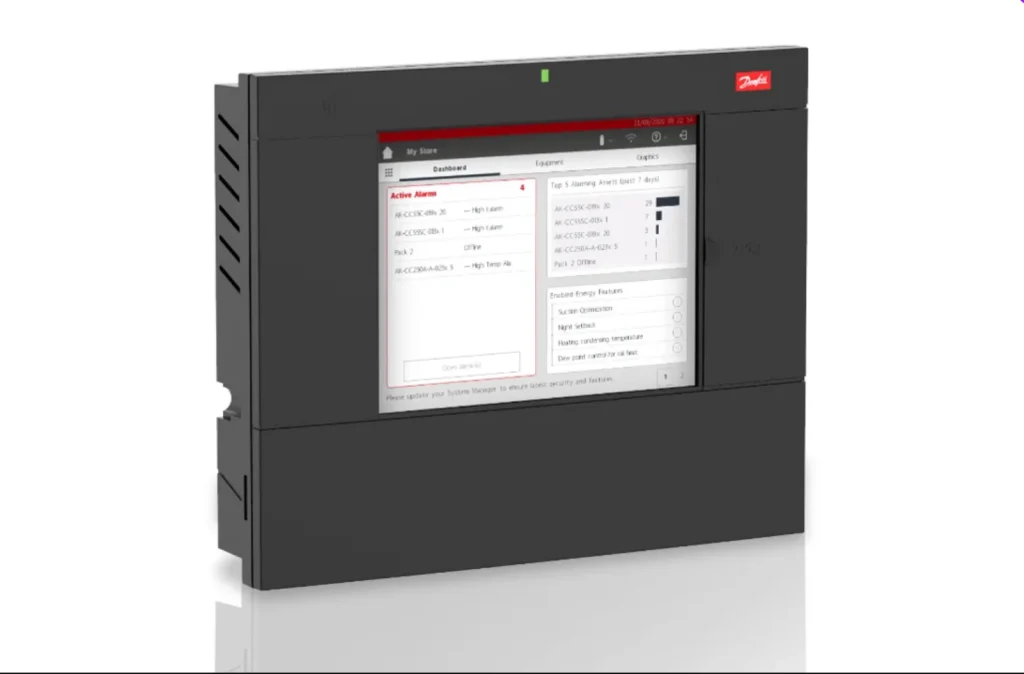
Danfoss AK-SM 800A management panel
Multiple prominent French supermarket chains have recently fallen victim to a massive cyberattack. Assailants ostensibly infiltrated internet-connected refrigeration management systems to remotely issue forced defrost commands. This insidious intrusion caused numerous chillers and freezers to experience catastrophic temperature spikes. Temperatures reached up to 50 degrees Celsius. Consequently, an immense volume of fresh produce and frozen provisions perished due to the severed cold chain. Moreover, several retail locations even endured electrical fires ignited by the overheating refrigeration units.
Hundreds of Retail Locations Severely Impacted
According to emergent reports from local French media outlets, the actual number of compromised supermarket branches likely exceeds four hundred. Within these locations, cold storage temperatures were maliciously elevated. In addition, automated defrosting cycles were artificially prolonged by several hours. This sabotage directly incapacitated the freezers and cold rooms. As a result, they became entirely unable to maintain viable temperatures. In certain establishments, the aberrant behavior of the refrigeration equipment sparked fires. Subsequently, automated sprinkler systems were triggered, though specific details regarding the extent of the conflagrations remain scarce.
Because the critical cold storage chain was irrevocably broken, afflicted storefronts were compelled to systematically purge and destroy colossal quantities of compromised food. Individual branches have reported immediate financial damages amounting to 21,000 euros. This suggests that the cumulative economic devastation across the French Republic could easily ascend into the millions of dollars.
Investigative Trails Lead to Antiquated Danfoss Systems
Preliminary investigations strongly suggest that the genesis of this digital assault resides within the refrigeration management hardware and software provisioned by Danfoss. The corporation has stated that the vast majority of the compromised systems are archaic models. In addition, certain devices have officially ceased receiving software and security updates. This implies, rather ominously, that these specific units harbor unpatchable flaws. This is reminiscent of previous research uncovering vulnerabilities in Danfoss refrigeration controllers.
These sophisticated chilling apparatuses possess the capability to remotely govern temperatures, orchestrate defrost cycles, and manage alarm protocols. The perpetrators presumably exploited these networked management functionalities to manipulate the defrost parameters. Thus, they forced the refrigeration units to cease normal cooling operations for extended durations. French authorities have also confirmed the discovery of pertinent vulnerabilities within the Danfoss software architecture and have proactively engaged the relevant suppliers.
The Identity of the Assailants Remains Shrouded in Mystery
The Parisian prosecutor’s office has initiated a comprehensive investigation into this monumental cyberattack, focusing acutely upon establishing the definitive correlations between the victimized enterprises, the catastrophic food spoilage, and the resultant electrical fires. The French national cybersecurity agency has likewise joined the inquiry. However, as noted in recent cybersecurity intelligence dispatches, no clandestine organization or individual has yet claimed public responsibility for this orchestrated sabotage. Therefore, both the identity and the underlying motivations of the attackers remain completely unknown.
The impacted corporations are currently isolating the associated refrigeration systems, conducting rigorous forensic examinations of remote access logs, device firmware, and alarm mechanisms. Meanwhile, Danfoss has urgently advised its clientele to immediately upgrade any devices that remain under active support, while systematically phasing out antiquated equipment and obsolete systems that are no longer eligible to receive vital security updates.
Support Our Threat Intelligence
Find our threat intelligence and malware analysis helpful? Support our work today and unlock a 100% ad-free reading experience!
 Buy Me a Coffee
