 Do Son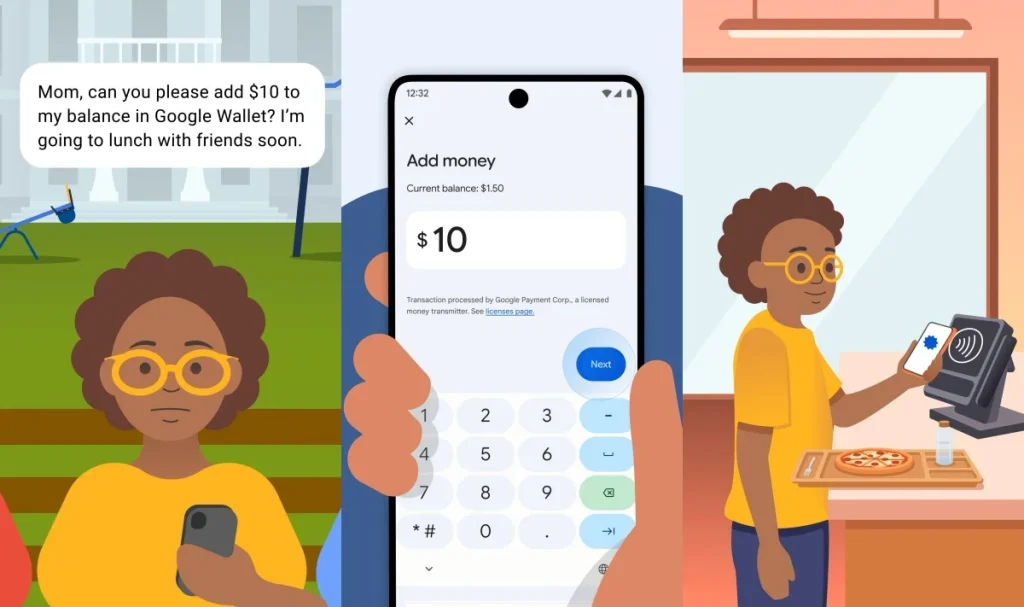
Google recently announced a groundbreaking new feature for the United States market. This innovative capability allows parents to safely distribute digital allowances to teenagers and children under eighteen. Furthermore, parents can comprehensively monitor and manage these funds through the Family Link application. Previously, minors seeking mobile payment functionalities typically required physical credit cards tethered to their parents. Alternatively, families often relied upon third-party prepaid card services to facilitate these transactions.
A Seamless Financial Ecosystem
The most significant advantage of this novel feature lies in eliminating the need for formal bank accounts. Consequently, parents can transfer funds directly into their child’s dedicated Google Wallet balance. Whenever a merchant’s NFC terminal supports Google Pay, the child can effortlessly initiate contactless payments. They can complete these transactions using any compatible Android smartphone or Wear OS smartwatch.
The Parental Remote Control: Deep Family Link Integration
Google officially stated that the primary intent behind this design is facilitating healthy financial habits. It specifically assists parents in teaching their children responsible consumption patterns. Meanwhile, the system ensures that parents retain absolute control over the distributed funds. Through deep integration with Google Family Link, parents possess multiple administrative authorities.
Comprehensive Management Tools
Firstly, parents can establish strict spending limits by customizing daily expenditure caps. Additionally, real-time monitoring allows parents to review transaction details whenever they choose. They can also grasp every single purchase instantly via immediate push notifications. Finally, the remote account lock feature provides a crucial safety net for families.
Automating Allowances and Enhancing Security
If a child spends excessively, parents can immediately activate a spending timeout. Similarly, if the child accidentally loses their smartphone or smartwatch, parents can remotely freeze the account balance with a single click. Furthermore, parents can seamlessly configure automatic recurring distributions to manage allowance schedules. For instance, setting a fixed allowance on the first day of each month effectively eliminates the hassle of manual transfers.
Stringent Spending Restrictions and Protective Mechanisms
To fiercely protect minors, this digital balance carries exceptionally rigorous usage limitations. Currently, children cannot utilize this specific balance for online shopping or in-app purchases. Moreover, the system entirely prohibits transferring funds to friends or relatives, as peer-to-peer transfers remain disabled. Crucially, the platform actively enforces restricted merchant categories to ensure child safety.
Blocking Inappropriate Transactions
The underlying system directly blocks specific adult-oriented merchant categories at the foundational level. These prohibited classifications comprehensively include dating applications, car rentals, and hospitality accommodations. Consequently, this robust mechanism thoroughly prevents children from conducting transactions within these inherently unsuitable channels.
Editorial Perspective: Nurturing Financial Literacy
For households deeply embedded within the Google software and hardware ecosystem, this update represents an incredibly practical enhancement. Indeed, Apple has provided a comparable Apple Cash Family service for quite some time. Additionally, the market already features specialized fintech products focusing on children’s financial education, such as Greenlight and FamZoo. While Google’s recent update appears somewhat reactionary, it strategically leverages inherent system integrations.
Streamlining the Digital Experience
By directly binding payment capabilities with the built-in Family Link, Google significantly reduces the learning curve for Android families. This elegant integration ultimately eliminates the tedious necessity of downloading and trusting external third-party financial applications. Exposing children early to digital assets, while teaching them proper management, remains an unavoidable modern parental challenge.
A Perfect Buffer Mechanism
Providing a predetermined digital allowance, while preserving backend monitoring and freezing controls, guarantees absolute fund security. Furthermore, this controlled environment serves as an excellent buffer mechanism. It gracefully empowers parents to let go, thereby allowing their children to learn independent consumption habits safely. Currently, Google has launched this feature exclusively within the United States market.
Future Global Expansion
Whether the company will expand this functionality to other global markets remains entirely unconfirmed at this time. Meanwhile, Apple previously expanded its Apple Cash service within the United States market. They cleverly added a feature designated as Apple Cash Family to their repertoire. Similarly, this specific function permits parents to issue allowances to children under eighteen who belong to their designated Family Sharing group.
Support Our Threat Intelligence
Find our tech and OS security coverage helpful? Support our work today and unlock a 100% ad-free reading experience!
 Buy Me a Coffee
