iPhone 17 Surge: Apple Hits Record $102B Revenue While Teasing AI Siri 2026 Debut
 Do Son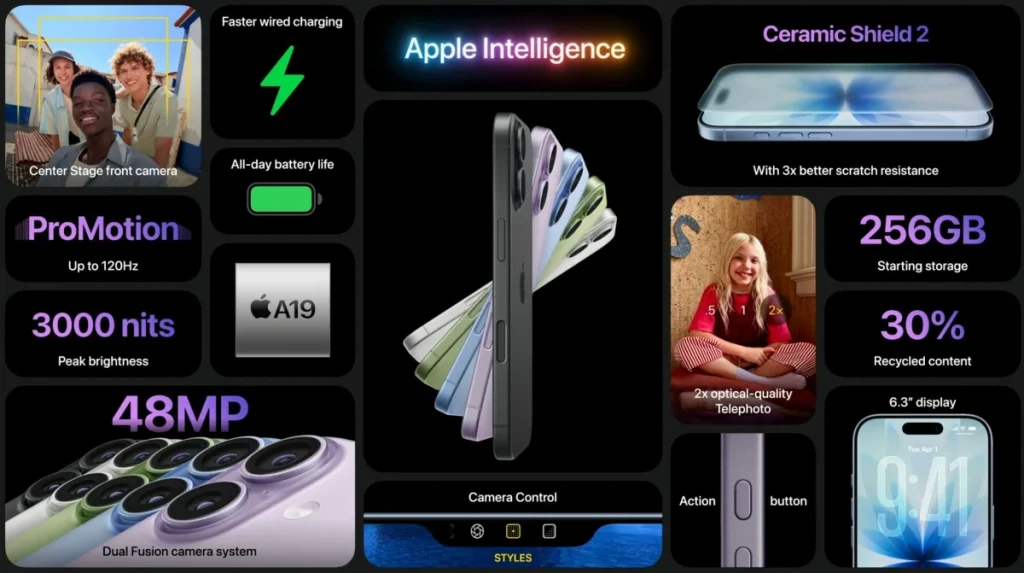
Apple has announced its financial results for the fourth quarter of fiscal year 2025, ending on September 27. Boosted by the strong initial sales of the iPhone 17 series, the company reported total revenue of $102.47 billion, marking a 7.94% increase from $94.93 billion a year earlier—a record high for the same period and slightly above market expectations. Net profit for the quarter surged to $27.47 billion, up significantly from $14.74 billion in the prior year.
From a revenue perspective, the iPhone division remains Apple’s cornerstone, contributing $49.03 billion (a 6.1% year-over-year increase) and accounting for nearly 48% of total revenue. The financial statement indicates that the newly launched iPhone 17, iPhone 17 Pro, and iPhone 17 Pro Max, available for less than a month, provided a substantial boost to earnings.
However, Apple deliberately avoided discussing sales figures for the iPhone Air, another highly publicized model released in the same period. Reports suggest that this niche-oriented device saw an early decline in demand shortly after launch, with rumors of production cuts already circulating. Analysts believe that the iPhone Air serves more as a technical precursor to future foldable models, implying that Apple never intended to position it as a major sales driver.
Revenue performance in Greater China, however, remains under pressure. The region generated $14.49 billion this quarter, down 3.59% from $15.03 billion in the same period last year—underscoring the intensifying competition in the Chinese market.
Seeking to ease investor concerns, CEO Tim Cook emphasized during the earnings call that the company has observed “very healthy demand indicators”, noting that market response to the iPhone 17 series has been overwhelmingly positive. He expressed confidence that the full impact of the new models will be reflected in the first quarter of fiscal year 2026, potentially leading to a strong rebound in Greater China.
To bolster investor confidence in Apple’s long-term strategy, Cook also unveiled progress in the company’s AI initiatives, revealing that a next-generation Siri powered by advanced AI integration will debut in 2026. Additionally, Apple plans to incorporate third-party AI tools into its operating systems—suggesting that beyond the current ChatGPT integration, future collaborations could involve Google’s Gemini or Anthropic’s models.
As for other hardware segments, performance this quarter was mixed:
- Mac: $8.73 billion (up 12.7% year-over-year)
- iPad: $6.95 billion (flat year-over-year)
- Wearables, Home, and Accessories: $9.01 billion (down 0.3%)
- Services: $28.75 billion (up 15.1%)
Given that Apple introduced only the M5 MacBook Pro during its autumn lineup refresh, analysts remain cautious about the Mac product line’s outlook for the upcoming holiday shopping season, with concerns that sales momentum may fall short of expectations.
Related Posts:
- Intel provides quarterly updates for CPUs with fixes for Spectre variants
- The Siri Crisis: Internal Testing Reveals Disappointing Performance for Apple’s Next AI
- A New “Siri” Is Coming: Apple Considers Using Google Gemini to Power Its AI Overhaul
- Apple and Google Are Partnering to Bring Gemini AI to Siri
Support Our Threat Intelligence
Find our tech and OS security coverage helpful? Support our work today and unlock a 100% ad-free reading experience!
 Buy Me a Coffee
