Meet Mico: Microsoft Unveils Clippy’s Emotional, AI-Powered Successor for Copilot
 Do Son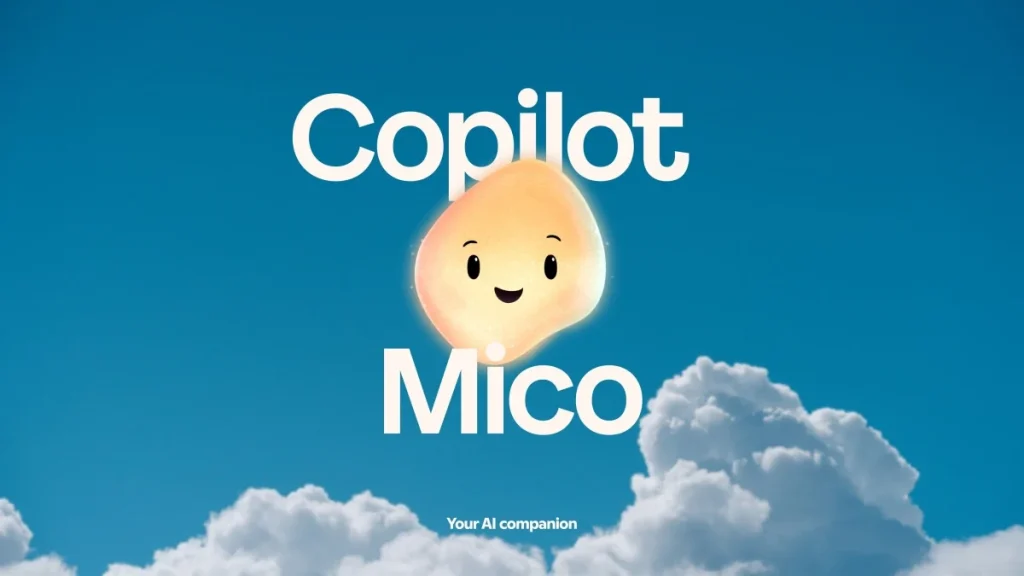
Microsoft has recently unveiled a new character persona for the voice mode of its AI assistant, Copilot, introducing it under the name “Mico.” This friendly, color-shifting entity is described by the company as “expressive, customizable, and warm,” envisioned as the new face of Copilot’s conversational experience—a clear homage to Clippy, the iconic paperclip assistant of Microsoft Office, now reimagined through the lens of modern AI technology.
In a blog post, Mustafa Suleyman, Microsoft’s Head of AI, described Mico as an embodiment of what an “AI companion” could be. This optional visual presence listens to the user, reacts in real time, and changes its colors dynamically based on the tone and flow of the interaction.
“We’re betting on optimism in a time of cynicism,” said Suleyman, “Instead of AI that replaces human judgment, we’re building AI that empowers your own – helping you make better decisions, spark your creativity, deepen your connections.”
This update underscores Microsoft’s commitment to human-centered AI—a vision of technology that serves humanity rather than the other way around.
Currently, Mico is being rolled out first in the United States, the United Kingdom, and Canada, where it comes enabled by default in Copilot’s voice mode, powered by Microsoft’s in-house MAI-Voice-1 and MAI-1-Preview models. For those who prefer not to interact with a virtual persona, the feature can be easily disabled.
Beyond Mico, Microsoft also announced a series of major new capabilities for Copilot:
- Copilot Groups breaks free from traditional single-user AI interactions, allowing up to 32 participants to collaborate in real time—brainstorming, co-writing, planning, and learning together. The system can summarize conversations, generate options, tally votes, and assign tasks, dramatically improving group productivity. Participants can join a shared AI workspace simply by clicking a link, enabling a truly collective Copilot experience.
- Persistent Memory: Copilot now features long-term recall, remembering key user information such as training plans, anniversaries, and recurring goals. By integrating with OneDrive, Outlook, Gmail, and other services, Copilot can search across platforms and retrieve files, emails, or calendar entries through natural-language queries.
Microsoft also introduced two specialized solutions for high-demand domains:
- Copilot for Health – Integrates trusted medical sources like Harvard Health, offering reliable healthcare information and assisting users in finding suitable physicians.
- Learn Live – A voice-activated Socratic tutor that fosters deeper understanding through guided questioning, visual prompts, and interactive whiteboards.
Further deep integration with Edge and Windows enhances the AI experience:
- Copilot Mode in Edge transforms the browser into an AI-powered assistant, capable of analyzing open tabs, summarizing and comparing content, and even automatically filling forms or booking reservations.
- Windows 11 becomes fully AI-driven, with the wake phrase “Hey Copilot” allowing users to summon assistance instantly—summarizing documents or guiding tasks in real time.
- The new Journeys feature organizes browsing history into coherent storylines, making it easier to trace your thought process and revisit key insights.
Related Posts:
- Android 16 & Gemini AI Unleashed: Google’s Pre-I/O Powerhouse
- New Attack on Microsoft 365 Copilot Steals Personal Data
- Google Boosts Accessibility with AI: Enhanced TalkBack, Captions, and More
- Google Boosts Accessibility with AI: Enhanced TalkBack, Captions, and More
Support Our Threat Intelligence
Find our tech and OS security coverage helpful? Support our work today and unlock a 100% ad-free reading experience!
 Buy Me a Coffee
