
 Do Son
Dylan Field, CEO of the design tools company Figma, has publicly stated that artificial intelligence does not...
Latest news

According to the latest reports, OpenAI is introducing a new service called “ChatGPT Login,” which allows users...

JPCERT/CC and the developer MOTEX Inc. have issued an urgent advisory for a critical remote code execution...

TP-Link Systems has released a new firmware update addressing four high- and critical-severity vulnerabilities in its popular...

For many years, Apple has allowed users to quickly launch the Camera app with a simple swipe...

Microsoft has confirmed the remediation of a critical security vulnerability in its ASP.NET Core product, identified as...

The cumulative update KB5066835 released last week for Windows 11 versions 24H2 and 25H2 introduced several serious...

Researchers recently disclosed a path-traversal vulnerability (CVE-2025-11001) in the open-source archiver 7-Zip that allows attackers to craft...

In the latest release of Microsoft’s open-source utility suite PowerToys, a new feature called Light Switch has...

Last week, Microsoft’s latest Windows 11 cumulative update had inadvertently broken localhost authentication, preventing countless developers from...

CVE-2024-23749, CVE-2024-25003, and CVE-2024-25004 exploit weaknesses in how KiTTY processes certain commands sent by remote servers.

The KV-botnet operates in the shadows, infecting small-office, home-office (SOHO) routers and firewall devices worldwide.

CVE-2024-24806, with a CVSS score of 7.3, exposes a server-side request forgery (SSRF) vulnerability within the very core of libuv

A PoC for CVE-2024-20328, a critical vulnerability in ClamAV, that allows remote code execution, was published

Dubbed CVE-2024-23113 (CVSS 9.8), this flaw allow unauthenticated attackers to remotely execute code on affected devices.

Bitdefender has uncovered a never-before-seen backdoor targeting Mac users, christened Trojan.MAC.RustDoor.

CVE-2024-22394 exposes an improper authentication flaw, potentially allowing remote attackers to bypass authentication on affected devices

MalDocs leveraging old CVEs often evade detection due to their sophisticated evasion techniques. These techniques include encryption

CVE-2024-24821 casts a shadow over Composer's reliability, exposing users to potential code execution and privilege escalation threats

Agility and scalability are imperative for growth in the fast-paced startup industry. Managed cloud solutions present a...

The Zardoor backdoor is not merely a piece of malware but a sophisticated espionage framework, designed for long-term infiltration

CVE-2024-21762 (CVSS 9.6), poses a significant risk, potentially enabling unauthenticated remote code execution on affected devices.

CVE-2024-23452 flaw that could potentially allow attackers to smuggle malicious requests through the bRPC's HTTP server.

Coyote represents a paradigm shift in the realm of Brazilian banking Trojans, embracing modern technologies like Node.js, .NET

DotStealer malware, masquerading within the binary veil of a 32-bit executable, crafts its lair directly on the user's system

ClamAV's developers issued critical patches addressing two vulnerabilities (CVE-2024-20328 & CVE-2024-20290) within the library

CVE-2024-20254 and CVE-2024-20255 affect devices with default configurations, amplifying the potential reach of the attacks

Raspberry Robin operates within a vast malware ecosystem, serving as an initial access broker for further malicious deployments

Glassy of EagleCloud, who found CVE-2024-20931, also provides technical details on the vulnerability, and publishes PoC code

The ramifications of falling victim to the XPhase Clipper campaign are dire, with users facing the prospect of substantial financial losses

Introduction Embracing microservices provides significant advantages for businesses and their development. They make applications more scalable, robust,...
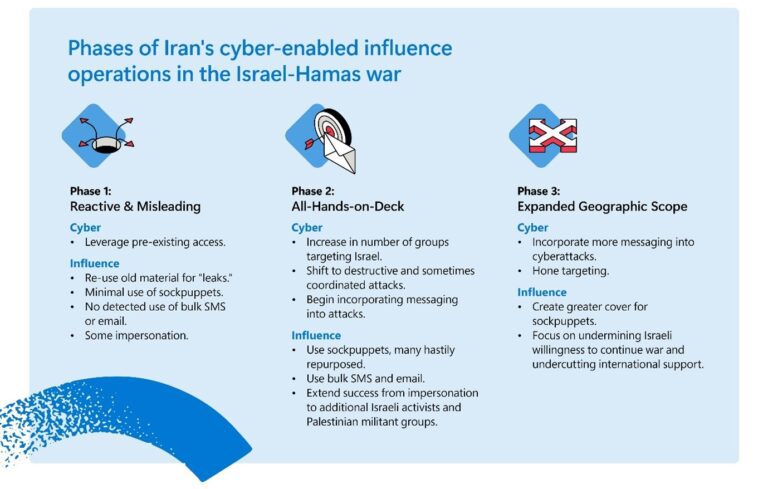
Many of Iran's initial cyber forays consisted of repurposing old data breaches and overstating the effectiveness of their attacks