
 Do Son
Researchers at Rapid7 have disclosed a critical permission bypass vulnerability in OnePlus OxygenOS, tracked as CVE-2025-10184. The...
Latest news

The issue of AI systems harvesting website and publisher content without compensation for training models or generating...

Apple has officially confirmed that iOS 26’s Digital ID feature will support the addition of passports, allowing...

DNN Software has issued a security advisory warning of a critical stored cross-site scripting (XSS) vulnerability in...

Researchers at Cisco Talos have uncovered a long-running espionage campaign active since 2022, targeting the telecommunications and...

Researchers at Zscaler ThreatLabz have uncovered a new malware family, dubbed YiBackdoor, first observed in June 2025....

Microsoft-owned professional networking platform LinkedIn has begun notifying users by email that it will soon start using...

Google has introduced a bold new experiment for Android gamers with the launch of Play Games Sidekick,...

Google has released a Stable Channel Update for Desktop with builds 140.0.7339.207/.208 for Windows and Mac and...

After nearly two years of silence, Zloader (a.k.a. Terdot, DELoader, or Silent Night) has returned with new...

Additionally, the CVE-2023-22515 vulnerability can be exploited to create unauthorized Confluence administrator accounts.

Tech has become an essential component of modern digital life, creating an accessible online experience for people...

While the concept of lateral movement isn’t new, its application in cloud environments like SQL Server instances is

CVE-2023-4911 allows local attackers to gain root privileges by exploiting a buffer overflow weakness in the GNU C Library's ld.so

CVE-2023-33106, CVE-2023-33107, CVE-2022-22071, and CVE-2023-33063 may be under limited, targeted exploitation

CVE-2023-43261 could allow attackers to expose sensitive information and gain unauthorized access to devices

Google and Microsoft confirmed that two zero-day vulnerabilities, CVE-2023-4863 and CVE-2023-5217 have been maliciously exploited in the wild

The vulnerability, tracked as CVE-2023-5288 (CVSS score of 9.8), could allow remote attackers to reconfigure or disrupt the devices.

Google’s bulletin sheds light on two bugs, specifically CVE-2023-4863 and CVE-2023-4211, believed to be under limited targeted exploitation

Arm's fix for CVE-2023-4211 has been incorporated into Android and Pixel devices. Google reacted, releasing the patch for its Pixel devices
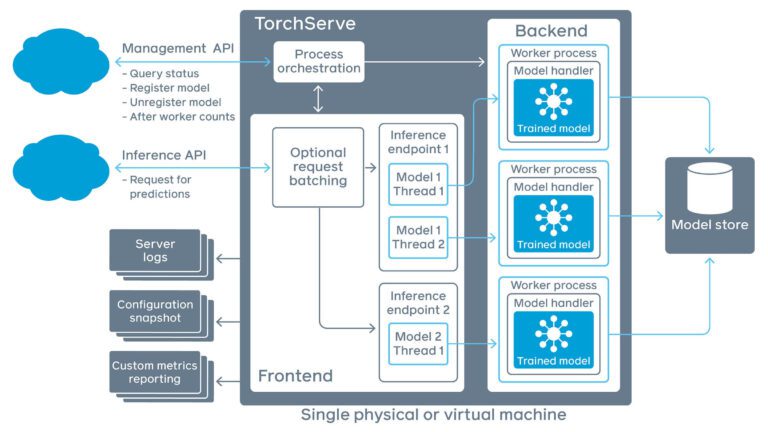
The CVE-2023-43654 vulnerability in question is a server-side request forgery (SSRF) in PyTorch TorchServe.

Cyber security attacks are at an all-time high. Businesses are often targets or fall victim to attacks. Click here for the risks to keep an eye on.

Currently, Encrypted Client Hello has been embraced by major browsers: Google Chrome and Mozilla Firefox. For Safari: Support is forthcoming.

Menorah malware was spotted playing a crucial role in a recent targeted phishing attack demonstrating the group's undiminished proclivity

the ransomware group RansomedVC has ostentatiously claimed to have successfully infiltrated Sony's systems

The Cl0p ransomware group exploited a popular SQL injection vulnerability (CVE-2023-34362) within the MOVEit file transfer solution

This newfound vulnerability (CVE-2023-41081), graded as "important" in severity, is of particular concern.

The digital realm experienced a wave of unease as Mozilla revealed a critical zero-day vulnerability in its flagship Firefox web browser

Tracked as CVE-2018-14667, this vulnerability has received an alarming severity score of 9.8/10 from Red Hat

The diversity of dietary supplements is increasing every day, but omega-3 continues to remain one of the...

With a towering CVSS score of 9.8, the CVE-2023-42115 vulnerability unveils a gateway for remote attackers to embed arbitrary codes

CVE-2023-42121 allows remote attackers unbridled access to execute arbitrary code on affected installations of the Control Web Panel