 Do Son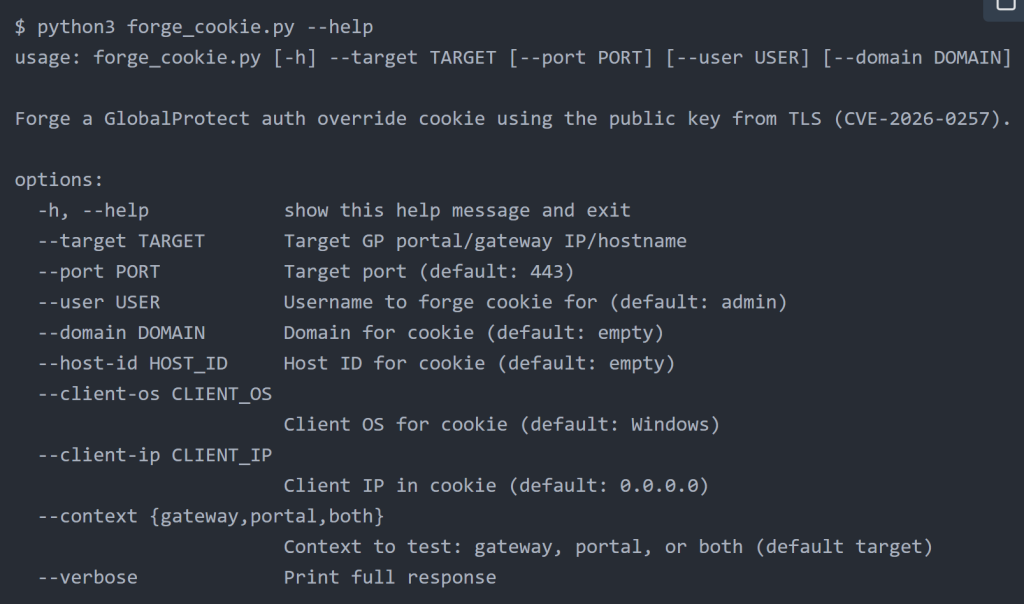
Serious Attacks Hit GlobalProtect VPN Gateways
A dangerous security vulnerability is currently impacting enterprise perimeter networks across the globe. Specifically, threat actors are targeting a critical PAN-OS authentication bypass flaw tracked as CVE-2026-0257. This security defect compromises Palo Alto Networks appliances running specific corporate virtual private network configurations. Because hackers are actively exploiting the vulnerability in the wild, federal authorities recently added the flaw to the CISA Known Exploited Vulnerabilities catalog. Consequently, system administrators must evaluate their security posture immediately to block unauthorized entry.
Inside the Authentication Override Mechanism
To begin with, the underlying software issue lies within a specialized access feature. This technical configuration allows administrators to streamline the user login experience. According to the Rapid7 analysis, “This feature allows a GlobalProtect portal or gateway to issue cookies to an authenticated user.” Therefore, users can leverage these tokens in future web communications instead of supplying raw credentials.
Tracing the Missing Signature Check
However, a critical validation vulnerability exists inside the core binary decryption handler. The background application base64-decodes the incoming token and decrypts it using a private key. The report notes: “The decrypted content is then trusted implicitly, with no signature verification of any kind occurring after decryption.” Consequently, an unauthenticated attacker can forge arbitrary tokens if they discover the correct public key parameters.
How Attackers Exploit Shared Certificates
Furthermore, the exploitation chain relies on poor certificate management choices. The threat requires a specific configuration regarding how certificates encrypt and decrypt these authentication tokens. Specifically, the vulnerability exposes devices that reuse the primary portal certificate across multiple network features.
Forging Valid Security Cookies
If an enterprise shares this certificate with the public HTTPS service, remote actors can capture the public key easily. In doing so, the adversary can construct and encrypt functional cookies. Subsequently, the appliance processes these forged elements server-side. As a result, the device grants the attacker unauthorized access, causing a total authentication bypass.
Tracking the Attacker Waves and Behavior
Meanwhile, forensic investigators have observed multiple waves of active threat campaigns. Security defenders spotted the earliest signs of unauthorized access on May 17, 2026. During the initial wave, attackers launched authentication probes originating from the Vultr hosting infrastructure.
Pinpointing a Unified Actor
Subsequently, a secondary wave occurred on May 21st using a different provider called Dromatics Systems. Despite the shift in network location, investigators noted a consistent MAC address across both campaigns. This digital footprint suggests that a singular threat group is orchestrating the operations. In the second wave, hackers successfully obtained full internal network access after receiving a VPN IP assignment. Clearly, this active PAN-OS authentication bypass flaw poses an immediate threat to corporate internal environments.
Immediate Mitigation and Patching Steps
Ultimately, organizations cannot afford to delay their infrastructure updates. Standard network monitoring tools might miss the cookie validation anomaly entirely. Therefore, IT managers must upgrade their perimeter appliances to vendor-supplied patches on an urgent basis.
Emergency Configuration Workarounds
If immediate patching is impossible, teams should apply emergency configuration adjustments to limit exposure. For example, administrators can disable the authentication override feature entirely in the portal dashboard. Alternatively, engineers can generate a unique certificate to use exclusively for cookie management. Taking these vital precautions will completely neutralize the threat vector before a network intrusion occurs.
Support Our Threat Intelligence
Find our vulnerability reports and weekly recaps helpful? Support our work today and unlock a 100% ad-free reading experience!
 Buy Me a Coffee
