Precise, Faster, Cheaper: OpenAI Unleashes GPT-Image-1.5 to Reclaim the Visual AI Crown
 Do Son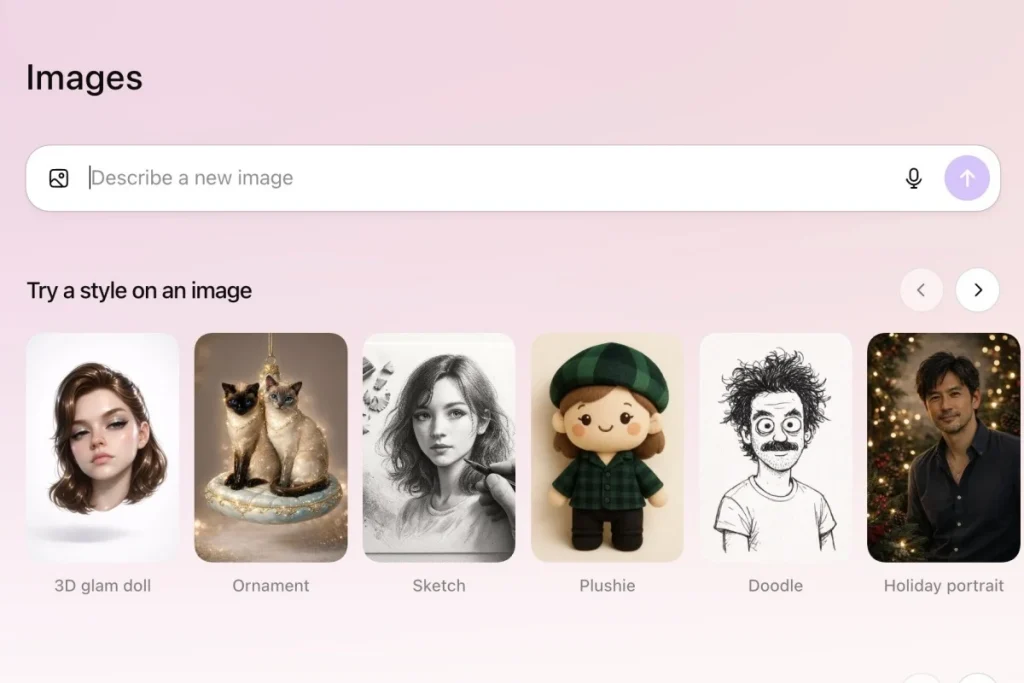
Confronted with Google Nano Banana’s aggressive resurgence in the visual generation space in the second half of the year, OpenAI has finally made its move, announcing the release of its latest image model: GPT-Image-1.5.
This update is not a simple exercise in parameter inflation. Instead, it directly addresses the pain points creators care about most—speed, controllability, and cost. OpenAI CEO Sam Altman even stepped into the spotlight himself, sharing images generated by the new model—most notably a tongue-in-cheek calendar of muscular men—to demonstrate its striking improvements in character consistency.
Historically, one of the greatest frustrations in AI image editing has been the “butterfly effect”: tweak a hairstyle, and the entire face inexplicably changes. GPT-Image-1.5’s most significant advance lies in its deeper understanding of visual structure and composition.
In OpenAI’s official demos, a single early-2000s party photo is progressively transformed—background figures are added, the visual style of specific subjects is altered (one person becomes hand-drawn, a dog turns into a plush toy), and finally everyone is dressed in OpenAI sweaters. Throughout the process, untouched regions remain remarkably consistent. In practical terms, the model can finally understand instructions like “change only this, leave everything else alone,” turning image editing from a gamble into a reliable workflow.
Accuracy, however, is only half the story. GPT-Image-1.5 is also fast—four times faster than its predecessor—approaching real-time feedback and dramatically reducing the cost of trial and error.
On the commercial front, OpenAI has paired the release with an unmistakable price offensive. Image input and output costs via the API have been reduced by 20% (priced at $8 per million input tokens), a clear attempt to lure more enterprise customers—such as Wix and Canva—and deepen its competitive moat. To support the new model, ChatGPT’s web and mobile apps now feature a dedicated image-creation entry point.
The new interface resembles a lightweight photo-editing application, complete with filter libraries, popular prompt templates, and even the ability to upload personal portraits to lock in facial features for consistent characters. For everyday users who would rather not repeatedly type lengthy, arcane prompts, this is a meaningful quality-of-life improvement. In hands-on testing, the model performs impressively on prompts requiring precise spatial relationships—such as “Mark Zuckerberg sitting on a beach at sunset while wearing Ray-Ban smart glasses”—and shows notable gains in tasks like converting real photos into clean line art.
The decision to label the release 1.5 rather than 2.0 feels deliberate—a signal of OpenAI’s pragmatism and restraint.
As Google Nano Banana Pro continues to lead in logical reasoning and physical simulation, OpenAI appears to be pursuing a more commercially grounded strategy: ruthless efficiency and tightly controlled workflows. For most users, solving abstruse mathematical puzzles may be secondary; what truly determines willingness to pay is whether a model can quickly and cheaply generate an image that is simply “good enough” to use.
Related Posts:
- Gemini’s New AI Image Generation Model Prioritizes Consistency, Control, and Trust
- FIRST published the Common Vulnerability Scoring System (CVSS v4.0)
Support Our Threat Intelligence
Find our tech and OS security coverage helpful? Support our work today and unlock a 100% ad-free reading experience!
 Buy Me a Coffee
