Project Kuiper is Now Amazon Leo: Amazon Rebrands Satellite Initiative for Commercial Launch
 Do Son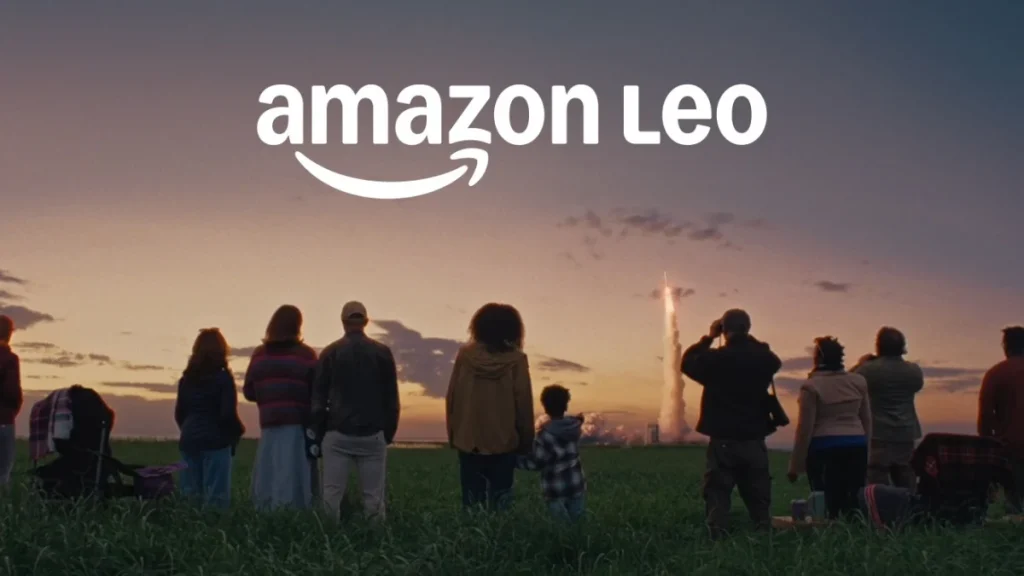
Amazon has announced that its satellite communications initiative, formerly known as Project Kuiper, will be officially rebranded as Amazon Leo—a name clearly chosen to reflect its reliance on Low Earth Orbit (LEO) satellites.
The change signals that the program, launched in 2019, is finally ready to shed its “project” designation and emerge as a fully fledged Amazon-branded product after a long and complex development cycle.
When Amazon first introduced Project Kuiper in 2019, it outlined an ambitious mission: to deploy a constellation of more than 3,000 satellites to deliver connectivity to regions lacking reliable internet access, with the goal of covering up to 95% of the global population.
Progress, however, has been relatively slow. Although Amazon has launched prototype satellites, detailed plans for an orbital laser mesh network, and demonstrated user-terminal antennas, it was not until April of this year that the company finally placed the first 27 satellites of the operational constellation into orbit.
By contrast, its chief competitor—SpaceX’s Starlink—has expanded at a far more aggressive pace. Starlink introduced its beta service as early as 2020 and rapidly scaled from there. Today, SpaceX not only supports satellite-based messaging in partnership with mobile carriers but is also actively collaborating with airlines to provide in-flight internet services.
Rebranding Project Kuiper as Amazon Leo indicates that Amazon is at last positioning its satellite network as a standalone commercial product—though it still has significant ground to cover.
Amazon has yet to announce when its satellite service will be broadly available to consumer and enterprise customers. Interested users can, however, register on the Amazon Leo website to receive future updates.
Related Posts:
- Starlink V3 Satellites Promise Blazing Fast Internet Speeds
- GLOBAL GROUP: New Ransomware Giant Emerges with AI Negotiators, Affiliate Incentives, and Industrial-Scale Attacks
- Russia blocks 1.8 million Amazon and Google cloud service IP addresses
- Apple Extends Free Satellite Connectivity for iPhone 14 and 15 Users
- iPhone’s Off-Grid Future: Maps, Photos, & ‘Natural Usage’ Satellite Features Revealed
Support Our Threat Intelligence
Find our tech and OS security coverage helpful? Support our work today and unlock a 100% ad-free reading experience!
 Buy Me a Coffee
