 Do Son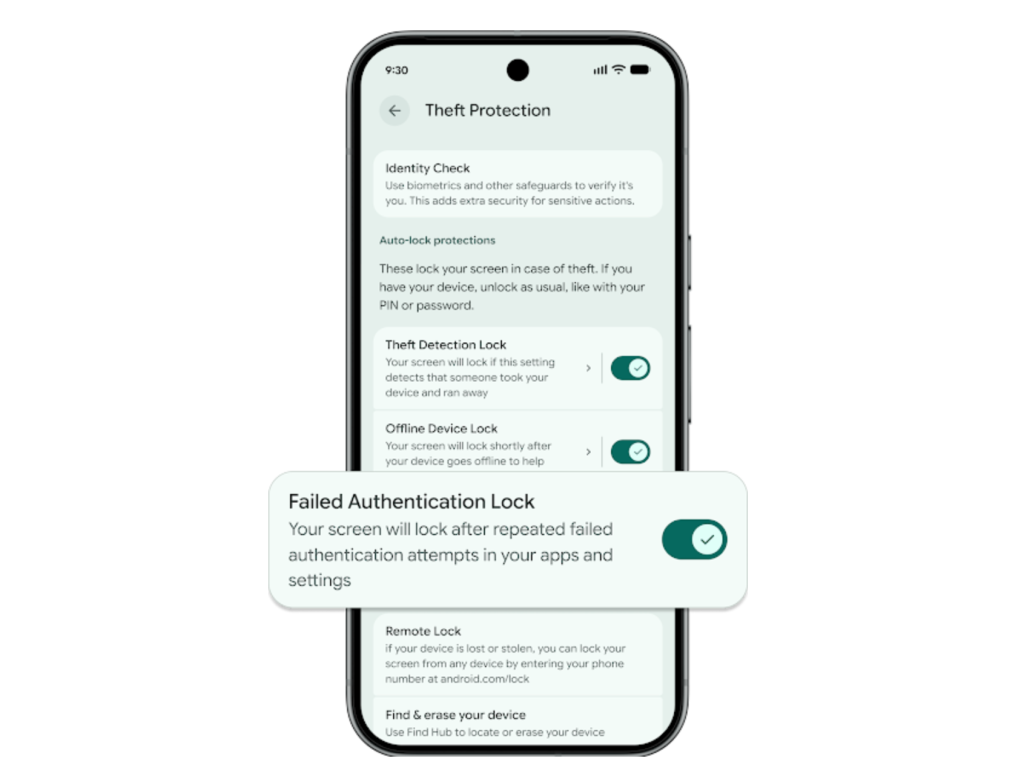
In the modern era, losing your smartphone is no longer just a hardware inconvenience—it is a gateway to identity theft. Recognizing that a stolen phone often leads to drained bank accounts, the Android Security Team has unveiled a sweeping set of updates designed to make devices “a much harder target for criminals.”
The updates, rolling out across various Android versions, focus on “multi-layered defenses that help protect you before, during, and after a theft attempt.”
Perhaps the most aggressive move in Google’s new arsenal is the deployment of on-device AI to combat physical theft in real-time. In a significant policy shift for the Brazilian market, Google is making two powerful features—Theft Detection Lock and Remote Lock—enabled by default on new devices.
Theft Detection Lock is particularly futuristic. It uses the phone’s gyroscope and sensors to detect the specific motion associated with a thief grabbing a phone from a user’s hand and fleeing.
“Uses on-device AI to sense motion and context that may indicate a ‘snatch-and-run’ theft. If a theft attempt is detected, it will quickly lock the device screen to help protect your data,” the Android Security Team explains.
By making these features “default-on” in high-risk regions, Android is ensuring that “new devices have a critical layer of theft protection from day one.”
For devices running Android 16+, the security overhaul digs deep into authentication protocols. The goal is to prevent thieves from forcing their way into a device even if they have physical possession.
One standout improvement is the expansion of Identity Check. Originally launched to protect settings, this feature now wraps its protective layer around third-party apps. This means that even if a thief knows your PIN, they cannot access your banking apps or Google Password Manager without biometric verification.
“We extended this safeguard to cover all features and apps that use the Android Biometric Prompt… meaning that critical tools… now automatically benefit from the additional security of Identity Check.”
Additionally, Google has toughened defenses against brute-force attacks. The new Screen Lock Guessing protection increases the lockout time after failed attempts, making it mathematically impractical for a thief to guess a PIN. Crucially, the system is smart enough to distinguish between a thief and a toddler: “identical incorrect guesses no longer count toward your retry limit,” ensuring you aren’t locked out by a curious child.
Recognizing that prevention isn’t always enough, Google has also enhanced recovery tools for the vast majority of the ecosystem (Android 10+).
The Remote Lock feature, accessible via android.com/lock, now includes an optional security challenge. This addresses a common anxiety: what if the thief tries to mess with your recovery options?
“We are adding a new optional security question/challenge to the process. This helps ensure that only you, the real device owner, can initiate a lock.”
With these updates, Android is trying to ensure that even if you lose the device, you don’t lose your digital life.
Related Posts:
- Malware infections associated with online gaming
- Android Boosts Anti-Theft Measures with AI and Biometric Security
- Researcher warns: Java-Based Stealer Spreads via Cracked Software
- Jingle Thief Cybercrime Gang Steals Hundreds of Thousands in Gift Card Fraud via Microsoft 365 Identity Abuse
Support Our Threat Intelligence
Find our tech and OS security coverage helpful? Support our work today and unlock a 100% ad-free reading experience!
 Buy Me a Coffee
