 Do Son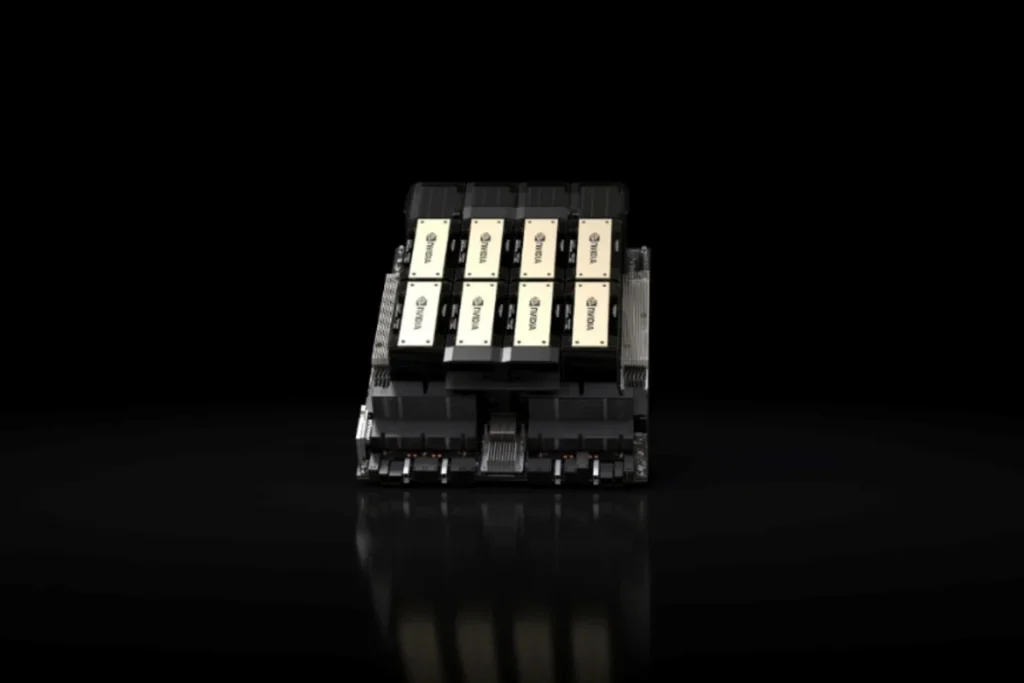
U.S. President Donald Trump announced earlier on his Truth Social platform that NVIDIA will be permitted—under strict conditions—to ship its high-end H200 AI accelerators to qualified customers in China and other countries. The concession, however, comes at a steep price: Chinese buyers must remit 25% of the total sales value to the U.S. government as a mandatory fee.
Trump noted that Chinese President Xi Jinping has responded positively to the policy. At the heart of this new approach is a model of “paid deregulation”: NVIDIA may export the H200, but only if a quarter of the revenue is transferred to the United States.
He emphasized that this policy would proceed only under conditions that ensure “continued and robust national security.” In Trump’s view, the measure will bolster American jobs, strengthen domestic manufacturing, and allow U.S. taxpayers to share in the economic gains. He also seized the opportunity to ridicule former President Joe Biden’s chip-control strategy, arguing that Biden’s performance-caps on AI processors forced American companies to waste billions developing down-spec products like the H20—chips that, as Trump phrased it, “nobody wants.”
According to Trump, such constraints stifled technological innovation, harmed American workers, and belong to a bygone era—“that time is over.” Earlier reports suggested the U.S. government was considering a 15% commission on H20 exports; the Trump administration has now opted for a more forceful approach: authorizing shipments of the far more advanced H200, but imposing a substantially higher 25% fee.
Despite the relaxation, the administration is still drawing a hard line around cutting-edge technologies. Trump made clear that NVIDIA’s next-generation Blackwell chips—already being deployed to U.S. customers—and future Rubin-architecture products are not included in the agreement. This underscores that “America First” remains the guiding doctrine: the most sophisticated compute capabilities will be reserved for domestic use.
The U.S. Department of Commerce is currently drafting the implementation framework. Trump added that the “25% fee-for-export clearance” model will apply not only to NVIDIA but also to AMD, Intel, and other American firms. This signals a shift in how U.S. semiconductor companies will navigate the Chinese market—from “special downgraded editions” toward a new paradigm of paid unlocks.
Related Posts:
- The New Price of AI Chips for China: NVIDIA and AMD Will Give 15% of Revenue to U.S. Governmen
- Can Trump Save TikTok? President-Elect Takes on Tech Giant’s Future
- Trump Extends TikTok’s U.S. Deadline by 75 Days to Secure American Buyer
- NSA can continue its surveillance will depend on Trump?
Support Our Threat Intelligence
Find our tech and OS security coverage helpful? Support our work today and unlock a 100% ad-free reading experience!
 Buy Me a Coffee
