 Do Son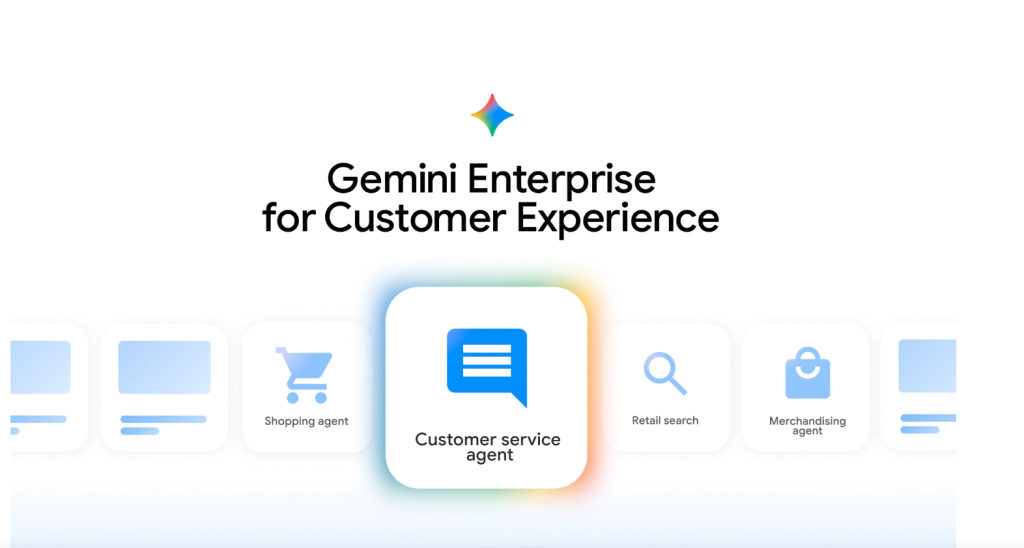
At the recent NRF 2026 Retail’s Big Show in New York, Google CEO Sundar Pichai unveiled the corporation’s nascent e-commerce stratagem, heralding the advent of the “Agentic Commerce” era. Google seeks to revolutionize contemporary online shopping paradigms through the deployment of autonomous AI Agents and the introduction of the Universal Commerce Protocol (UCP)—a standardized framework designed to empower AI to seamlessly navigate product discovery, price comparison, and final procurement across disparate platforms on behalf of the user.
Contemporary e-commerce often necessitates a cumbersome experience, requiring users to juggle multiple browser tabs for comparison and undergo repetitive data entry for shipping and payment upon redirection. Google’s “Agentic Commerce” vision aims to eradicate these points of friction. By integrating these capabilities within Google Search’s “AI Mode” and the Gemini application, the AI can now interpret ambiguous queries—such as “procure slip-resistant footwear suitable for inclement weather under $100″—and autonomously scan inventories, evaluate specifications, and finalize the purchase directly within the Google interface, obviating the need for external redirection.
To manifest this vision, Google has introduced the Universal Commerce Protocol, an open standard developed in tandem with retail titans such as Shopify, Walmart, and Target. Acting as a universal “API” for the retail sector, UCP facilitates real-time access to inventory status, fluctuating price points, and logistics data. This ecosystem has already garnered the patronage of financial and retail luminaries, including American Express, Mastercard, Visa, Stripe, and Home Depot. Beyond the overarching protocol, Google introduced specialized tools for brand customization:
- Business Agents: Brands like Reebok or Lowe’s can train bespoke AI representatives to answer nuanced consumer inquiries—such as technical specifications regarding slip resistance—using official datasets and a curated brand voice, while simultaneously suggesting complementary accouterments.
- Direct Offers: When the AI identifies a high propensity for purchase, it stochastically generates exclusive promotional codes directly within the interface, sparing the consumer the labor of manual coupon hunting.
This initiative will debut in the United States, supporting transactions via Google Pay and PayPal, before expanding globally. Addressing concerns regarding data monopolization, Google underscored that under the UCP framework, the individual retailers remain the “Merchants of Record.” Google serves merely as the technological facilitator and intermediary, ensuring that transaction data is not sequestered; furthermore, all payment verifications are fortified through advanced encryption and tokenization to preserve user autonomy and data integrity.
In the era of generative AI, Google is endeavoring to redefine the intrinsic value of “Search.” Historically, Google’s role was limited to traffic redirection—guiding users toward Amazon or individual brand domains. However, as Amazon increasingly becomes the primary destination for product discovery, Google must retaliate. Through UCP and Agentic Commerce, Google aspires to retain the “transactional” phase within its own ecosystem, evolving from a mere informational gateway into a comprehensive service portal.
The triumph of this strategy hinges upon the widespread adoption of the UCP standard. If adoption remains peripheral, the AI’s capacity for comprehensive comparison will be stifled. Nevertheless, by aligning with the “anti-Amazon” coalition of retail giants like Walmart and Shopify, Google is clearly forging an expansive open alliance to challenge Amazon’s closed ecosystem. Should these agents successfully liberate consumers from the banality of form-filling and manual price tracking, it would represent a monumental leap in the evolution of the digital retail experience.
Related Posts:
- Two New High-Severity Flaws in FreePBX Puts Admins and APIs at Risk
- The Frictionless Frontier: Microsoft Launches “Copilot Checkout” at NRF 2026
- Secure Your Print Jobs: Microsoft Rolls Out Universal Print Anywhere for Everyone
- OpenAI Launches Instant Checkout in ChatGPT, Teaming with Stripe to Reshape E-commerce
Support Our Threat Intelligence
Find our tech and OS security coverage helpful? Support our work today and unlock a 100% ad-free reading experience!
 Buy Me a Coffee
