 Do Son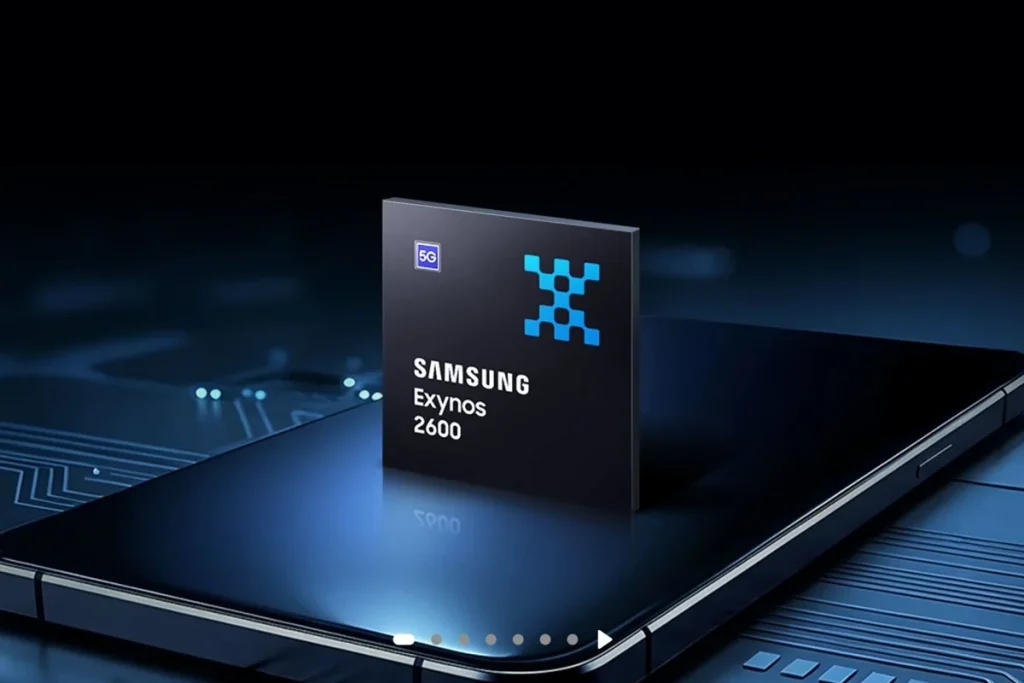
In an effort to finally shake off the long-standing complaints about excessive heat and aggressive throttling in its in-house processors, Samsung appears ready to tackle the problem at the level of physical design. Reports suggest the company is actively developing a new packaging approach for mobile devices, with plans to transition next-generation Exynos chips to a “side-by-side” layout—an attempt to address thermal inefficiency at its very core.
Today’s flagship smartphone processors—whether Qualcomm’s Snapdragon, MediaTek’s Dimensity, or Apple’s A-series—typically rely on PoP (package-on-package) stacking to conserve precious internal space. In simple terms, components such as memory are stacked directly on top of the system-on-chip, much like layers in a hamburger.
While this approach streamlines motherboard routing, it introduces a serious drawback: heat accumulation. Under heavy workloads, the processor’s waste heat becomes trapped beneath the memory layer, preventing rapid dissipation. Temperatures spike, thermal throttling is triggered, and sustained performance—particularly in gaming or AI workloads—inevitably suffers.
Samsung’s proposed side-by-side packaging does exactly what the name implies: the processor and memory are placed adjacent to one another on the substrate rather than stacked vertically. Although this increases the overall footprint on the circuit board, it offers a decisive advantage—the top of the processor is no longer covered. Heat spreaders or vapor chambers can make direct contact with the chip surface, dramatically reducing thermal resistance. This shift underscores Samsung’s urgency to restore the competitiveness of the Exynos lineup.
Competing against Snapdragon and Dimensity chips built on TSMC’s advanced processes, Samsung’s own foundry nodes have struggled with yield and energy efficiency. If process technology alone cannot outpace rivals in the near term, improving thermal behavior through packaging innovation may offer a viable path to leapfrogging the competition.
Yet this strategy cuts both ways. A side-by-side layout demands more motherboard space, inevitably squeezing room for other components—most notably the battery. Striking the right balance between cooling and performance on one hand, and endurance and form factor on the other, will pose a formidable challenge for Samsung’s engineers. In my view, this move signals that the Exynos team has reached a point of all-or-nothing resolve.
Over the past several years, Exynos chips have either underperformed or vanished from flagship devices such as the Galaxy S series, dealing a heavy blow to the brand’s reputation. If a side-by-side design enables Exynos to sustain peak performance in demanding titles or ray-tracing workloads without throttling—even at the cost of a slightly larger device or marginally reduced battery capacity—it would be a worthwhile trade-off in rebuilding user confidence.
Apple has already demonstrated the merits of a similar approach in its M-series chips for iPads and Macs, where unified memory sits beside the SoC rather than atop it, delivering clear benefits in both thermals and sustained performance. If Samsung can successfully miniaturize this architecture for smartphones, Exynos processors in 2026 or 2027 may finally be poised for a genuine comeback.
Related Posts:
- Beyond SOS: Samsung’s Exynos 5410 Brings 5G Video Calls to the Middle of Nowhere
- DOJ’s Radical Proposal: Could Google Be Forced to Sell Chrome and Android?
- The 2nm Revolution: Samsung Unveils the Exynos 2600 with All–Big-Core Power & HPB Cooling
Support Our Threat Intelligence
Find our tech and OS security coverage helpful? Support our work today and unlock a 100% ad-free reading experience!
 Buy Me a Coffee
