The Final Piece: Xbox App Hits Windows on Arm, Transforming Copilot+ PCs into Gaming Rigs
 Do Son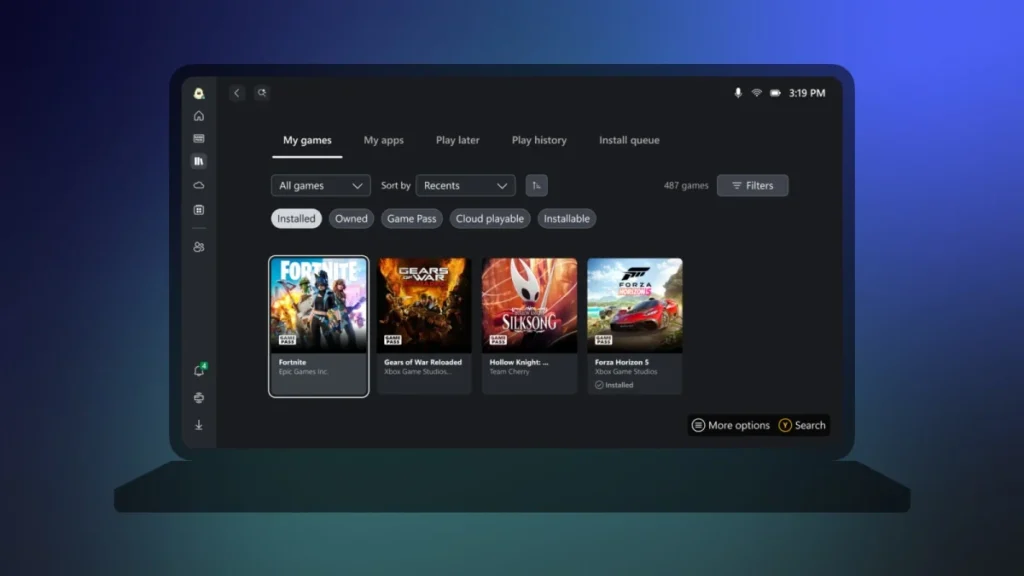
Microsoft continues to broaden the application ecosystem for Windows on Arm, finally integrating the pivotal “gaming” piece into its strategic mosaic. The technology titan has officially announced that the Xbox App now provides comprehensive support for Arm-based Windows 11 PCs. Consequently, users of Copilot+ PCs equipped with Qualcomm Snapdragon processors can now seamlessly procure, download, and engage with PC titles through the official application.
The debut of the Xbox App within the Arm architecture is not an isolated occurrence but is predicated upon a fundamental breakthrough in underlying technology. In December, Microsoft implemented a critical update to its Prism emulator, introducing support for the AVX and AVX2 instruction sets. These instruction sets are indispensable for the computational efficiency of contemporary titles and often represent the threshold for a game’s viability on Arm architecture.
According to official metrics, over 85% of the titles within the Xbox Game Pass library are now capable of operating smoothly on Arm-based PCs. Beyond single-player masterpieces, Windows on Arm demonstrates a distinct advantage in its support for online gaming. Unlike Valve’s Linux-based SteamOS, Windows on Arm is compatible with kernel-level anti-cheat software, such as Epic Games’ Easy Anti-Cheat (EAC).
This ensures that Arm-based Windows devices possess a broader spectrum of compatibility for multiplayer online games requiring anti-cheat detection than the Steam Deck. Since the inception of the Copilot+ PC initiative in 2024, Microsoft has collaborated rigorously with Qualcomm to advocate for Arm hardware while simultaneously refining software compatibility, ensuring a myriad of games perform optimally on Snapdragon-powered devices.
While Microsoft’s foray into handheld gaming consoles has thus far concentrated on AMD (x86) silicon, the universal support of the Xbox App for Arm—coupled with prior intimations from Qualcomm—suggests that the advent of an Arm-based Windows 11 handheld may be imminent. Historically, while Windows on Arm laptops boasted superior endurance and connectivity, their primary deficiency remained a dearth of playable content. By optimizing the Prism emulator and launching a natively compatible Xbox App, Microsoft has effectively navigated the “final mile” toward mainstream consumer adoption.
This represents an exceptionally significant signal for the handheld market. Although current Windows handhelds, such as the ROG Ally or MSI Claw, offer commendable performance, their battery longevity remains a chronic vulnerability. Should the Arm architecture resolve these power-consumption dilemmas while maintaining over 85% compatibility through Microsoft’s software layer, the next generation of Windows handhelds may very well be dominated by Arm technology.
Related Posts:
- Microsoft Unlocks Gaming on Windows on Arm: Xbox App Now Supports Native Downloads
- Apple SVP Joswiak Teases “Five M’s”: M5 MacBook Pro, iPad Pro, and Vision Pro Launch Expected This Week
- Cloud Gaming for Everyone: Xbox Opens Its Streaming Service to Game Pass Core and Standard
- Microsoft Launches Gaming Copilot on Windows & Xbox App
Support Our Threat Intelligence
Find our tech and OS security coverage helpful? Support our work today and unlock a 100% ad-free reading experience!
 Buy Me a Coffee
