The Grid is the Goal: Alphabet’s $4.75B Bet to Own the Power Plants Behind Gemini
 Do Son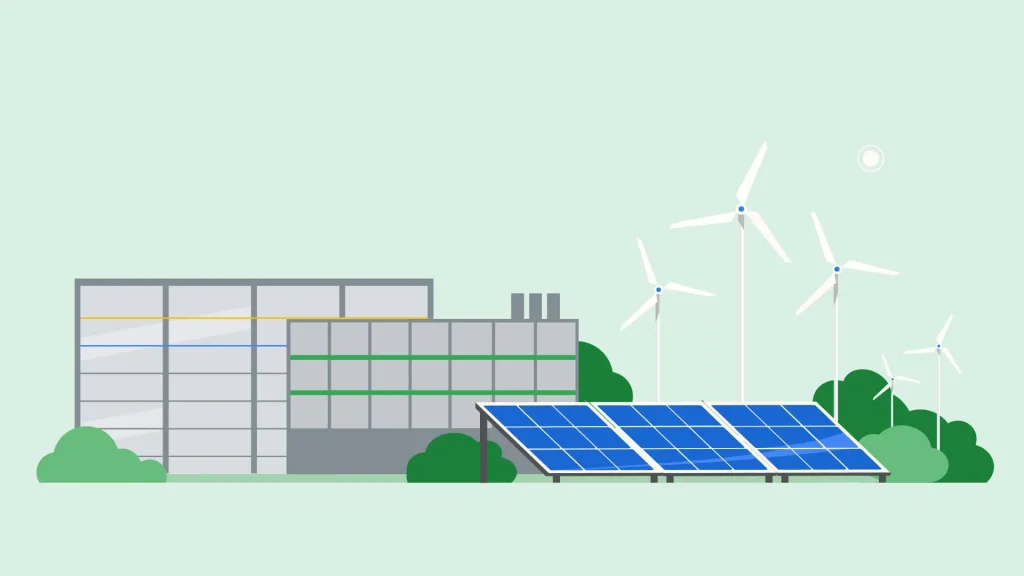
In the end, the decisive factor in the AI compute arms race is not algorithms or chips, but electricity. Alphabet, Google’s parent company, has announced a definitive agreement to acquire Intersect Power, a Houston-based clean energy and data center infrastructure developer, for $4.75 billion in cash, while also assuming the company’s existing debt.
The transaction is expected to close in the first half of 2026, signaling that Google—facing an enormous and growing power deficit driven by AI model training and cloud services—has chosen to evolve from a mere purchaser of electricity into a builder and owner of generation and infrastructure.
The relationship between the two companies is not new. Google previously held a minority stake in Intersect Power through earlier funding rounds. This full acquisition marks a deliberate shift from a contractual partnership to deep internal integration.
Under the terms of the deal, Alphabet will gain control of Intersect Power’s energy and data center projects currently under development or construction, with a combined capacity measured in multiple gigawatts. One prominent example is a solar power plant and battery storage system in Texas built directly adjacent to a Google data center campus. In a statement, Alphabet CEO Sundar Pichai said the acquisition will allow Google to deploy new generation capacity more flexibly in response to data center demand, while accelerating energy innovation across the United States.
Following the acquisition, Intersect Power will retain its brand and operate as an independent Alphabet subsidiary, with CEO Sheldon Kimber continuing to lead the company. This structure means that while Intersect Power will prioritize Google’s electricity needs, it will still maintain a degree of operational flexibility in external markets. The deal underscores what has become Silicon Valley’s most acute source of anxiety: a looming power shortage.
As advanced AI accelerators such as NVIDIA’s Blackwell enter large-scale deployment, data center power consumption is rising at an exponential rate. Microsoft has moved to restart the Three Mile Island nuclear plant, Amazon is investing in small modular reactors, and Google has opted to acquire a developer specializing in large-scale solar and energy storage.
The boundaries of competition in the tech industry have clearly blurred. It is no longer just about who has more chips or stronger models; it is now about who can build power plants faster and secure scarce grid capacity. After all, without electricity, even the most powerful AI cannot run.
For Google, bringing power generation under its own control may make its balance sheet heavier, but it represents the most reliable form of “uninterruptible power supply” for safeguarding AI dominance over the next decade.
Related Posts:
- Alphabet to Acquire Cybersecurity Powerhouse Wiz for $23 Billion
- Alphabet Q1 2025: Revenue Surges, Gemini 2.5 Launched
- Alphabet Soars in Q2: AI Fuels 14% Revenue Jump to $96.4B, Google Cloud Profits Skyrocket
- OpenAI and Broadcom Partner to Develop Custom AI Accelerator Chips for 10 GW of Infrastructure
Support Our Threat Intelligence
Find our tech and OS security coverage helpful? Support our work today and unlock a 100% ad-free reading experience!
 Buy Me a Coffee
