 Do Son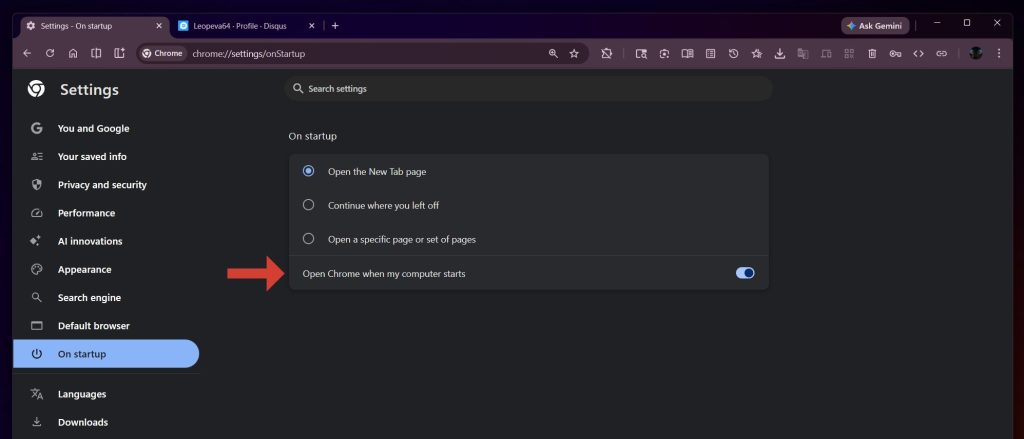
Image: Leopeva64
It is a well-established axiom that a proliferation of startup items inevitably extends the duration of system initialization. When a multitude of applications are installed, many surreptitiously designate themselves for automatic execution upon startup; consequently, the user’s boot time may be delayed by several seconds or even tens of seconds beyond the norm.
For software developers, however, establishing such a presence offers manifold advantages, such as the pre-loading of background processes to facilitate an instantaneous launch experience.
Currently, Google is experimenting with integrating Chrome into the system startup sequence. The objective is to configure the browser as a foreground process—automatically opening the primary window upon boot. Foreground processes enjoy higher resource priority than background tasks, ensuring that the user experiences near-instantaneous responsiveness upon clicking the Chrome icon. At this juncture, the startup feature remains in the nascent testing phase within the Canary branch. Crucially, Google has not enabled this by default; rather, it provides a toggle within the settings menu, allowing users to exercise their own discretion.
Should a user rely heavily on the browser and maintain a relatively sparse startup list, enabling this feature is unlikely to be detrimental, as a negligible delay of a few seconds is rarely a significant grievance.
This novel startup configuration will gradually migrate through the Chrome Dev and Beta channels before its eventual debut in the Stable version. Once implemented, users may navigate to Chrome Settings, then to the Startup section, to either authorize or rescind the permission for Chrome to launch during the system boot sequence.
Related Posts:
Support Our Threat Intelligence
Find our tech and OS security coverage helpful? Support our work today and unlock a 100% ad-free reading experience!
 Buy Me a Coffee
